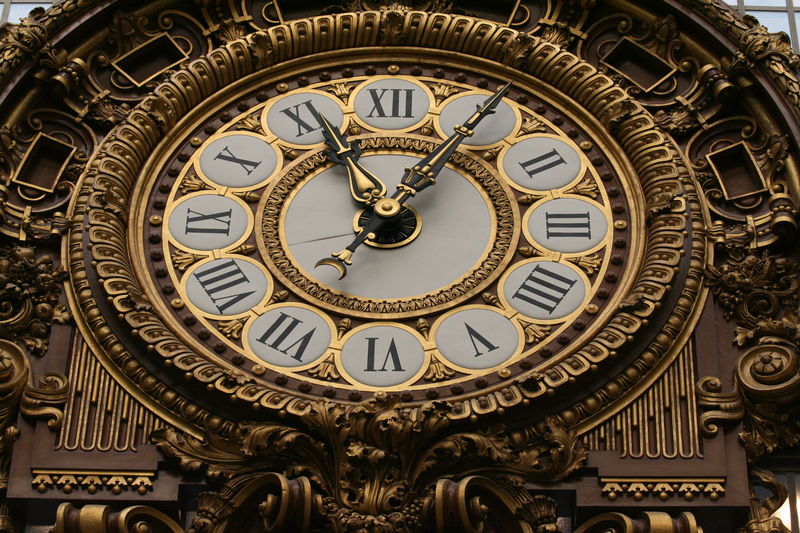
It was on my list of Paris must-sees, so that’s where I’m headed today.
You’ll only get shots of the inside: it was so stifling outside I couldn’t bring myself to press the shutter!
I love this museum: the light that floods those spectacular spaces you can take in at a glance the moment you walk through the door.
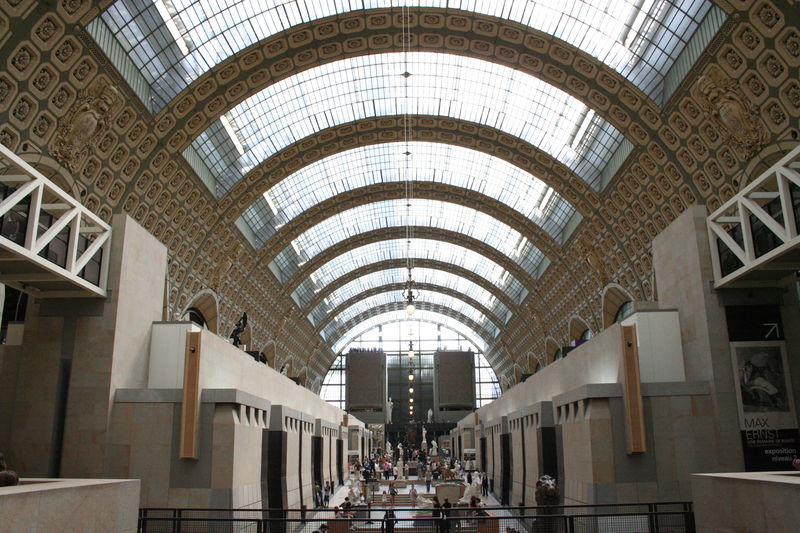
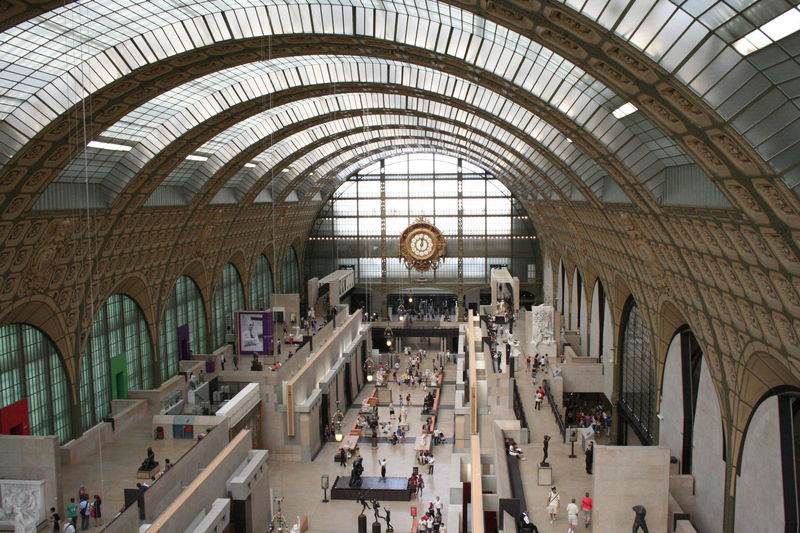
And what I especially love is that this magnificent building sat abandoned for so long and finally got a second life. I love the idea of a city that keeps moving, that doesn’t get stuck in a bygone era but reinvents itself again and again.
So I set off on a “rambling” tour, letting my feet lead the way rather than following a guide or reading up on what to see.
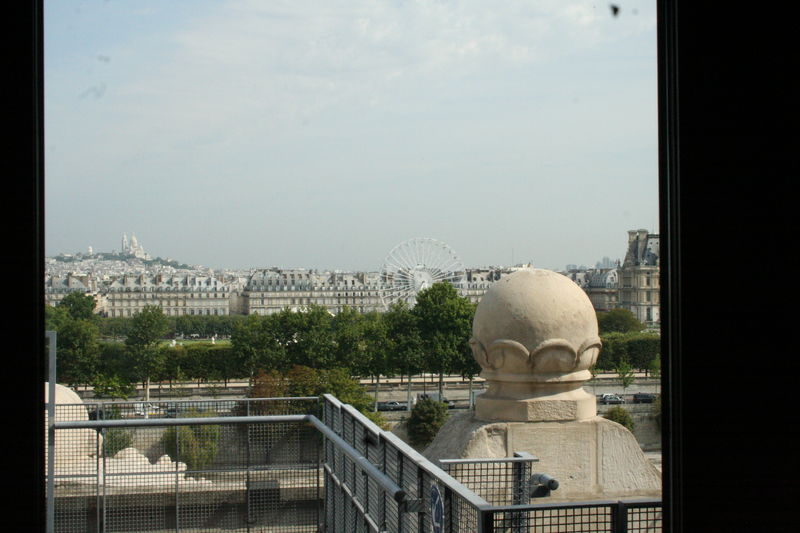
First, up to the terrace: stifling heat, a few snapshots, then back into the cool, with a detour through the little restaurant to admire one of the clocks on the facade facing the Seine.
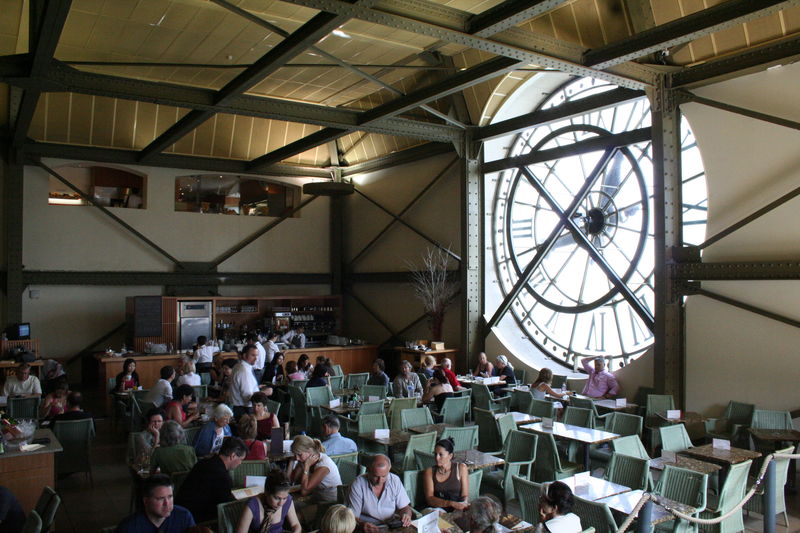
Then off to “The Impressionists.”
Some works give off such a glow that my feet carry me right over to them, as if I had no say in the matter.
Among them:
the woman reading by Renoir 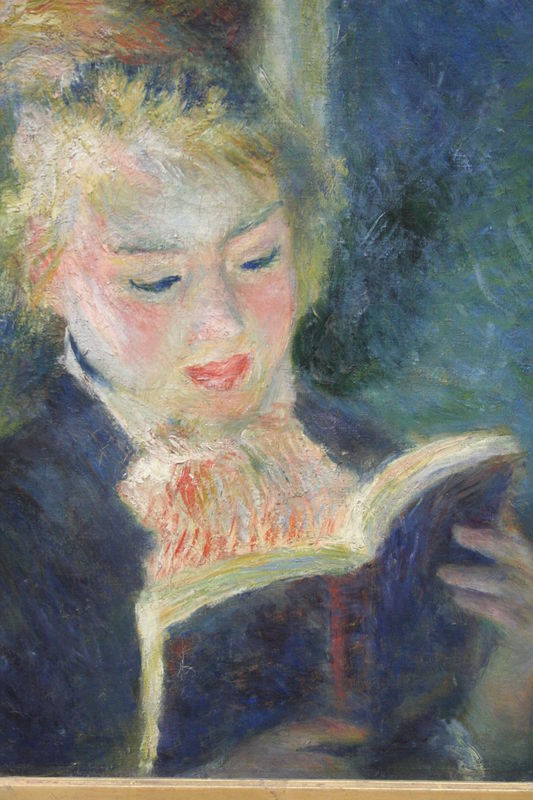
the turbulent sky in Van Gogh’s “Thatched Cottages at Cordeville” 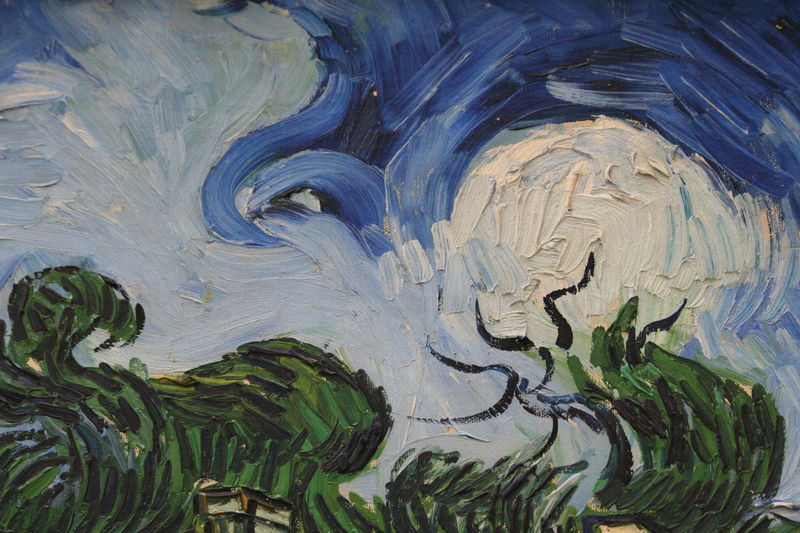
or his “The Siesta (after Millet)” 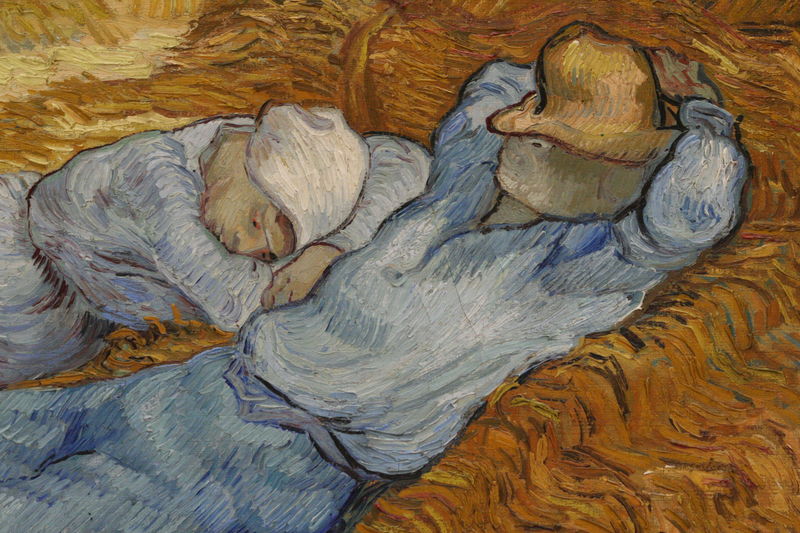
I also discover Henri Edmond CROSS 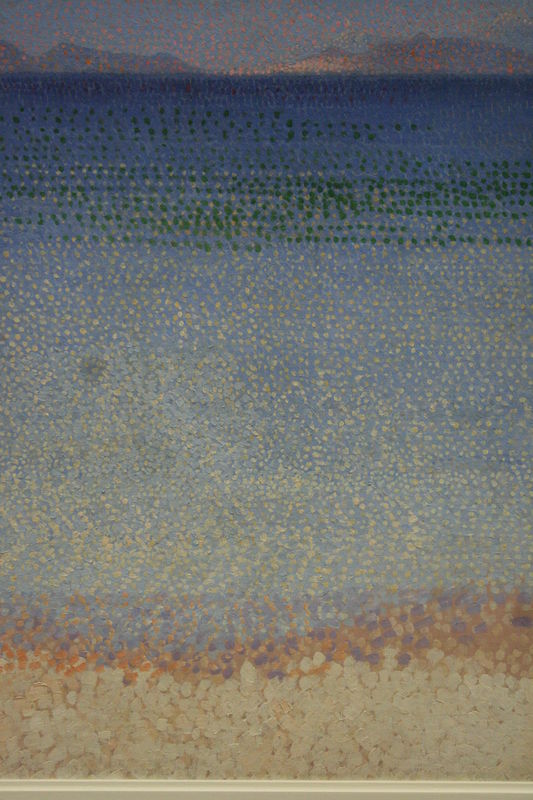
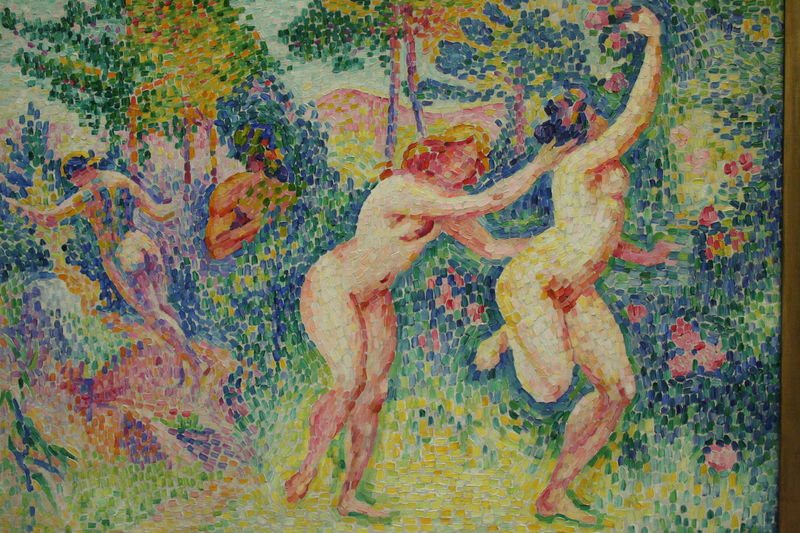
I retrace my steps: Renoir again 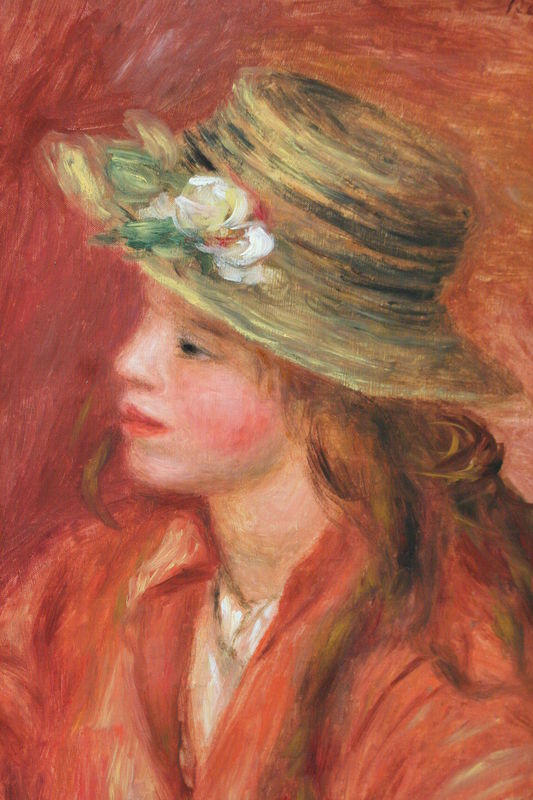
but also Sisley 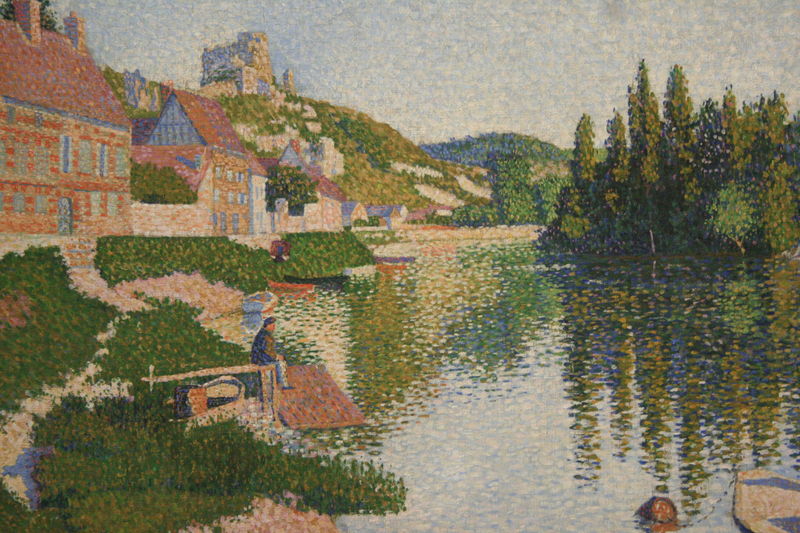
Before leaving this floor, a visit to one of the museum’s icons, the dancer by DEGAS
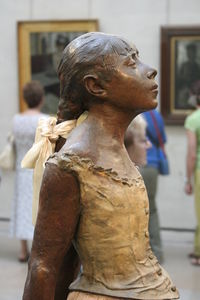
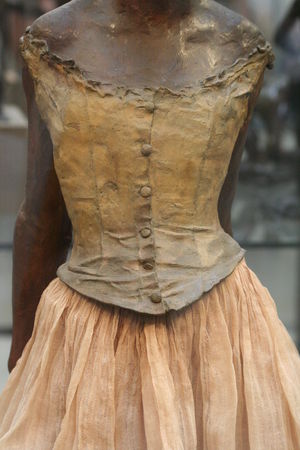
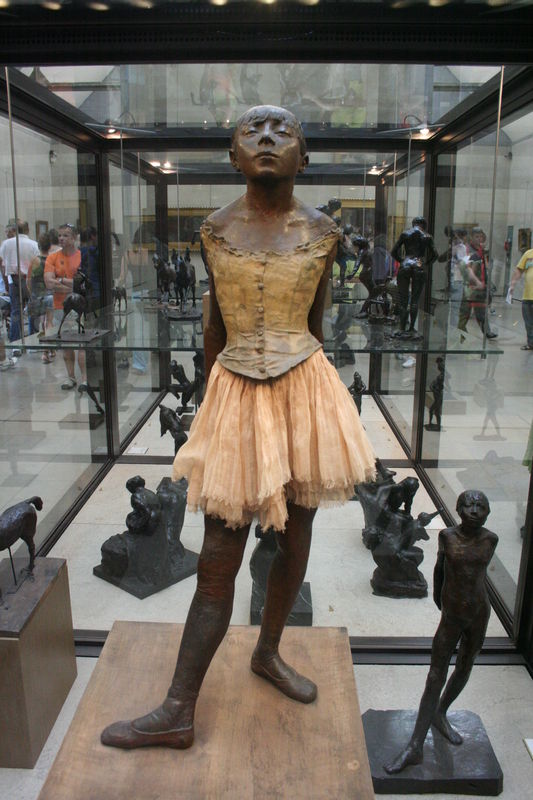
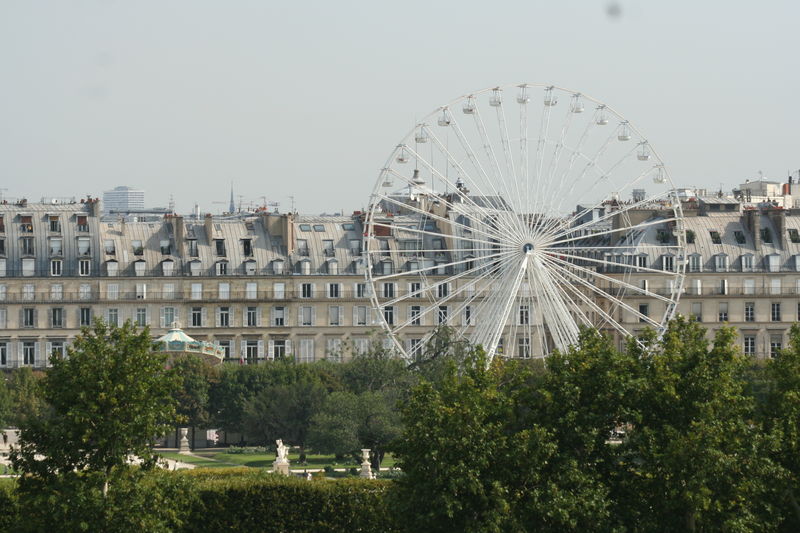
but there’s beauty in the glimpses you catch of the world outside, too, through a clock face or a window
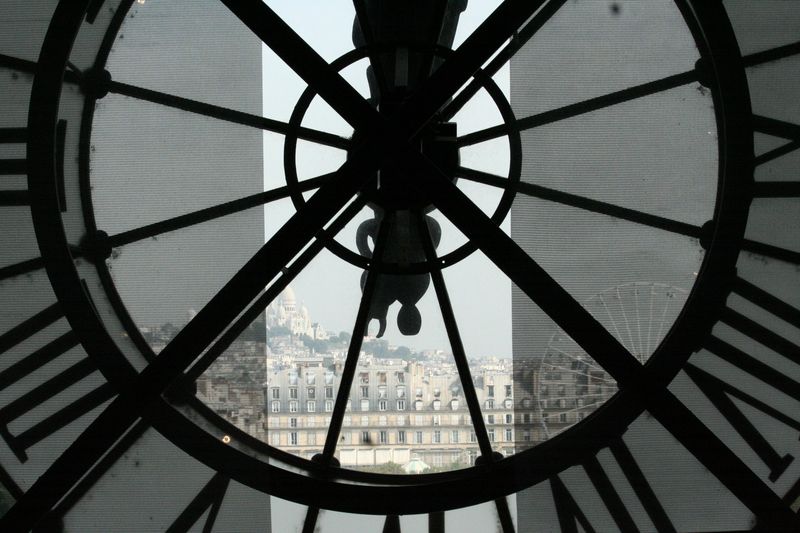
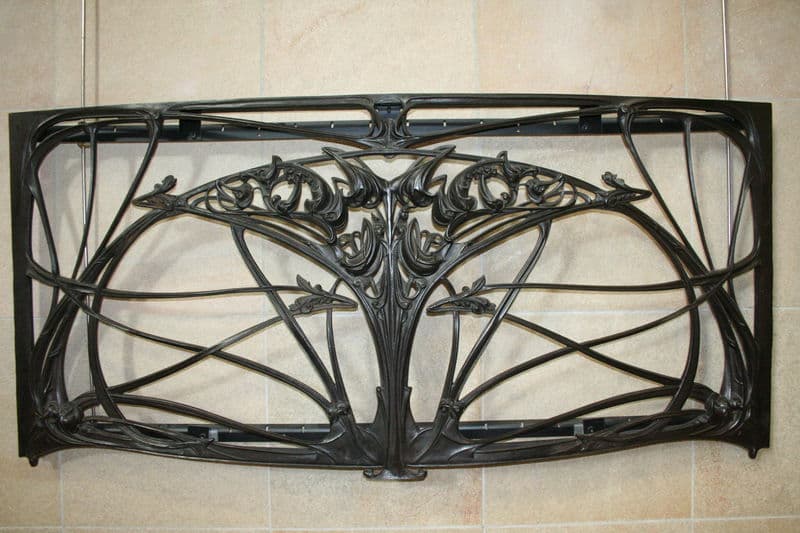
On my way out, I pass the Guimard rooms, another take on “art in the city, or is it the other way around?”
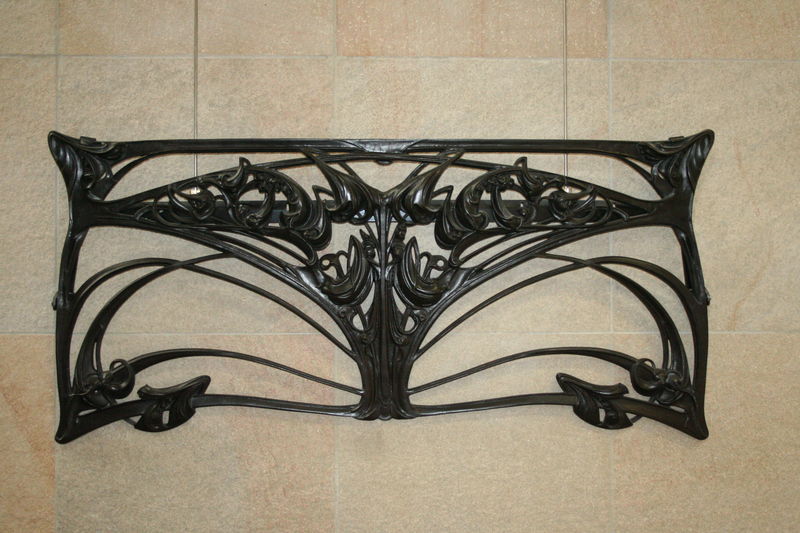
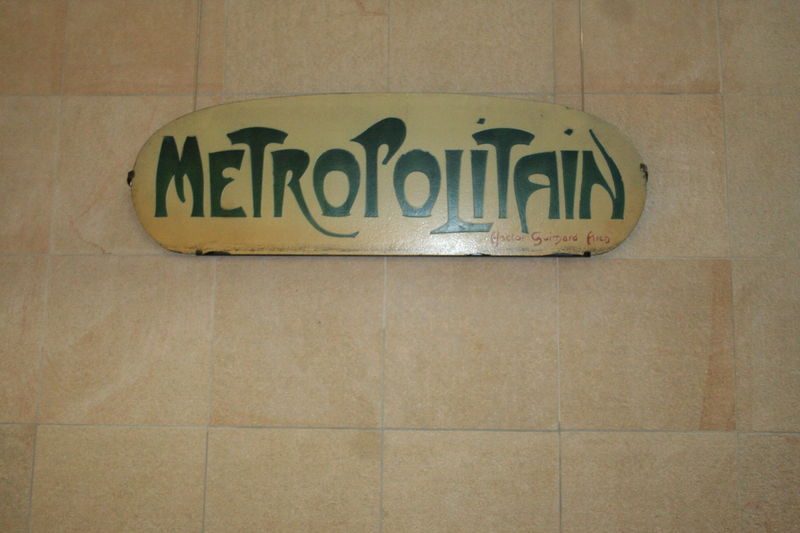
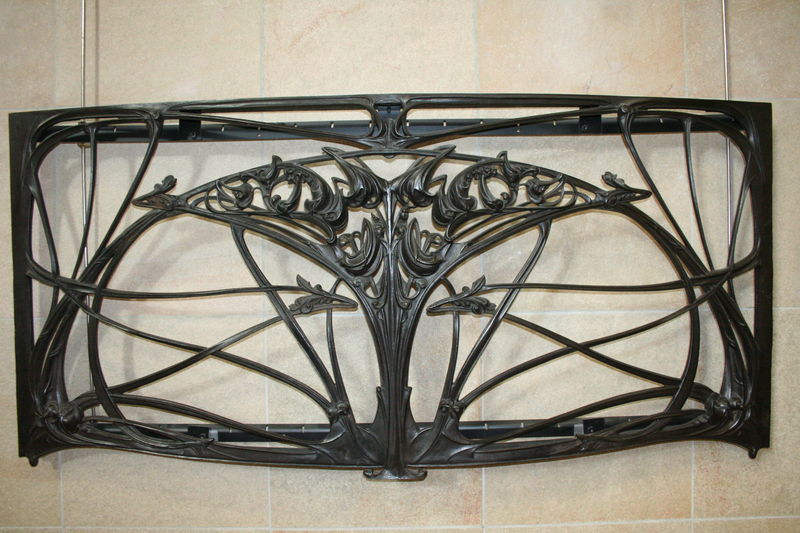
And finally, a moment to admire the innards of this magnificent building from another era
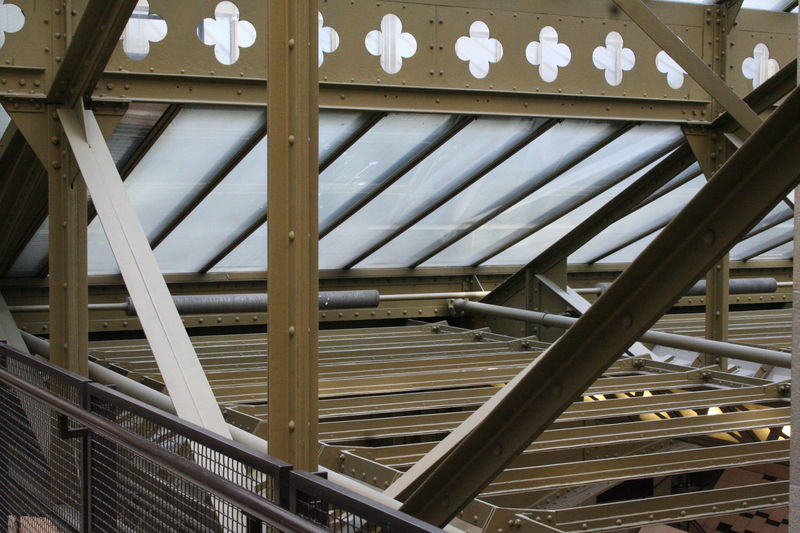
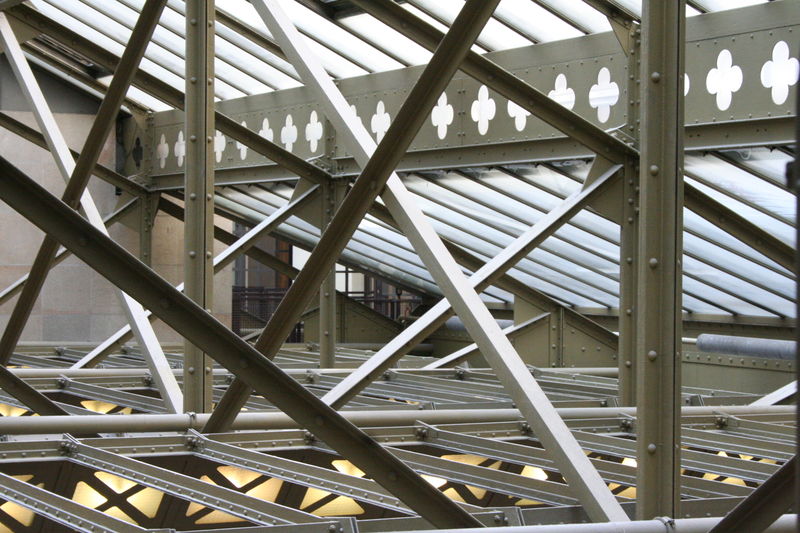
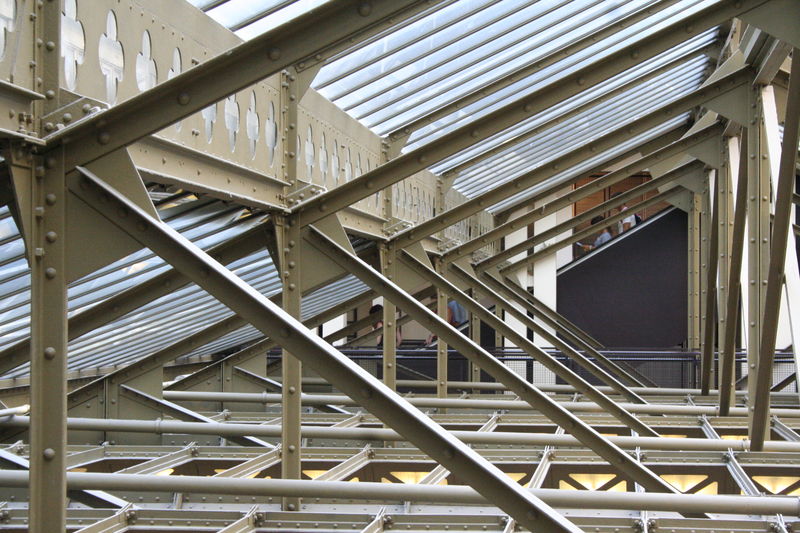
Before I go, a little history: the architect Victor Laloux began building the station and its adjoining hotel in 1898, and both opened on July 14, 1900, for the World’s Fair.
The building has a hall that’s 32 meters high, 40 meters wide, and 138 meters long. A stone facade conceals the metal framework inside. From 1900 to 1939, the station handled trains bound for southwestern France. In 1939, it switched to serving only the suburbs. During World War II, it was used to send packages to prisoners of war and later to welcome them home at the Liberation. In 1973, the hotel closed.
In 1977, the decision was made to turn it into a museum devoted to the arts of the second half of the 19th century. The museum opened on December 1, 1986.
See you tomorrow.