buzzzzzzzzz… sustainable development… bzzzzz… global warming… buzzzz… organic products…
It all started with a faint buzz, a little flutter in my ears: HE was telling me, with great enthusiasm, about Eric Orsenna’s latest book, “l'avenir de l'eau. Petit précis de mondialisation II”; my daughter said, “What if we tried buying some organic products, just to see?”; and my company offered me a quiz called “A Summer for a Panda,” in partnership with WWF, to raise my awareness of environmental issues.
Now, I’m not about to analyze the impact of globalization on the future of the planet right here and now, because others do it brilliantly (Erik ORSENNA), or even get into how the Grenelle de l'environnement has shaped the way France deals with the issue. Far be it from me to run through the Kyoto Protocol and what’s about to happen in Copenhagen (a little background), list who signed on, or point fingers at the holdouts.
And I’m not going to take stock of Obama’s first year, either: what he promised and what he’s actually set in motion.
So, you might ask, what am I going to talk about?!
Well, I’m going to talk about what we do as individuals, me in particular, as a city dweller who hasn’t exactly been doing her part so far—shame on me!
And I want to hear from you, so we can understand what we do, as ordinary people going about our daily lives, to look after the future of our planet, and therefore our children’s future!
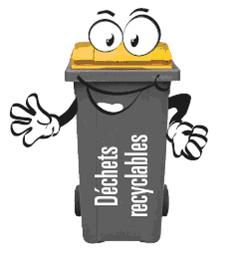
So I’ll start with sorting the recycling: I’d never really given it much thought, so I shamelessly tossed plastic containers, paper, and all kinds of trash into the same bags, and those bags all ended up in the same green-lidded bins…! But how could I ignore those gorgeous yellow lids making eyes at me in the street? I finally gave in, and little by little, we’re getting the hang of it!
Then there’s what we buy: organic products never really interested me, and the packaging looked more like something from the shelves of my neighborhood drugstore than from “La grande épicerie” at Bon Marché… But then there are the vegetables… grown in ways that are better for the soil, and maybe better for our health, too… I’m not saying I buy everything organic now, but sometimes I can’t resist!
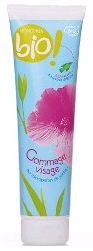
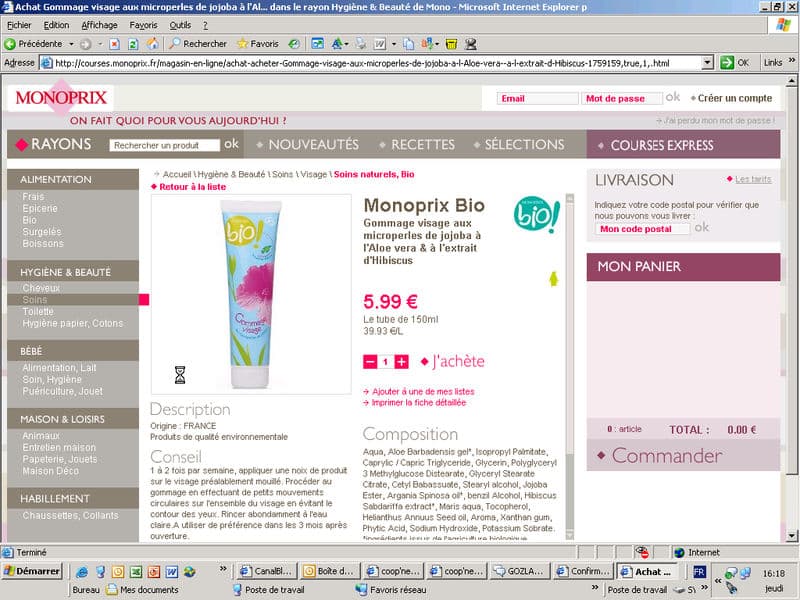
And would you believe I even ended up with an organic facial scrub from MONOPRIX? The tube is pretty, and it really does make you think you’ll see a difference in your skin! Not to mention the “aluminum-free” deodorant, which, I have to admit, works really well!
And then there’s how we get around…
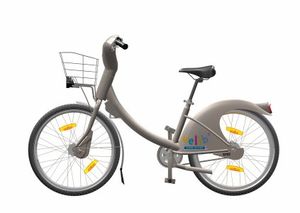 or
 ?
So here’s what I say…
yes when a simple action can become second nature
no when it’s all about jumping on the latest bandwagon with a lot of PR fanfare (no, I’m not going to the nearest NESPRESSO store, by car or by bike, with my dripping coffee pods in an old recycled plastic bag just so Georges can feel better about himself!)
yes when the company gets involved by setting up paper collection and providing bins for cell phones and batteries
no when that same company leaves the office lights on in five five-story buildings, leaving it up to employees to switch them off if necessary, not to mention the restrooms that are lit around the clock, with no motion sensor or even a light switch, and then lectures us about our personal habits!
yes to teaching our children about these universal values that go beyond our own interests
no to the zealots who jump at every chance to make you feel guilty by holding up their own flawless behavior as an example
And to wrap up, here’s an excerpt from Erik Orsenna’s book, to make you want to read on…!
“In ten years, in twenty years, will we have enough water? Enough water to drink? Enough water to grow plants? Enough water to keep water scarcity from becoming yet another reason to go to war? In the hope of answering these questions, I went traveling.
For quite a while.
From the Nile to the Huang He (Yellow River).
From the Amazon to the tiny Neste River, a tributary of the Garonne.
From an Australia dying of thirst to the flooded islands of the Brahmapoutre…
I met scientists, farmers, members of religious orders, dam builders, and mountaineering physicists who measure where glaciers end on the world’s highest peaks.
I spent time with doctors in Calcutta fighting cholera.
I listened to countless lessons, including ones from the Namibian beetle and the kangaroo.
How do they survive in the middle of the desert? Little by little, I got to know our planet better.
I saw inequalities deepen everywhere, especially those tied to climate.
But I also saw that pragmatism could work, and that government agencies and private companies could work beautifully together.
I saw delusion and cruelty at work.
Now that I’m back from my travels, it’s time to tell the story.
One in six people on the planet still has no access to water.
One in two lives without a sanitation system.
Why? ”
So what does sustainable development mean to you?