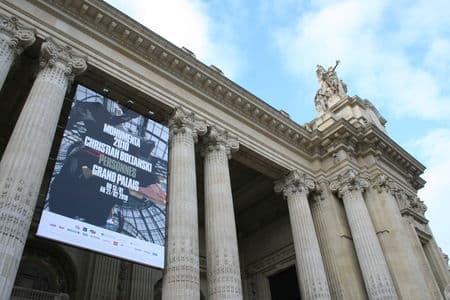
I’m angry
It was supposed to be about emotion, quiet reflection, the duty to remember, life, death…
To me, the duty to remember is crucial. It’s essential to pass that memory on to our children in the hope that the horrors of the past won’t be repeated, and that’s why I can’t stay neutral about an exhibition that claims to share those values. I know the Holocaust is a difficult subject to tackle head-on, and I understand why artists who want to evoke it turn to metaphor and approach it indirectly, but in this particular case…
We went in sure it would hit us in the gut, that we’d be swept up in the emotion. And what did we get instead? This… “Holocaust show business” on a grand scale, the very thing Boltanski so loudly and clearly rejects.
So what does this “work of art” consist of?
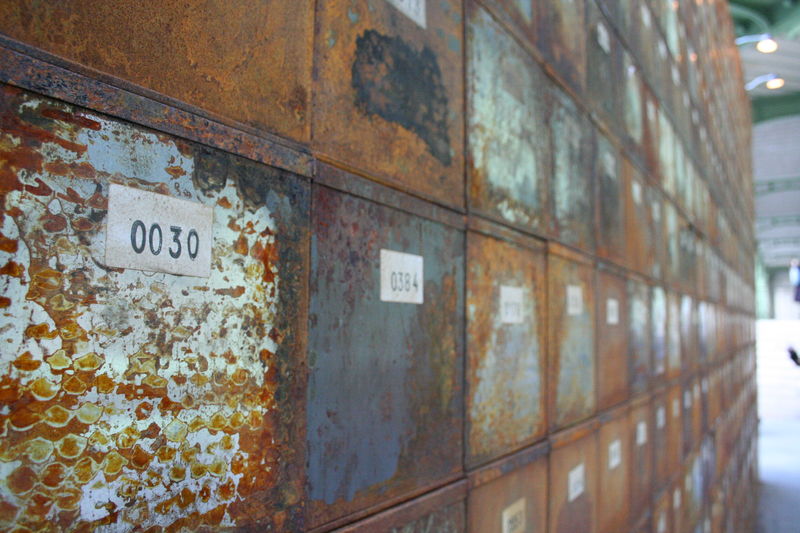
At the entrance, a wall of numbered compartments, like the ones you find in some post offices
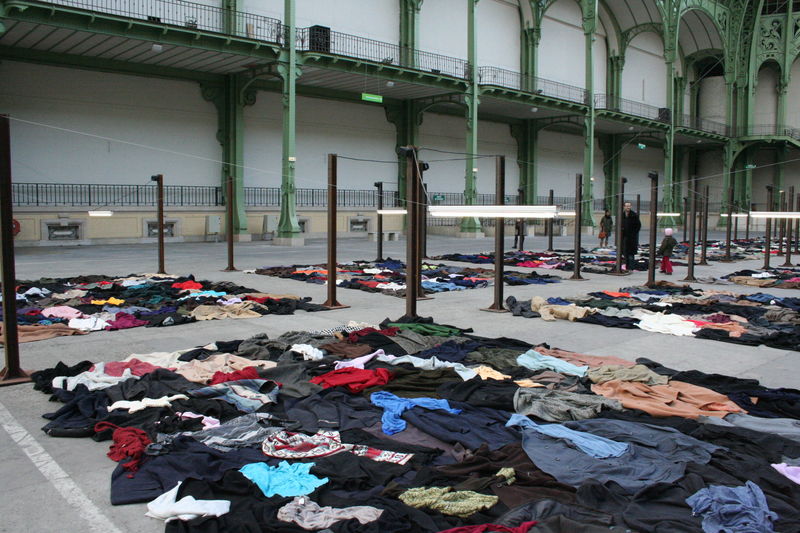
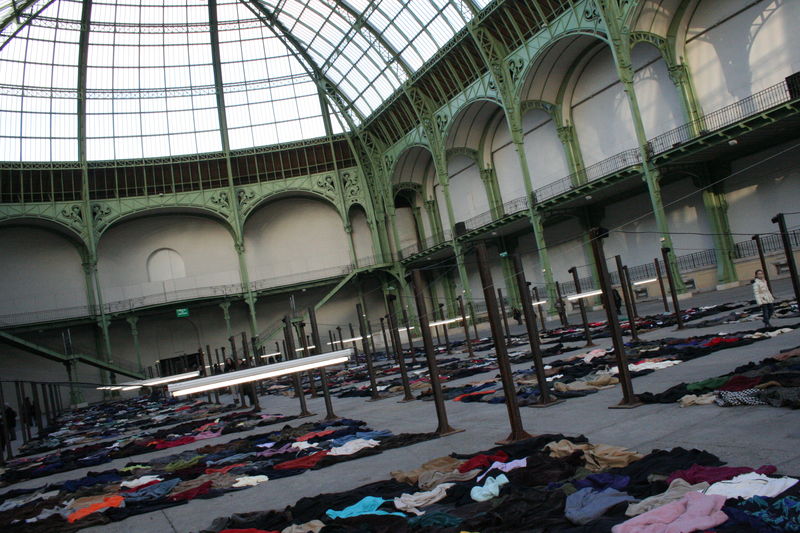
Once you get past the wall, you discover the nave, which the artist has taken over…
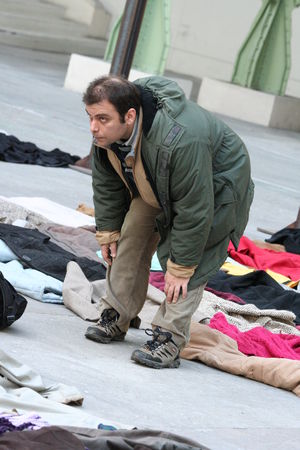
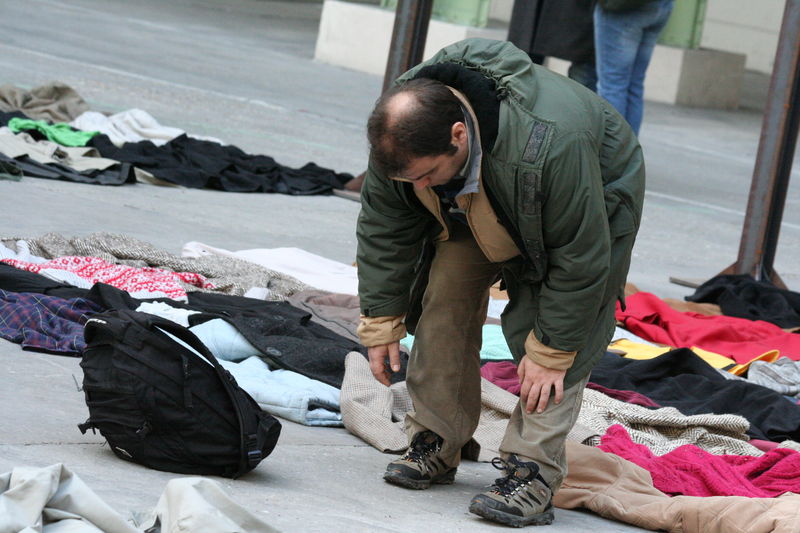
Piles of brightly colored clothes, some carefully laid out on the floor, others heaped up into a giant pyramid that makes you want to jump right in and looks uncannily like one of those ball pits full of colorful balls at Ikea. It all looks rather pretty, I’ll admit, but it makes you want to take pictures more than it makes you want to pause and remember the victims of recent history, or even think about death, life, and what either of them is ultimately about…
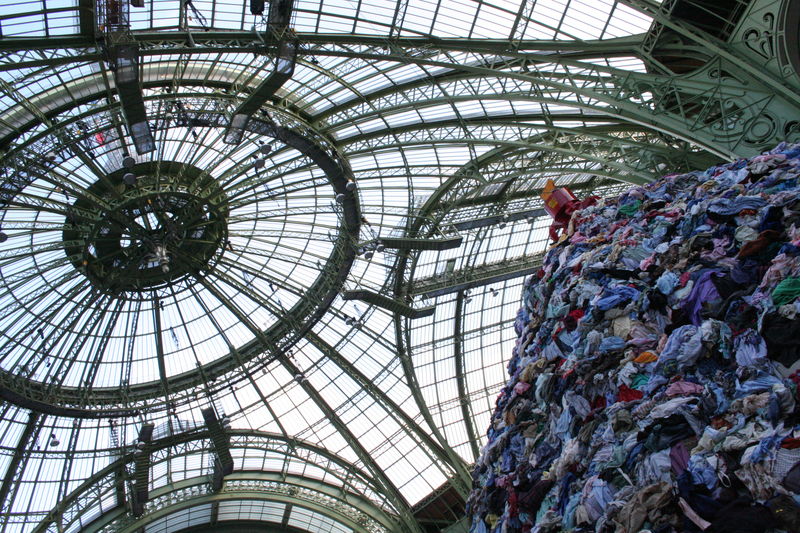
A deafening racket that, far from calling to mind the faint beating of one heart or several, fills your head and makes it impossible to think.
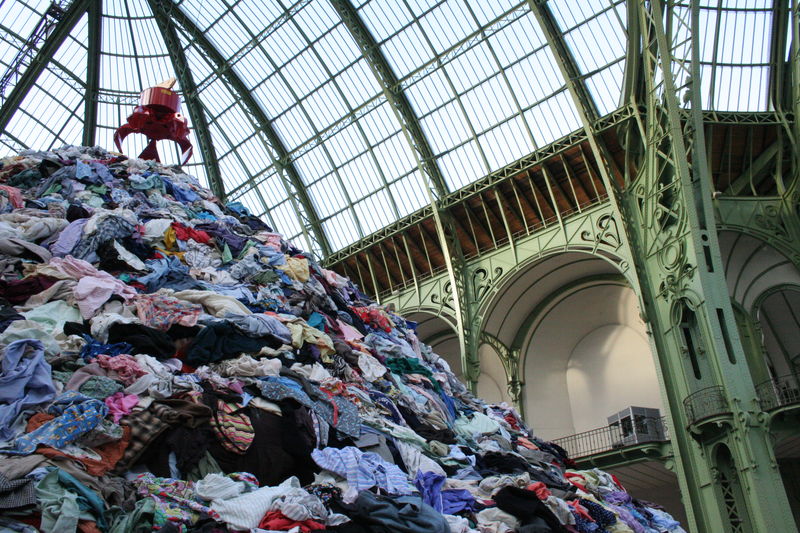
Now, you might tell me that an exhibition—or a work of art, since that’s what we’re talking about—that doesn’t quite achieve what it set out to do, or misses the mark entirely, and fails to get its message across is pretty common. Fair enough.
But in this case, my own reaction aside, what worried me was what I heard and saw:
First there was the student who said to the friend she was with, in a tone of great authority: “It makes you think of a concentration camp.”
Then there was one of the many gallery guides on hand, explaining that Boltanski “denies using the Holocaust for marketing purposes.”
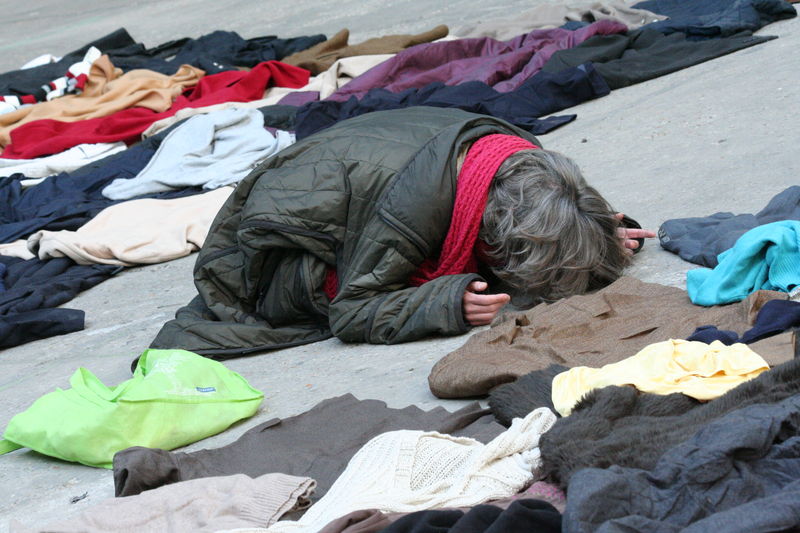
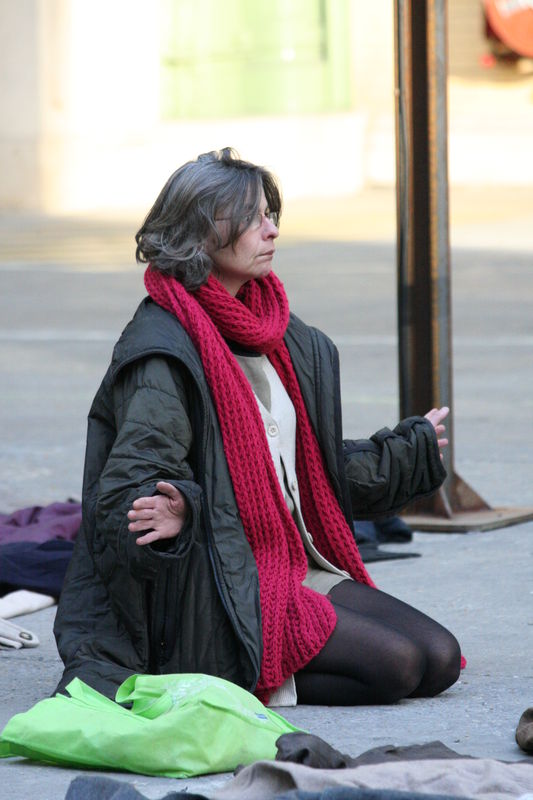
And finally, these two people, who for a moment we thought were extras in the installation. They were so primed by who knows what obscure talk of the kind you get so often with contemporary art that they looked as if they’d gone into a trance…
So if you’re in the mood to see a pretty, colorful jumble in the sumptuous setting of the grand Palais, by all means go. But if you’re hoping to be moved, to understand people and the strength they can find in desperate situations, this isn’t the place for you.
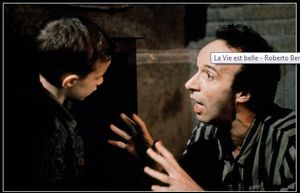
Go see—or see again—Benigni’s “Life Is Beautiful” instead. Now there’s a true masterpiece: it’s about LIFE, about what it means to be HUMAN, and it looks to the future with the power of a genuine work of art.