Yes, I’ve already told you about those historical plaques you come across in PARIS...
And yes, I’ve told you how much I love them...
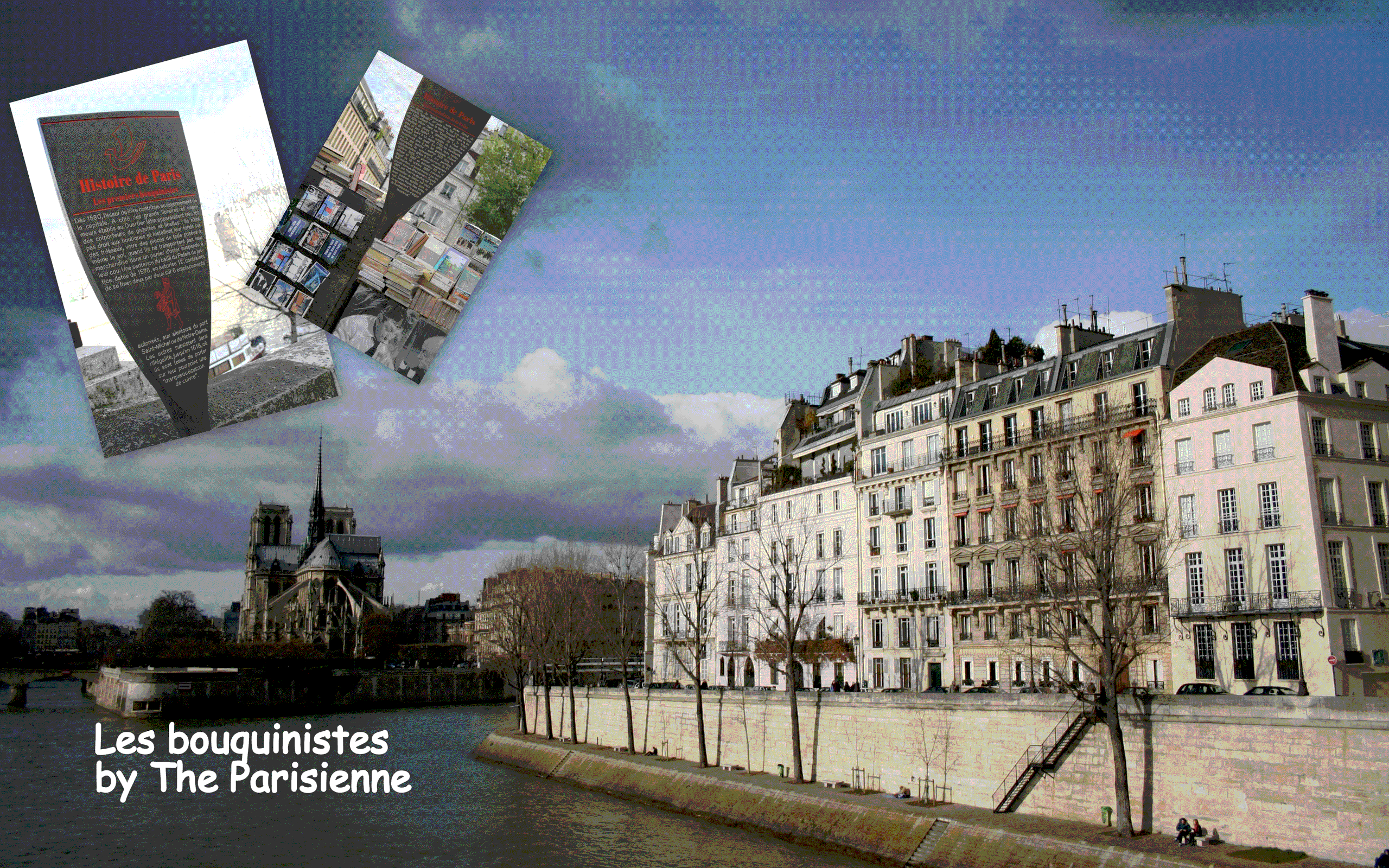
Well, here’s proof! Thanks to one of those plaques, I finally learned where the word “bouquiniste” comes from!
And you, do you know where it comes from? Oh, all right, if you insist, I’ll tell you everything!
The word “boucquain” first appeared in 1459, and by the late 16th century it was recorded as “bouquin” (it probably comes from the Flemish “boeckjin,” meaning “little book”).
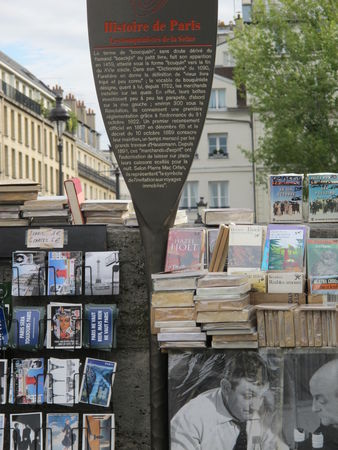
As for the tradition of the bouquinistes, it began around the 16th century with small-time peddlers. Under pressure from booksellers, a 1649 regulation banned portable stalls and the display of books on the Pont Neuf. The authorities at the time were keen to crack down on unofficial markets that weren’t subject to censorship. So over the years, itinerant booksellers were driven out, then allowed back with permits.
In 1859, the city of Paris began granting permits for bouquinistes to set up in fixed spots. Each bookseller was entitled to 10 meters of parapet for an annual fee of 26.35 francs, plus 25 francs for a business license. They were open from sunrise to sunset. Finally, in 1930, the dimensions of the “boxes” were standardized.
Spread out over more than three kilometers along the Seine and recognized by UNESCO as World Heritage, the 240 Parisian bouquinistes run 900 “green boxes,” displaying some 300,000 old secondhand books and a huge number of magazines, stamps, and collectible cards...
So, will you look at these one-of-a-kind booksellers a little differently from now on?.