So I’m back on my tour of Paris, following in the footsteps of Métronome!
If this fourth chapter took so long to show up, it’s because, to tell you the truth, it threw me a little!
First, a metro station that no longer exists…
Then the trials and tribulations of Roman emperors, from Constantin to Julien by way of Constance, all far from Lutèce and taking little interest in it, if any at all!
But I’ve decided not to let this rather unusual chapter stop me. At least, I hope it won’t!
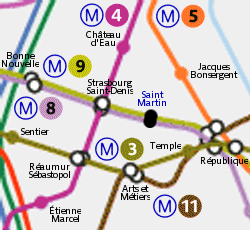
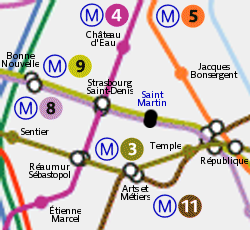
So instead of a photo of the Saint Martin station, which has been closed since 1939 and now serves as a shelter run by the Salvation Army, you get… this!
A little history, then… One day in the winter of 338/339, Martin, a young Roman soldier who’d already given away all his pay, gave half his cloak to a poor man who asked him for alms.
Years later, in 385, by then a bishop, he stops in Paris. Gaul has embraced Christianity, and this friend of the poor has become quite a figure… During this visit, he shows his devotion to those most in need once again by kissing a man with leprosy on the cheek. The man wakes up cured the next morning!
Back to our Romans… No point dwelling on the ones who neglected Lutèce, so I’ll stick to the one who matters: the one who loved PARIS, Julien!
He comes here to rest between battles and expeditions… his “private” capital, the one he’s called his own since January 358.
And wouldn’t you know it, if Lorànt Deutsch is to be believed, Julien was the very first person to go strolling around Paris!
He loves Paris for its island! Can you imagine? Would he dare steal my favorite spot?!
Oh, wait, there’s room for both of us after all… He can have the île de la Cité, and I’ll have my île Saint Louis!
Especially since he loves the Seine so much, sometimes calm, sometimes choppy, its swollen waters lapping at the sides of the houses lining the banks.
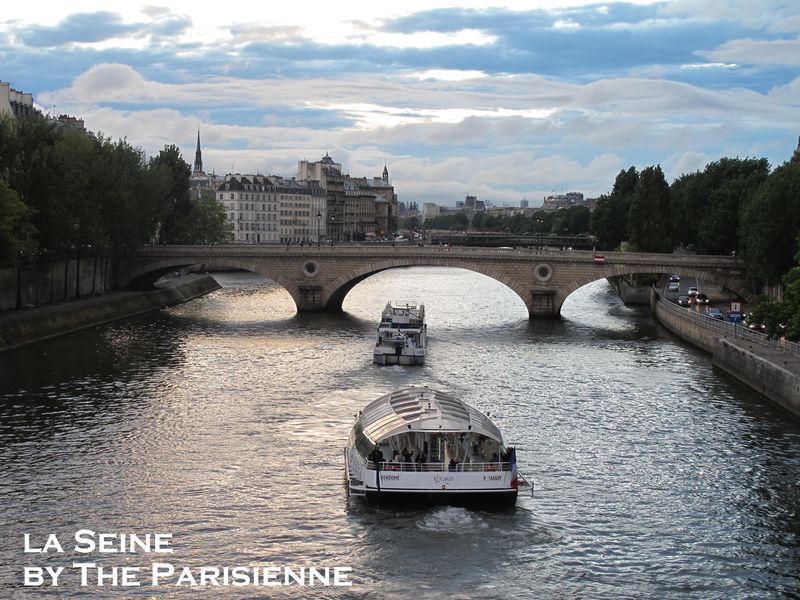
Nothing remains of his imperial residence, but the site would remain home to a palace: today’s Palais de Justice.
Lorànt Deutsch keeps coming back to that eternal question: when did Paris become Paris?
What seems certain is that the city of the PArisii, clustered on the île de la Cité from the end of the third century onward, was surrounded by walls. You can see just how thick they were at 6 rue de la Colombe…
So I’ll end with that famous line… Paris will always be Paris!
And to help you find all the places mentioned in this chapter…
View Metronome IV on a larger map