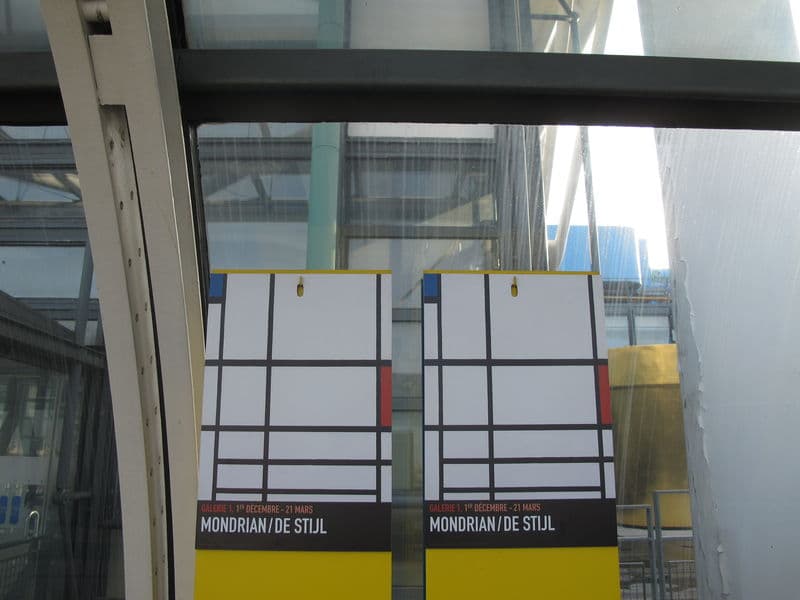
Mondrian – de Stijl: a pretty cryptic title for the ignoramus I was before I saw this exhibition ...
So, De Stijl: a journal founded in 1917 by Theo Van Doesburg that served as a platform for Neo-Plasticism until 1931. It brought together painters and architects who, without really forming a movement in the strict sense, helped shape “a new understanding of art” : Neo-Plasticism:
“A more conceptual approach to making art, based on universal values.”
Clear as mud to you? Me too!
If you’re in the mood for some pompous, elitist commentary that borders on mental masturbation, whatever you do, don’t forget to grab an audio guide!
Otherwise, here’s my take:
Mondrian, who flirted with Fauvism early on, developed a passion for trees, which gave us this:
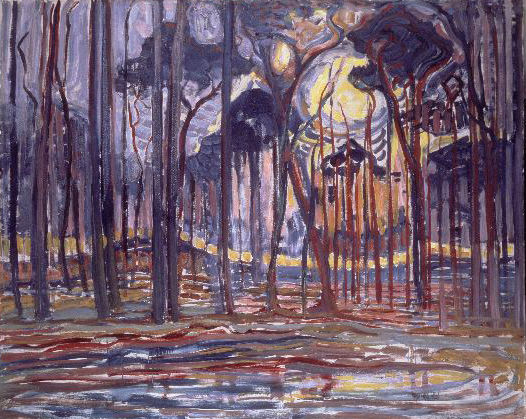
And then this, once he started heading in the direction of Cubism ...
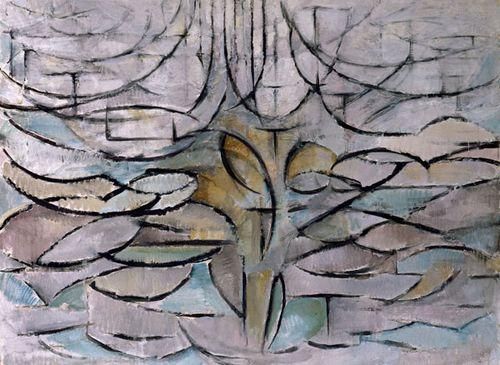
He kept stripping things back and whittling down his palette until he arrived at these horizontal and vertical lines framing blocks of color—primary colors only. Neo-Plasticism was born! It has a charter with eight rules, and the only one I managed to remember was this one, the last:
“All symmetry is to be ruled out”!
And Mondrian keeps exploring ... “the search for a rhythm, a kind of dynamic pulse in the color” (thanks, audio guide!)
As the “dominance of white” becomes more and more apparent—and that’s according to the learned lady on the audio guide—and color all but disappears from the canvas, as you can see in this 1937 “Composition in Red, Blue, and White” ...
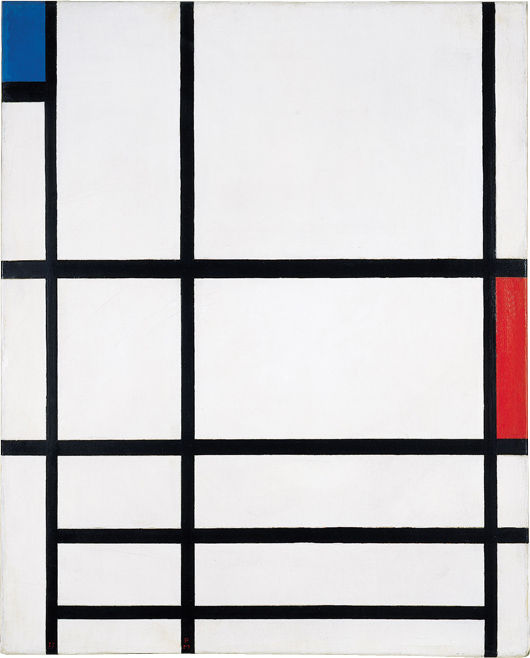
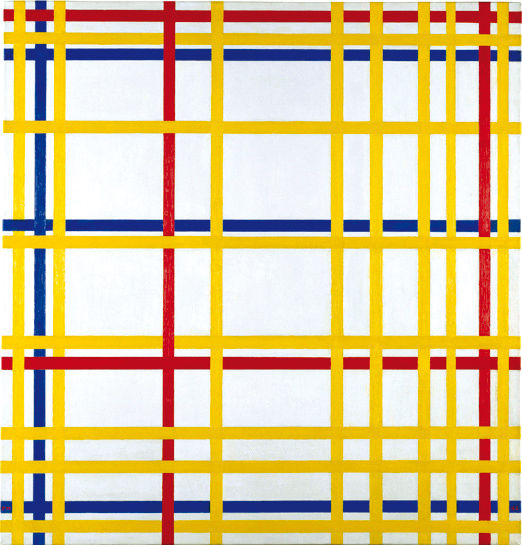
So, with white taking over his canvases, you’d expect the grand finale to be a blank sheet of paper ... But Mondrian moves to New York, and this is what happens ...
So how could I not think of this legendary commercial? I’ll let you discover it—or rediscover it, as the case may be ... Whatever you do, watch it all the way through: it’s a masterpiece!
So Mondrian did belong to a real movement that crossed disciplines, with Neo-Plasticism as its road map ...
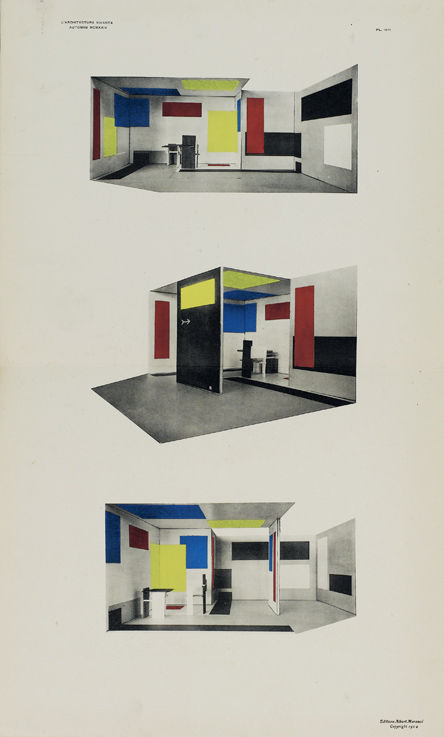
Mondrian started out with Cubism and went down a path that led him to “flat blocks of color and a diminished role for color.” But to my mind, he really comes into his own when architects take up his movement—in other words, when it’s catapulted back into 3D! That’s where I really appreciate his work, in these De Stijl-inspired buildings ... But that’s just me, of course!
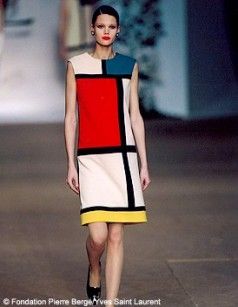
And let’s not forget this immortal work he inspired an artist at least as great as himself to create ...