An Italian team runs the Musée Maillol and brings it to life.
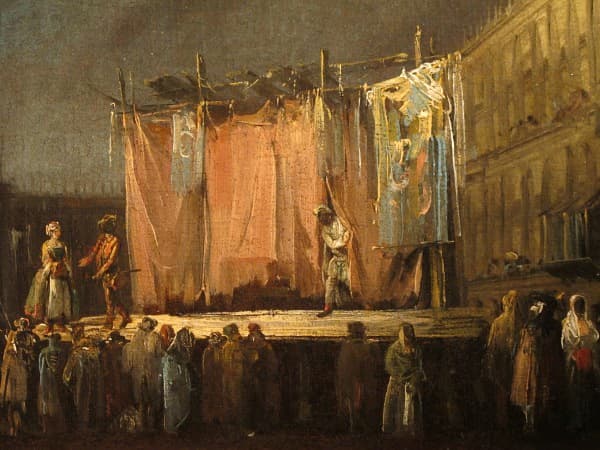
And the exhibition opening today is called Canaletto in Venice!
It’s more than an exhibition: the Musée Maillol is taking you on a real trip to Venice.
Every part of the museum gives you a taste of Venice:
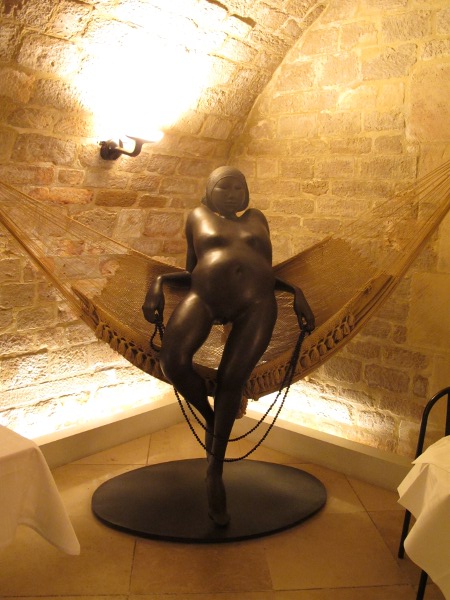
First, the restaurant, which is serving a selection of dishes from the region for the occasion: an absolute treat to enjoy in the vaulted dining room downstairs.
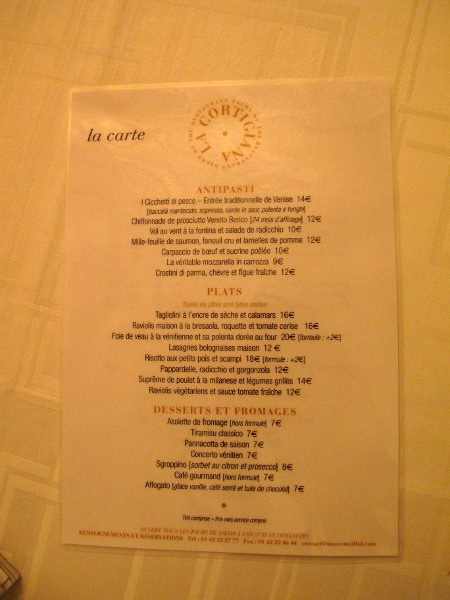
I got to try several antipasti and loved them! If the main courses and desserts live up to that preview, you absolutely have to stay for lunch!
Then there’s the shop, where everything has a connection to the exhibition or to Venice itself.
And there’s a film, too, shot in Venice for this exhibition, as the Musée Maillol does for every exhibition it puts together in-house.
And finally, there’s the exhibition itself.
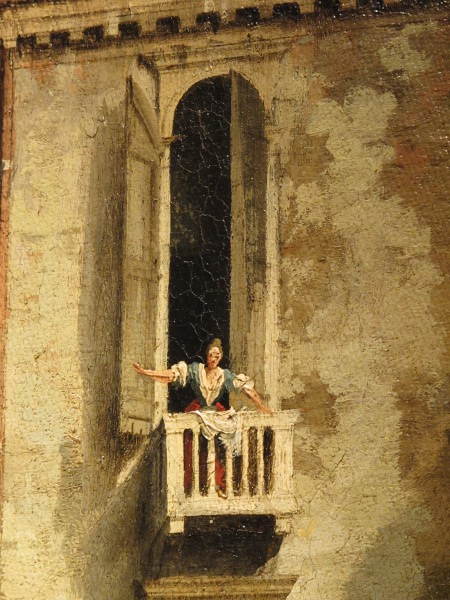
It’s staged beautifully, with wooden walkways running along the walls, like the ones Venice puts up during acqua alta.
And then there’s the exhibition design, from the moldings and finishes on the walls right down to the lettering that guides you through the rooms, whether it’s the one for place Saint Marc or the one for the Grand Canal: everything draws you into the spirit of Venice and shows off the paintings beautifully.
Canaletto is a veduta painter. Let me explain: a veduta was originally a topographical view, meant to be precise and to show a place exactly as it is. All of Canaletto’s paintings were commissioned, mostly by English collectors.
So, Venice: a city of emotions, lights, scents, images, and colors.
Canaletto’s Venice has many sides:
Luminous skies, sunlight falling on the facades, water everywhere...
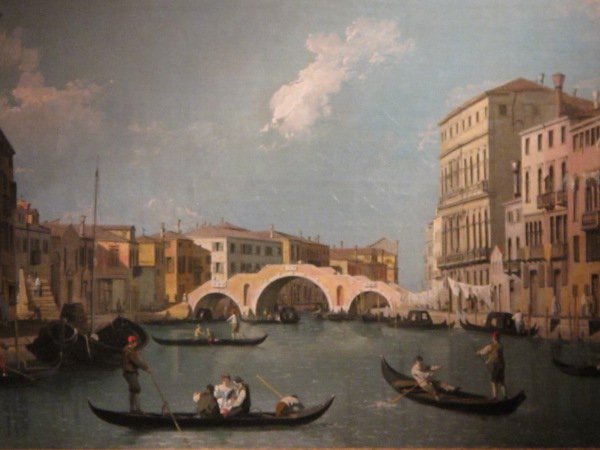
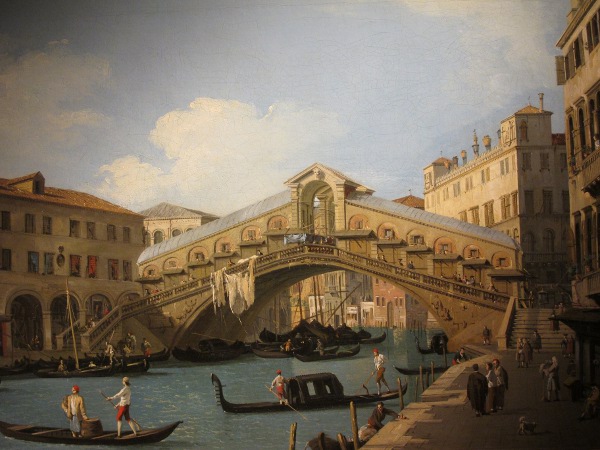
Everyday people who bring to life a city that, by the 18th century, had lost a little of its former splendor...
And buildings rendered with such academic precision they almost look like classroom exercises.
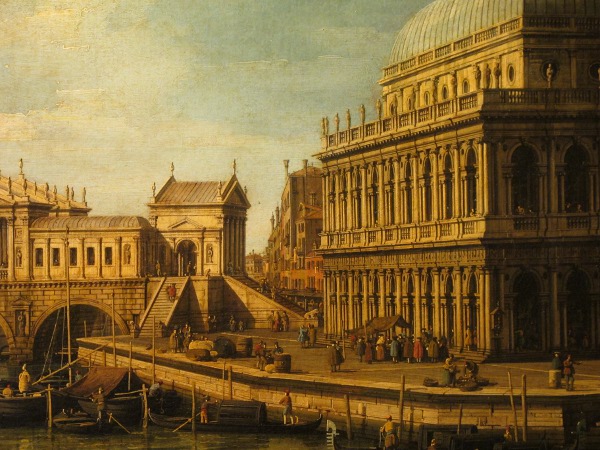
To my mind, Canaletto’s paintings reach their peak around 1725.
Take this painting, where the sun catches a sail or a facade and bathes it in light.
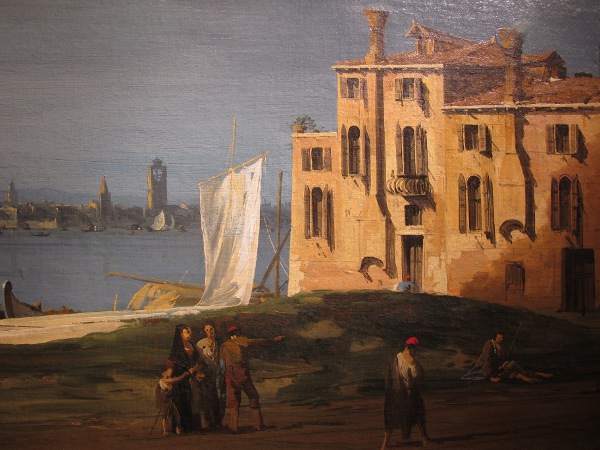
After that, the paintings take on a sinister heaviness, with all the light and life gone.
You can admire his sketchbook, a one-of-a-kind piece that’s survived the ravages of time, and flip through it digitally right there. You can also take a look at his tools, like the camera obscura, a sort of ancestor of the camera that let him reproduce what he saw down to the smallest detail...
Of course, you can’t help admiring the precision of every detail on every facade.
And of course the topographical accuracy is there, even if he seems to have taken a few liberties, moving a bridge here and a palace there.
But here’s the question I asked myself as I left the exhibition: what did he invent, what did he revolutionize, whether in how we see or how we feel? Where’s his vision, what movement did he shake up, or even create...?
Now all that’s left is for you to go, come up with your own answer, and have a Venetian experience of your own.
Musée Maillol 61 Rue de Grenelle 75007 Paris
Phone: 01 42 22 59 58