Bourdelle et l'antique – Sculpture in the Early 20th Century
The Bourdelle et l'antique exhibition takes visitors through the sculpture of the early 20th century, looking at how ancient sculpture influenced the artists who shaped its first few decades.
You get to see just how much ancient Greece shaped Bourdelle’s work, as well as that of his contemporaries, whose work there’s plenty of here to admire.
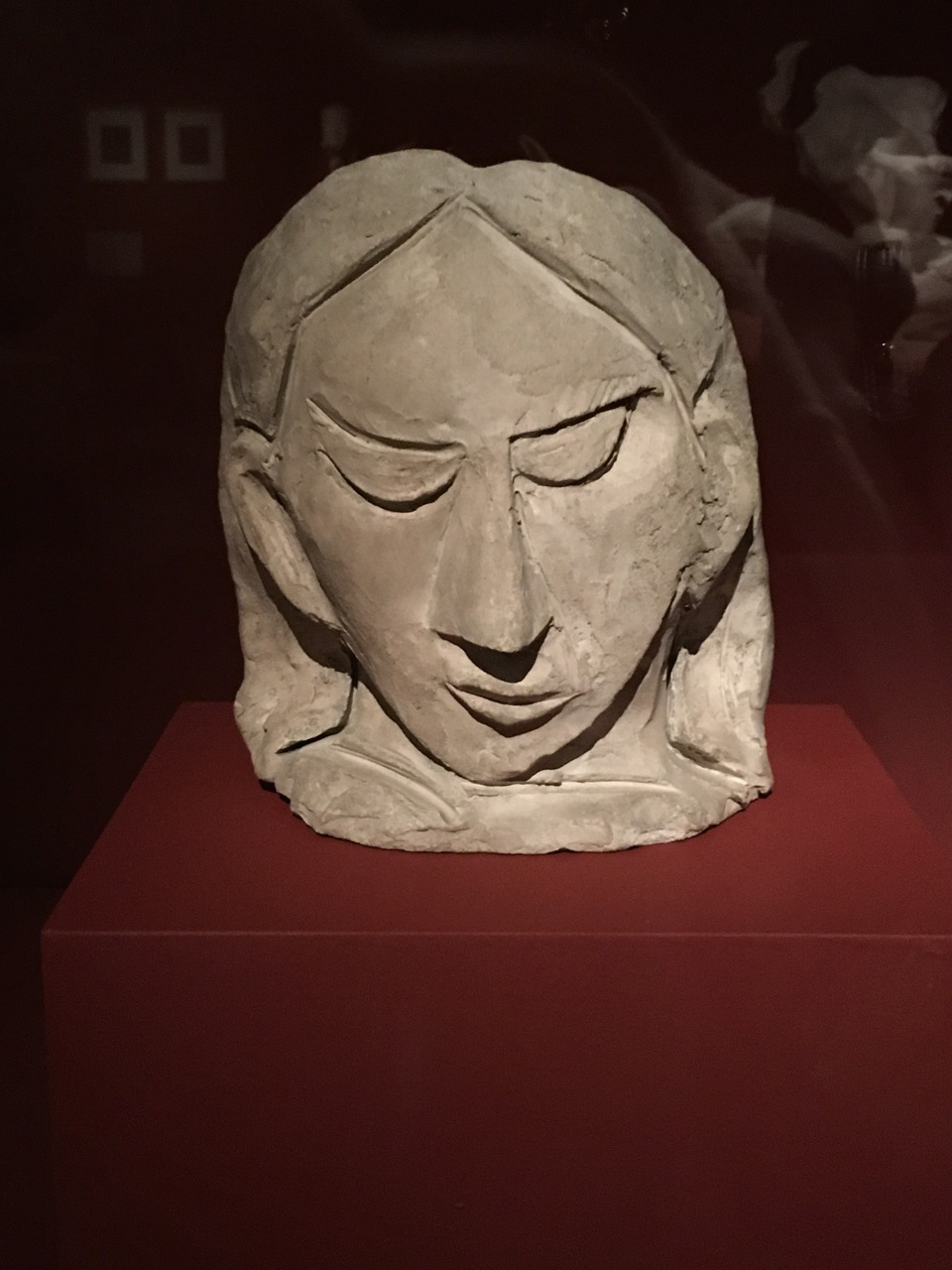
Works by Picasso, Modogliani, and, of course, Rodin and Maillol (Bourdelle’s sworn enemy) help make the point and bring out the parallels in their work.
A chance to (re)discover the sculptor’s work and the work of everyone who inspired him.
Nearly 150 works by a range of artists are brought together around Bourdelle’s own major works, which mark the stages of the exhibition.
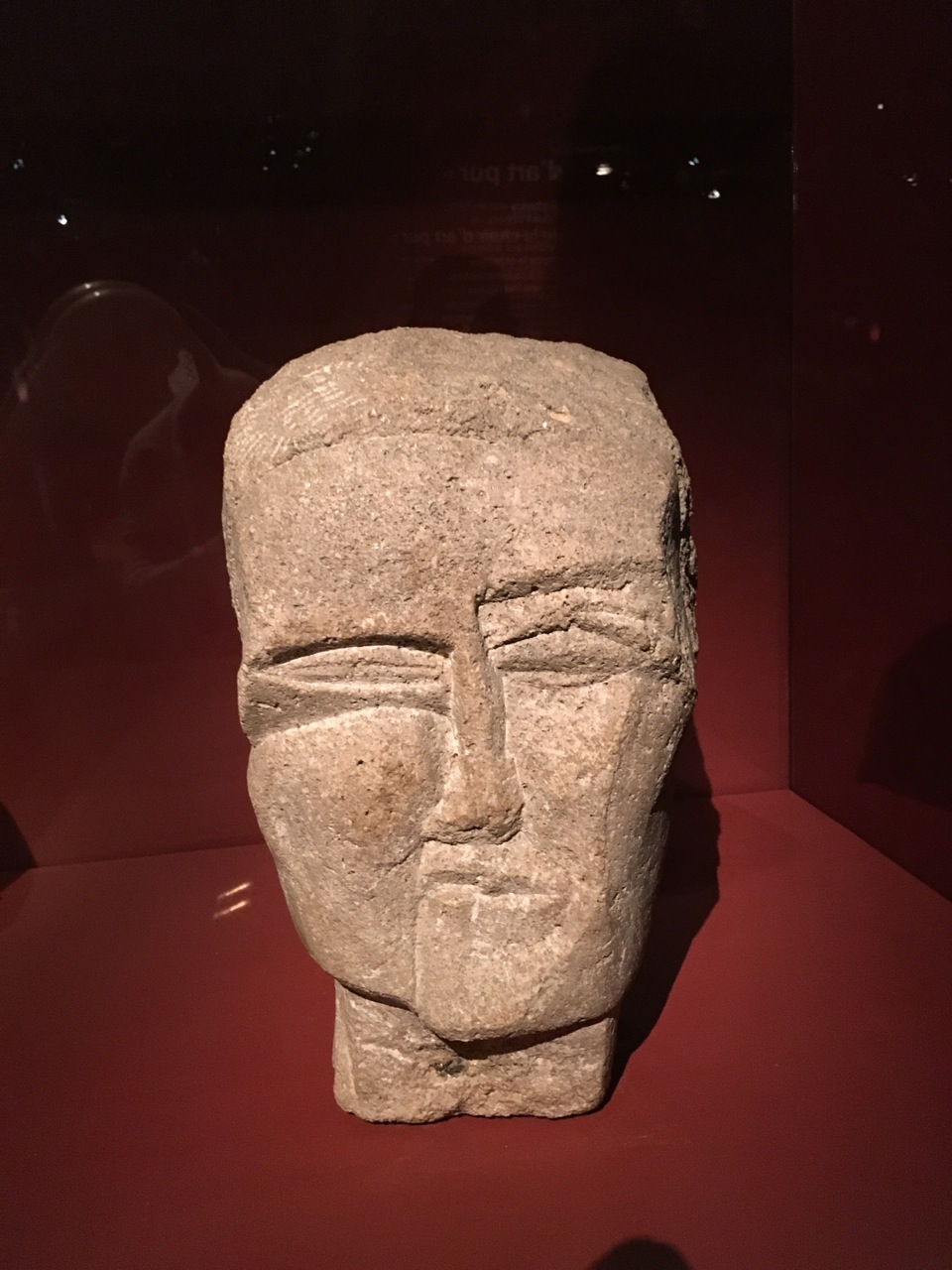
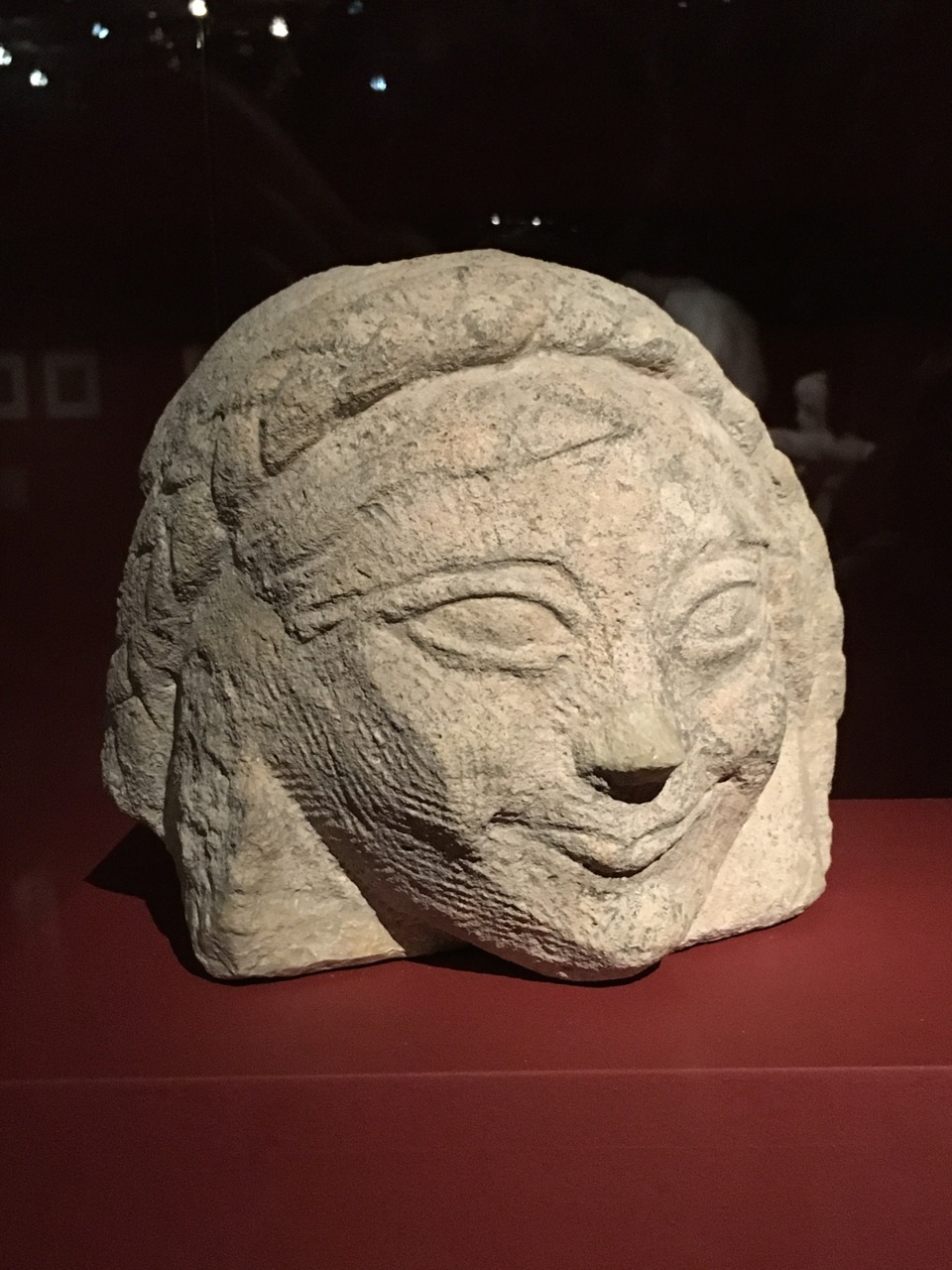
Bourdelle et l'antique – A Walk Through the Exhibition
The exhibition is organized around seven major works by the artist. For each one, we see where he found inspiration in ancient Greece, in the works he observed, studied, and analyzed before creating something of his own.
The first sculpture is this bust of Pallas.
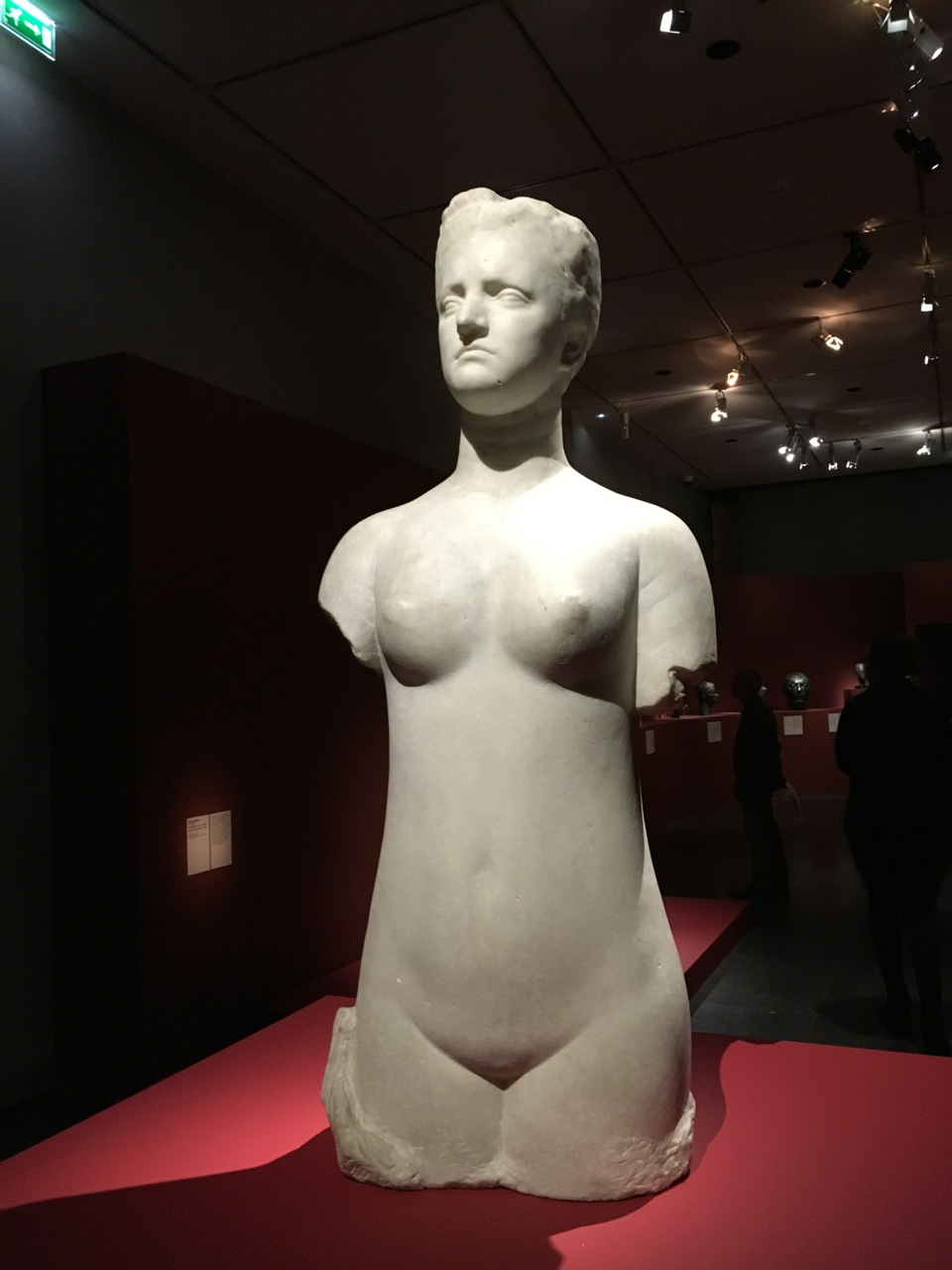
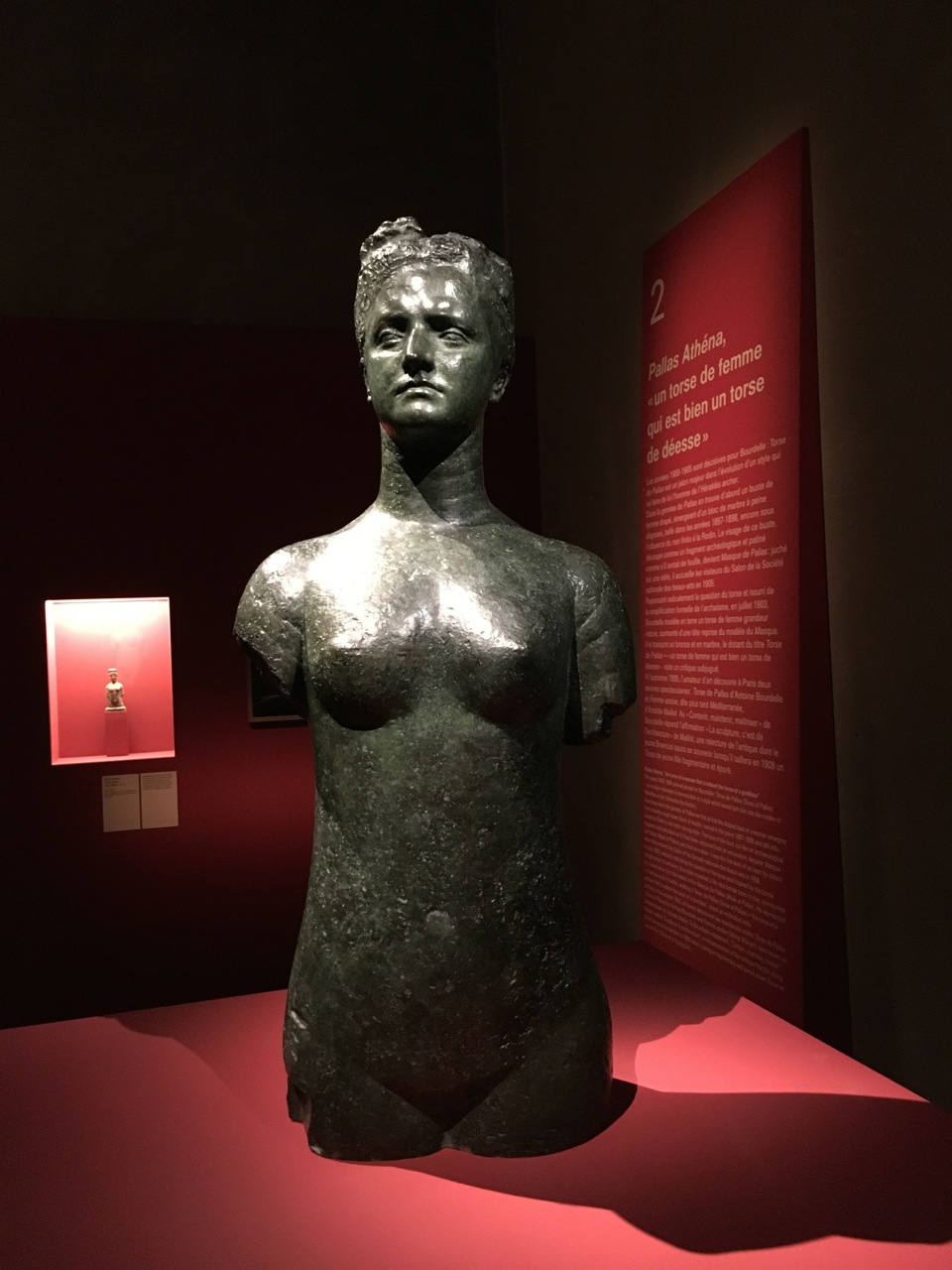
Her face would become a mask, as if it had just been unearthed at an archaeological dig.
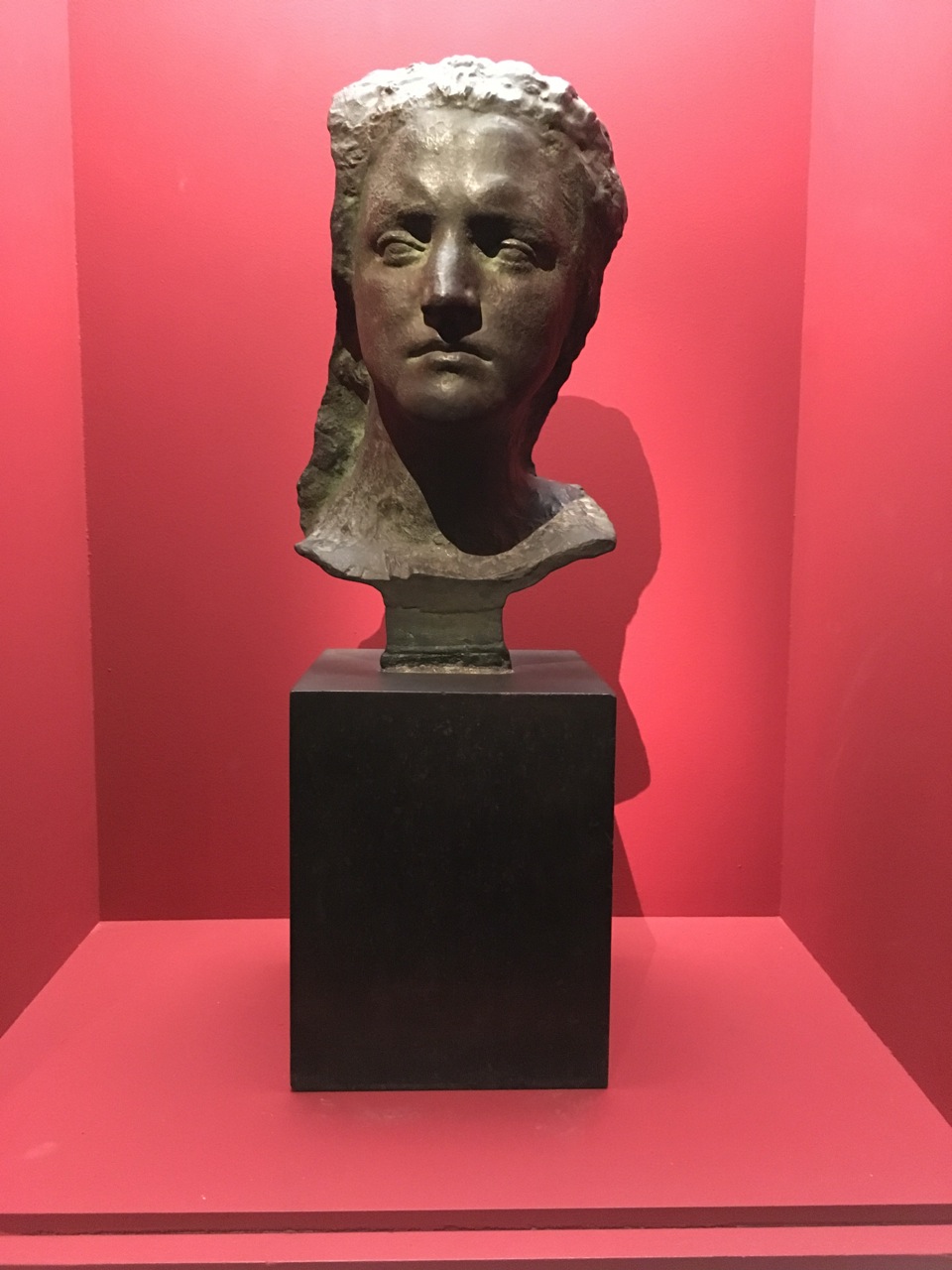
This piece marks a real turning point in his work.
It’s 1903, and he’s modeling a bust of a woman in clay; here we see it in marble and bronze.
He starts stripping forms down to their bare essentials, moving away from the realism of some of his earlier work.
The second piece we discover is his Apollo.
He starts with a clay model that he sets aside and leaves untouched.
When he finds it again years later, he decides to create a new work from this battered portrait, worn down by time and the elements.
The piece remained little known for years, and the bronze version on display here, with its golden patina, would become the final work.
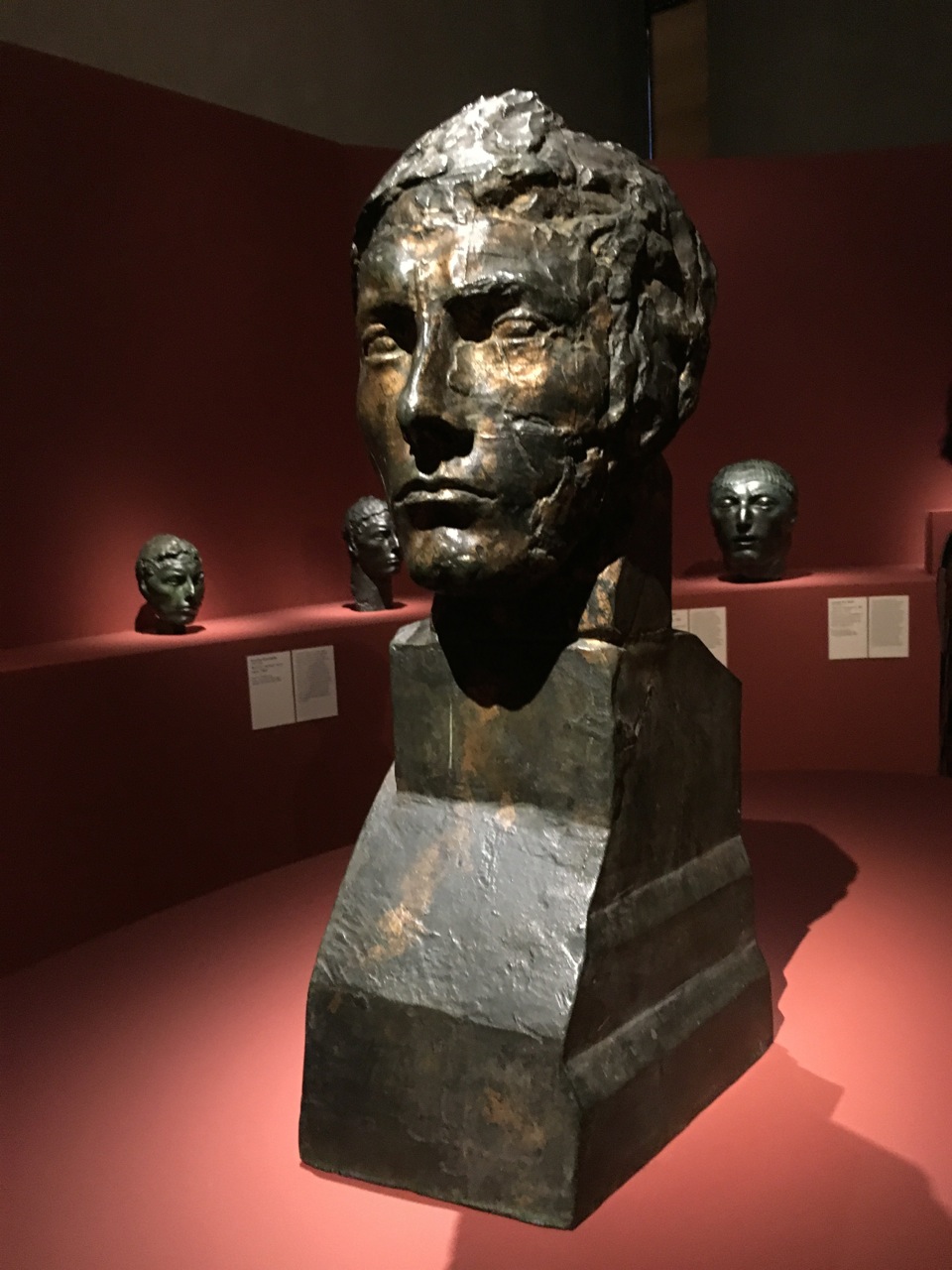
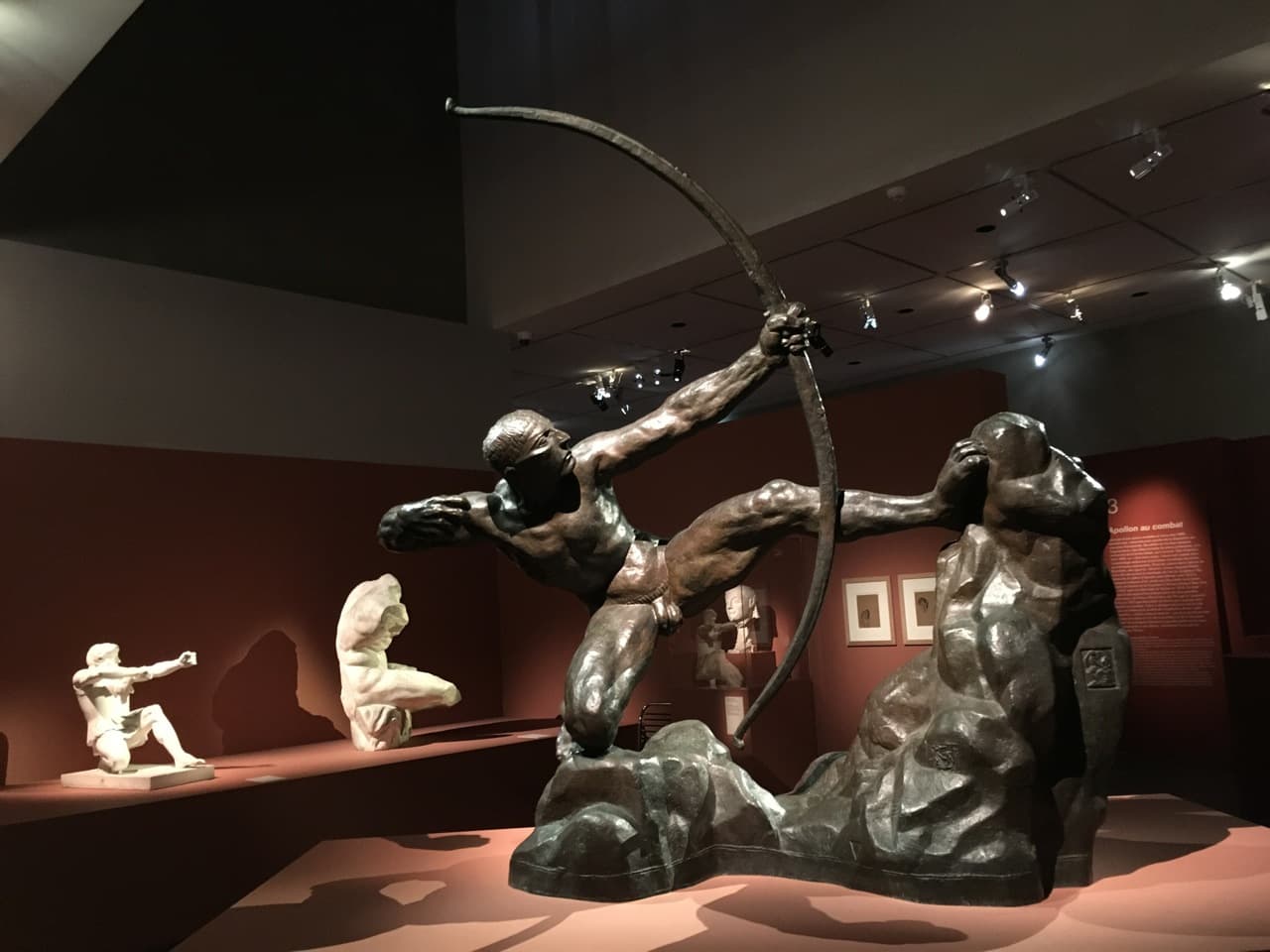
Next we come to the room that houses one of the sculptor’s most famous works: Hercules the Archer.
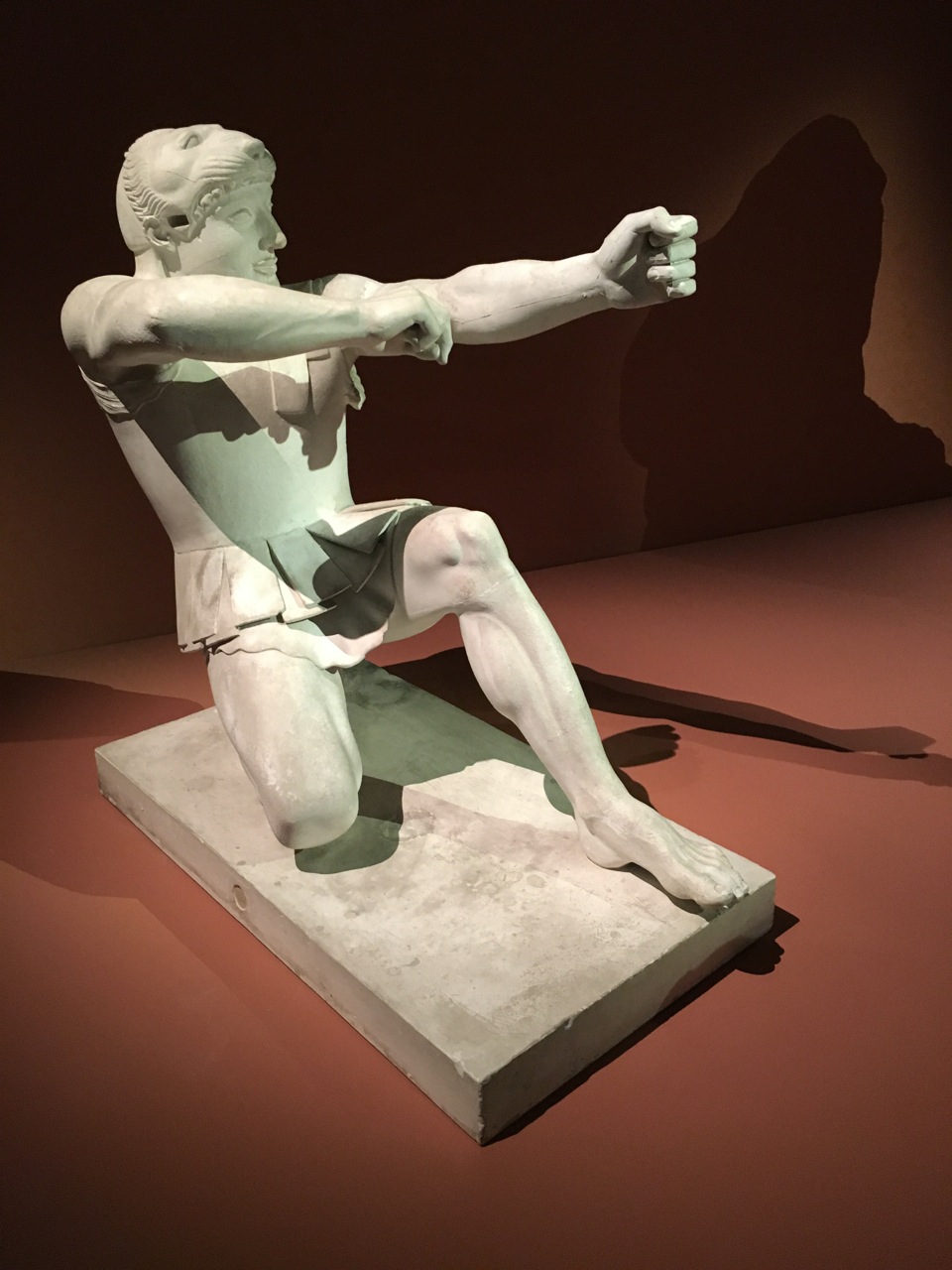
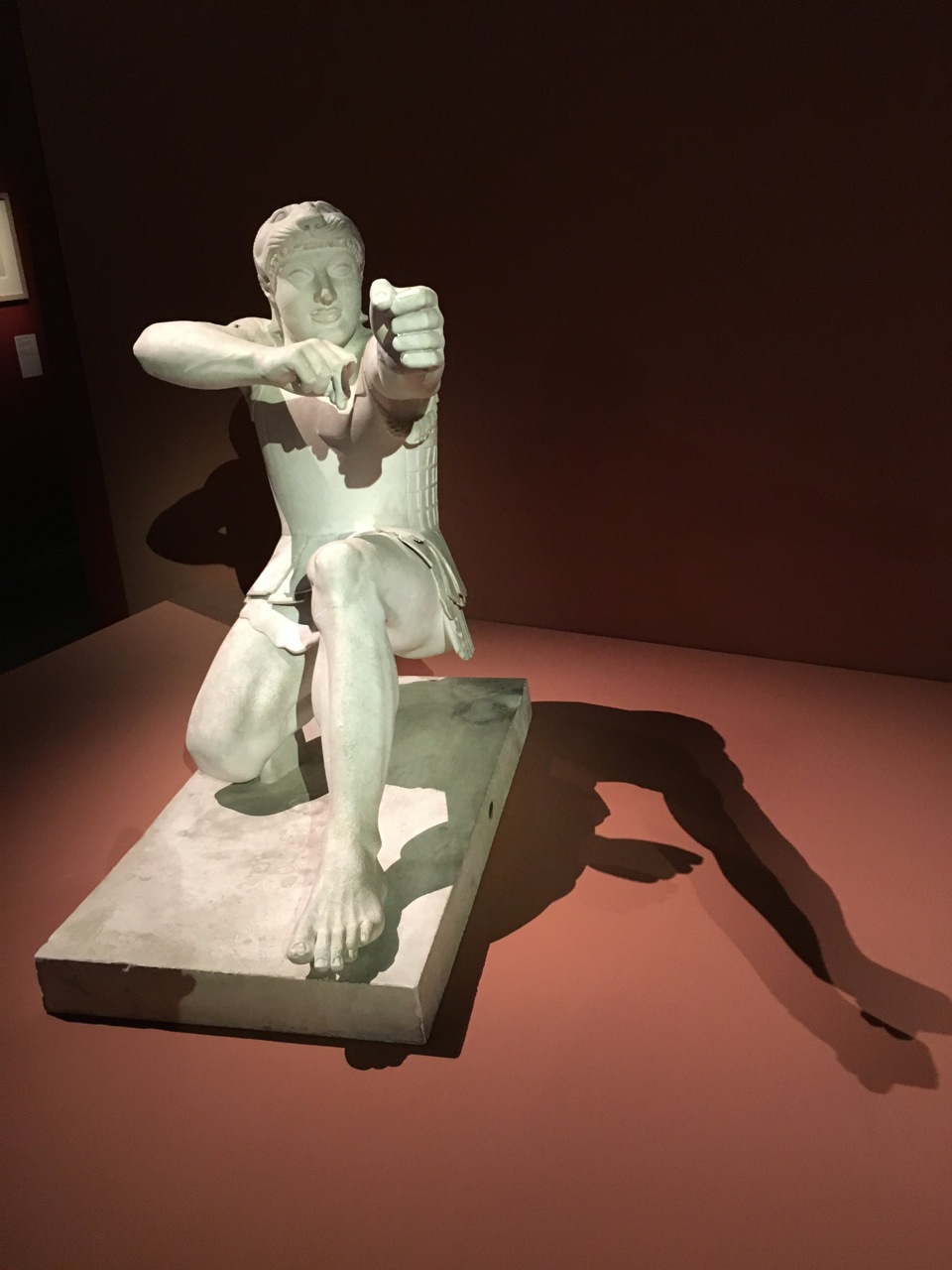
Taking his cue from the famous archer of Aegina, Bourdelle gives this monumental work a sensual, almost sexual quality.
It stands in the middle of the room, so you can take it in from every angle.
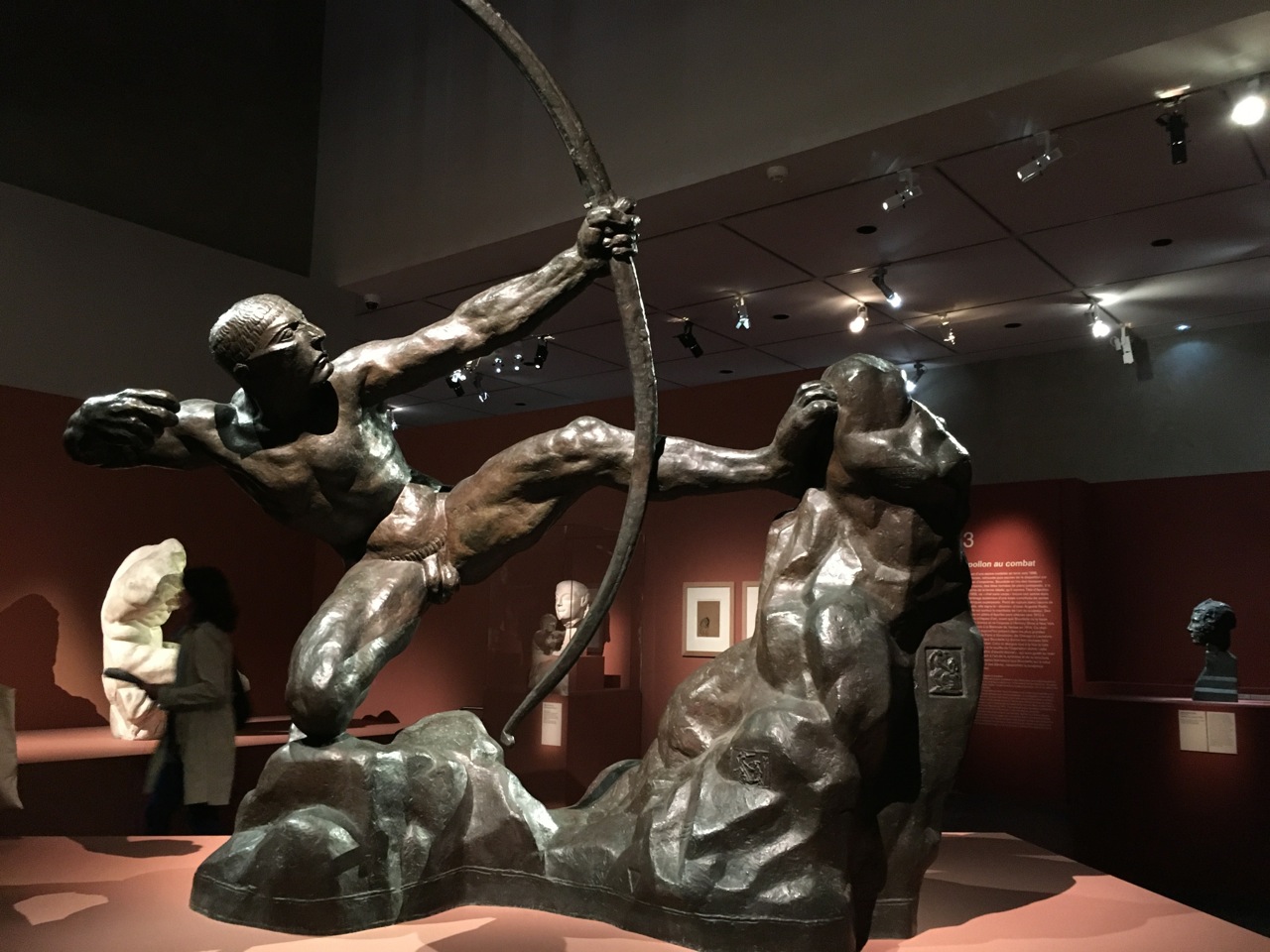
Hercules the Archer was a huge hit at the 1910 exhibition, and you can see how it inspired other artists, like Henri Laurens in his sculpture of a woman playing the harp.
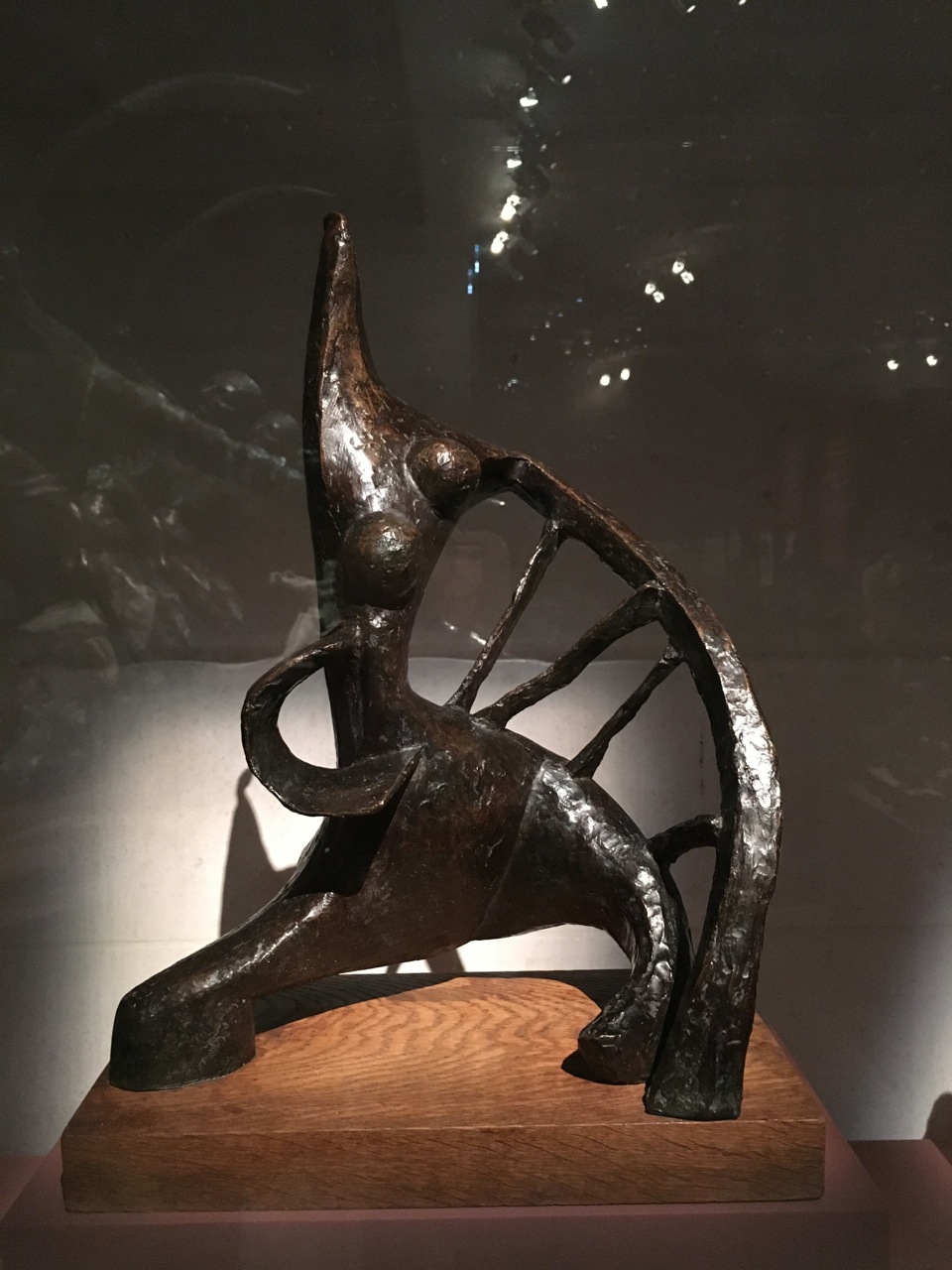
Next comes his Cléopâtre, a portrait of his Greek student, Cléopâtre Stevastos.
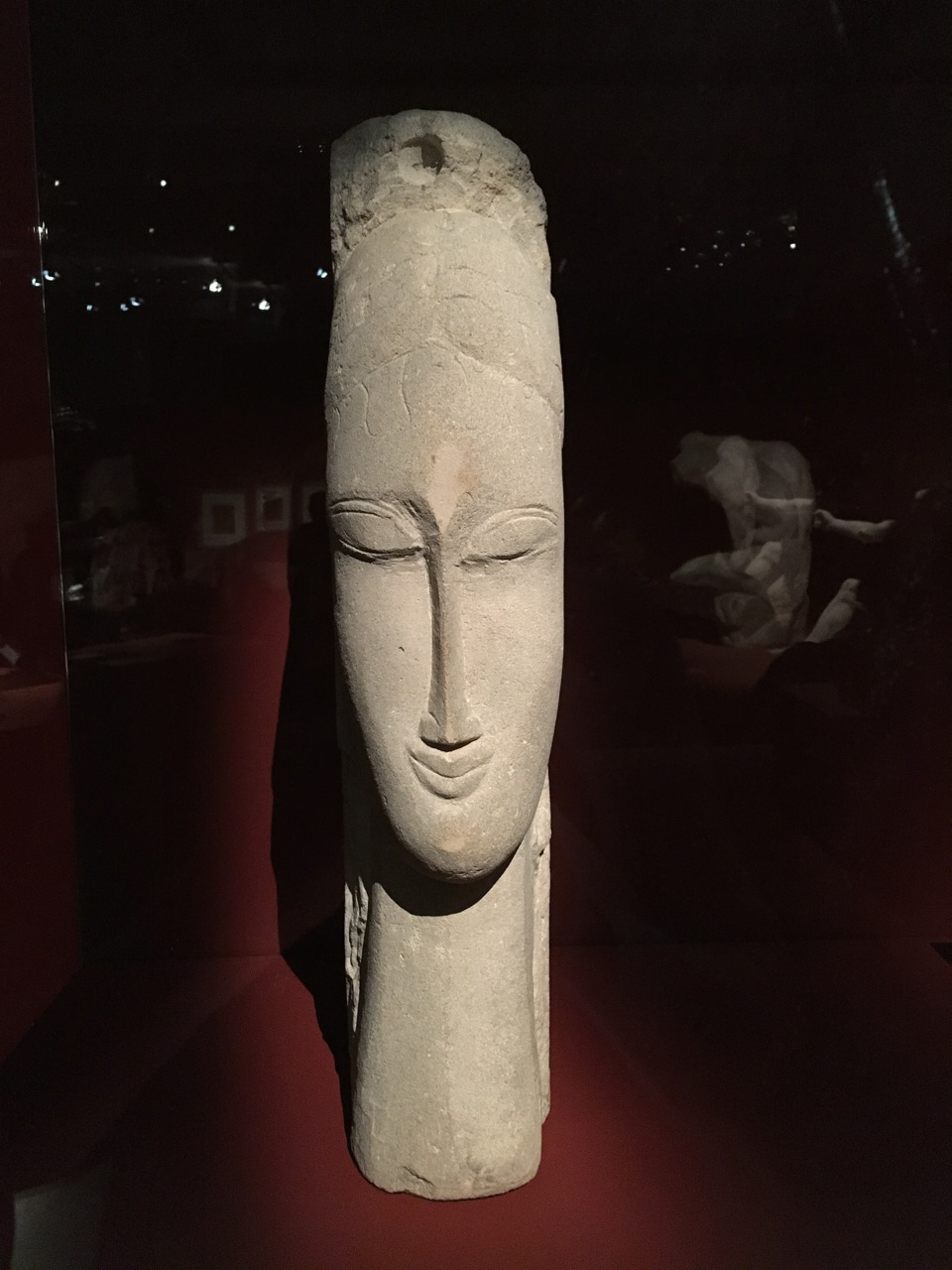
Several works by artists of the period are displayed together, so you can see how they influenced and inspired one another.
And I fell in love with this little gem by Modigliani.
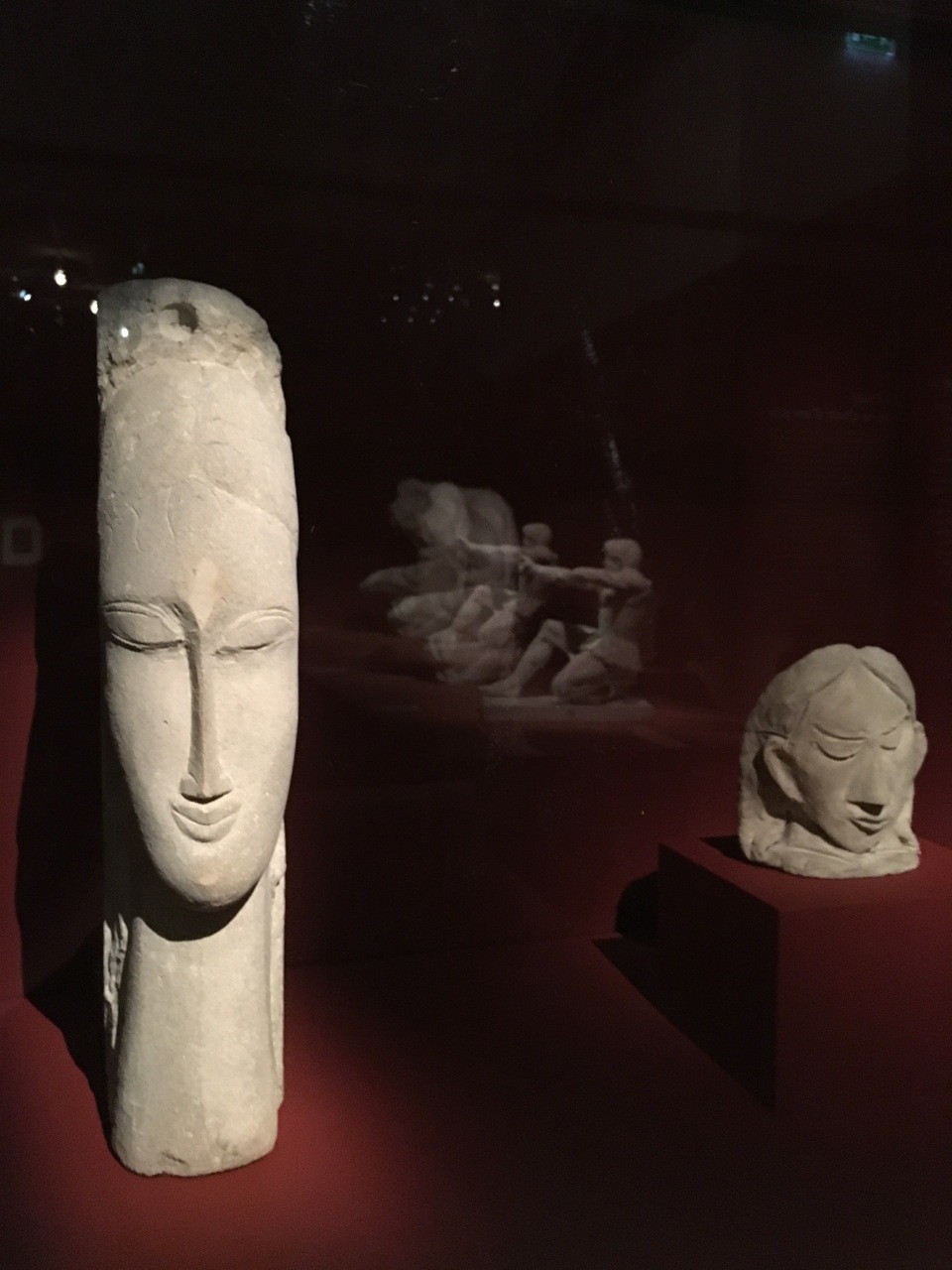
The visit continues
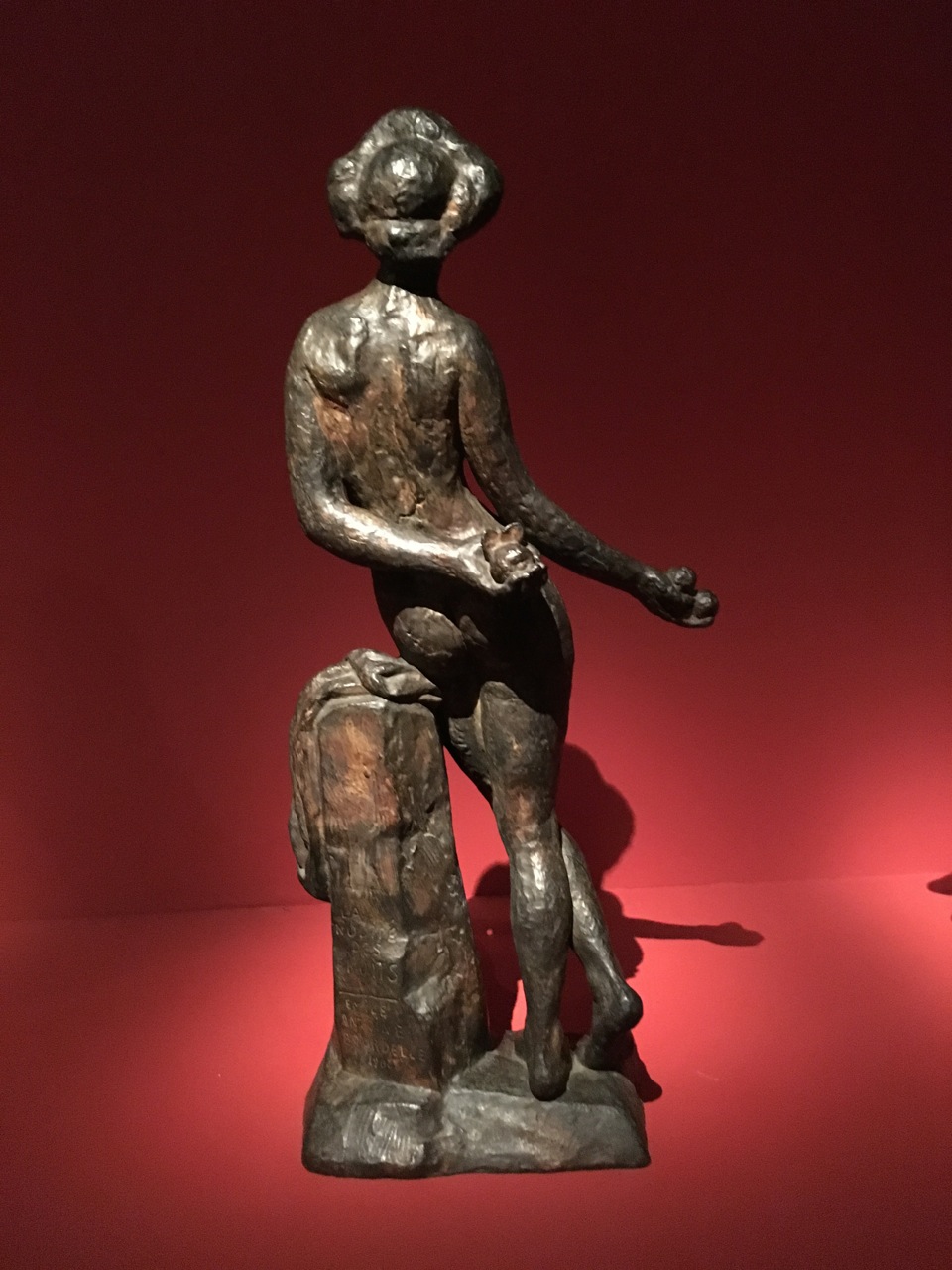
We go from a goddess, Pénélope
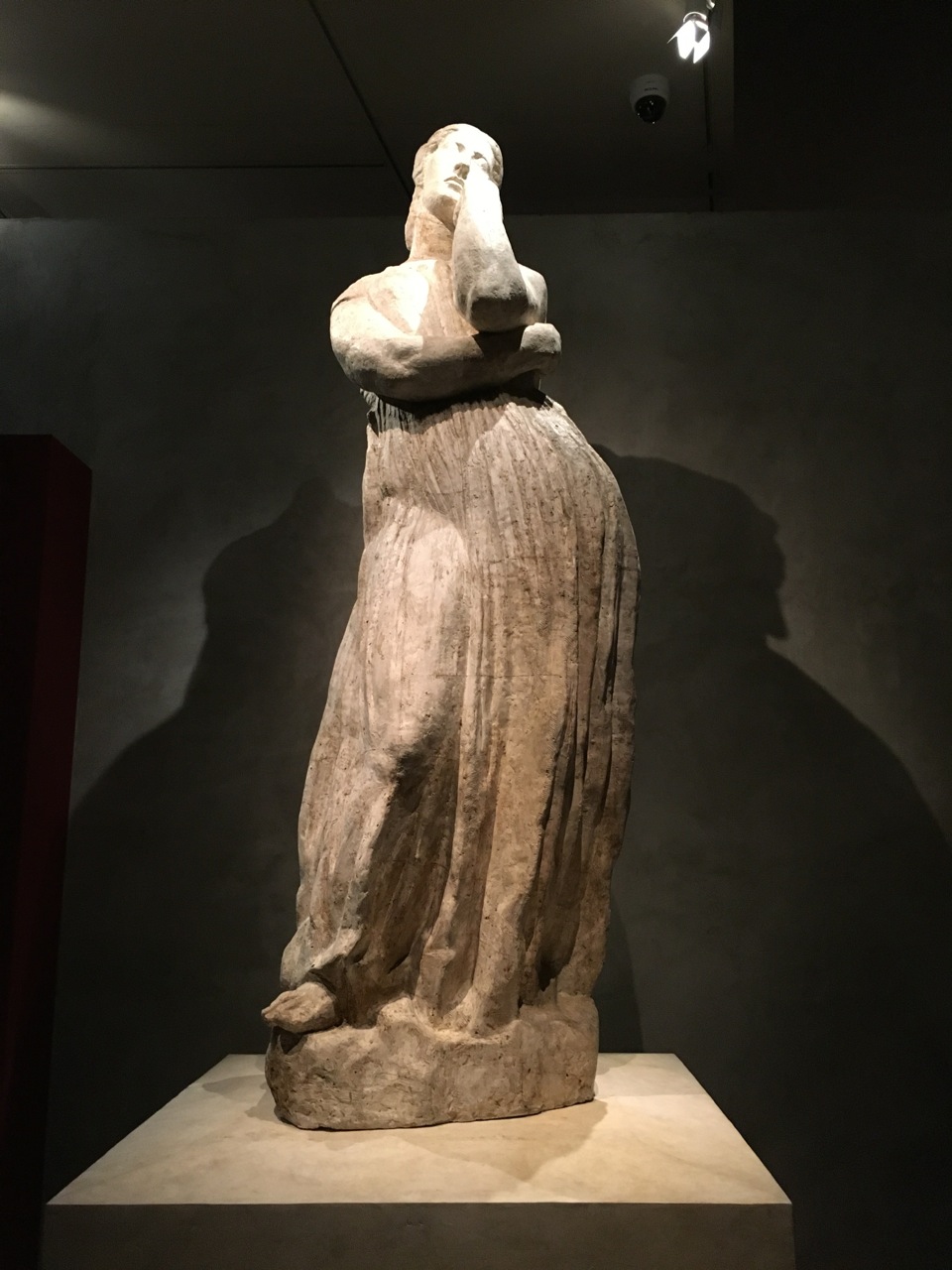
To the world of fauns and satyrs, which, along with Isadora Duncan, inspired the frescoes Bourdelle created for the théâtre des Champs Elysées.
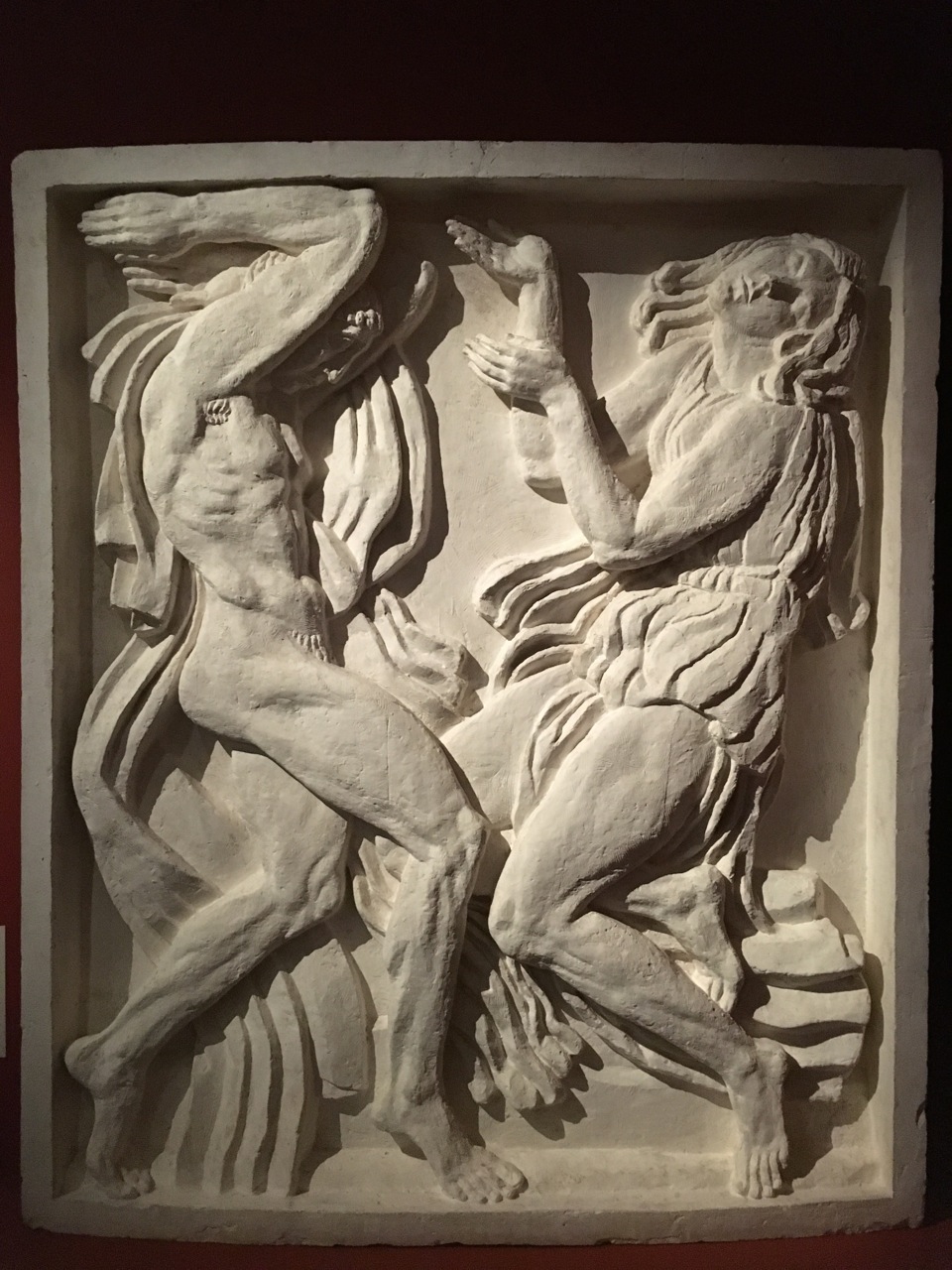
So this exhibition is a trip through time, from ancient Greece to the early 20th century, but also a journey through the sculpture of the century’s first few decades.
Bourdelle et l'antique from October 4, 2017, to February 4, 2018
Musée Antoine Bourdelle
18, rue Antoine Bourdelle 75015 Paris
Tel.: +33 (0)1 49 54 73 73