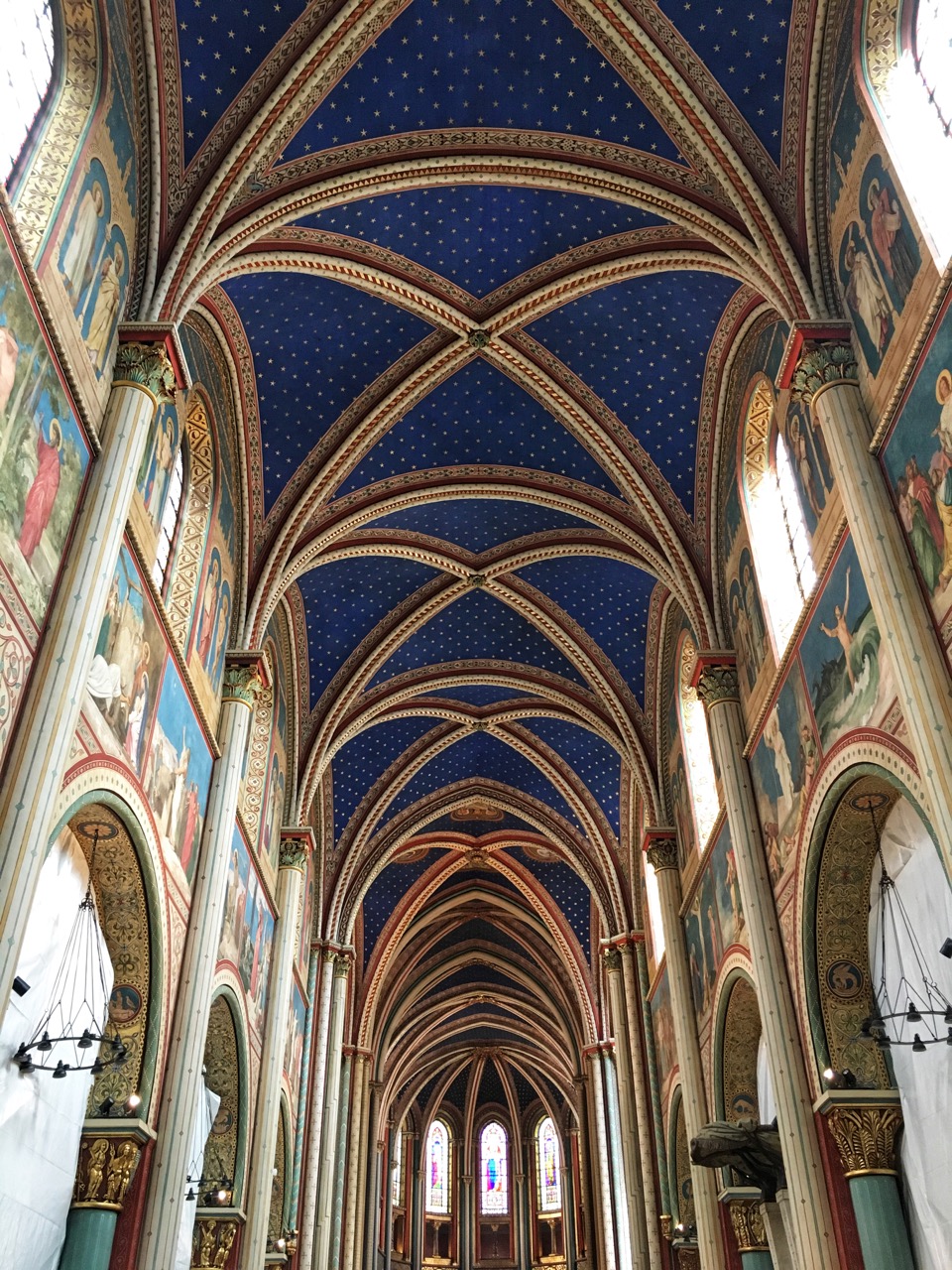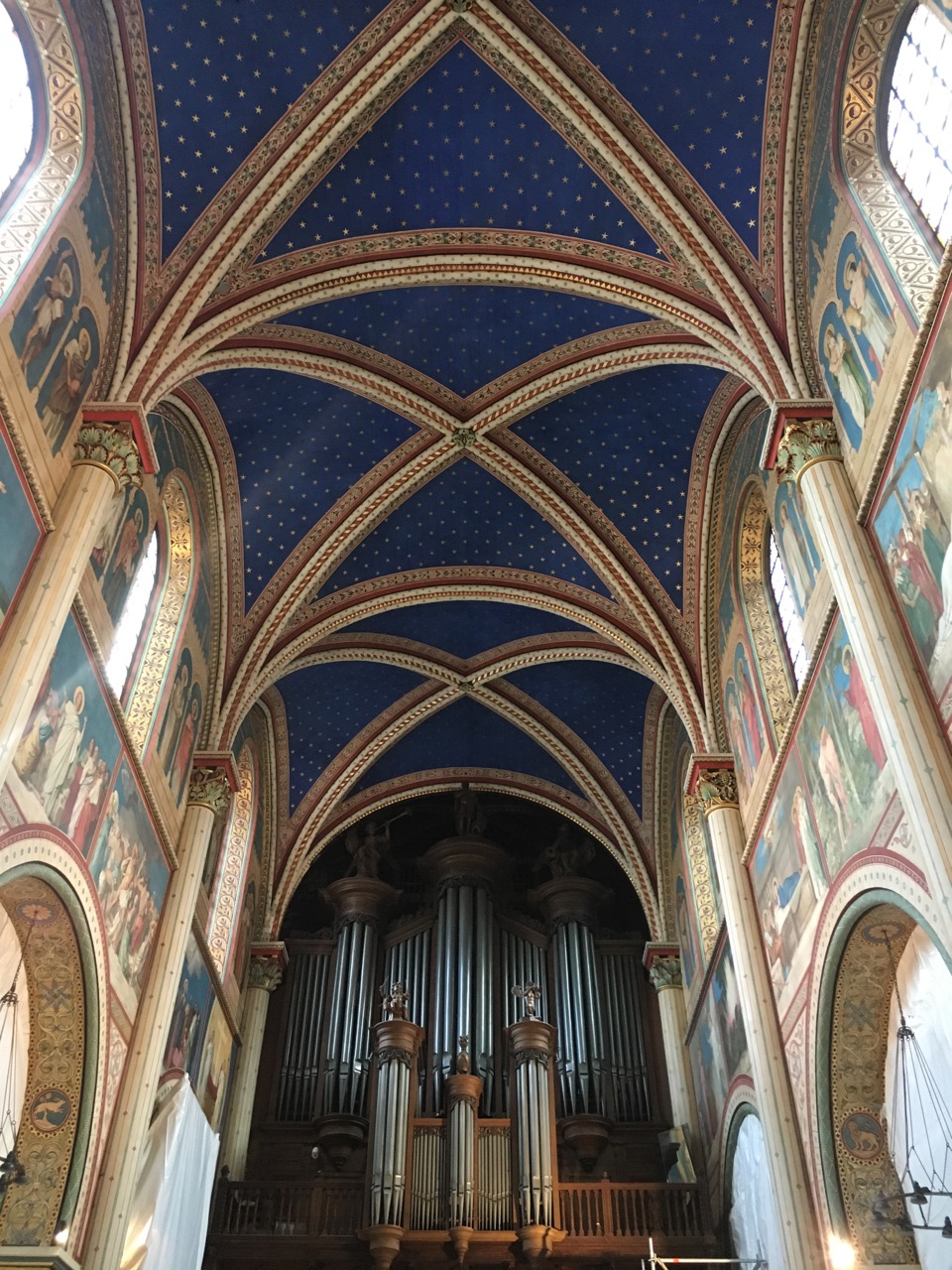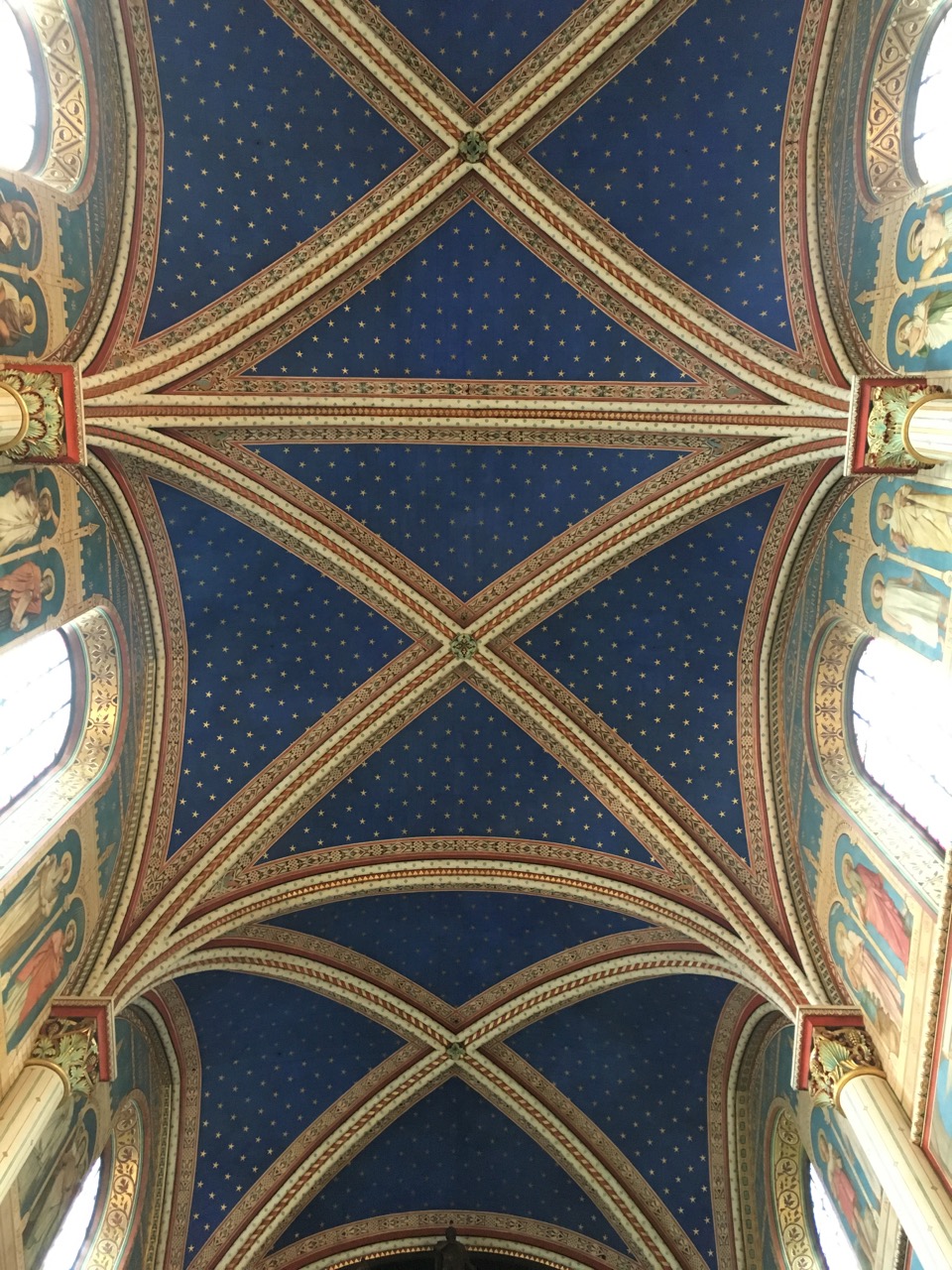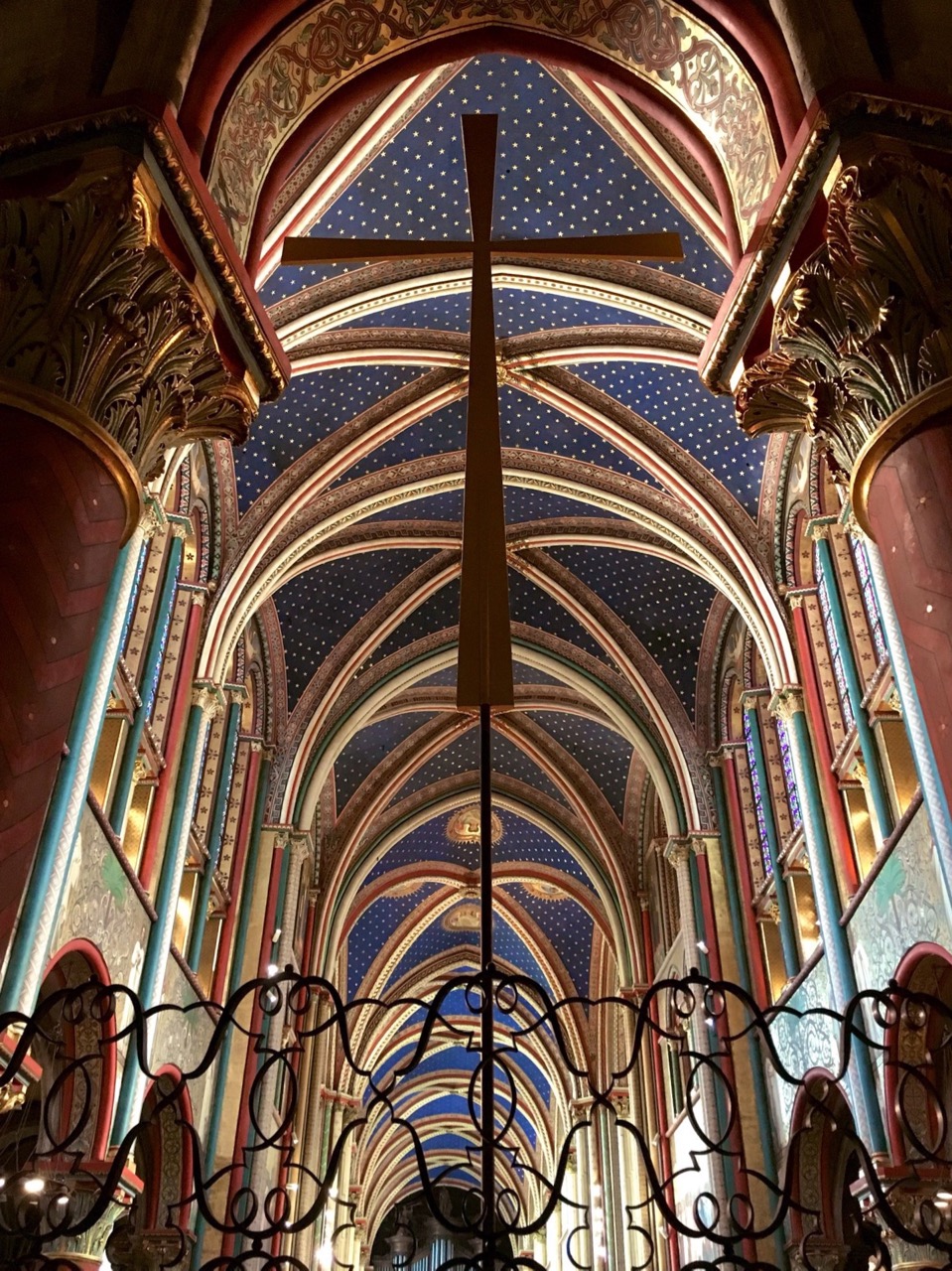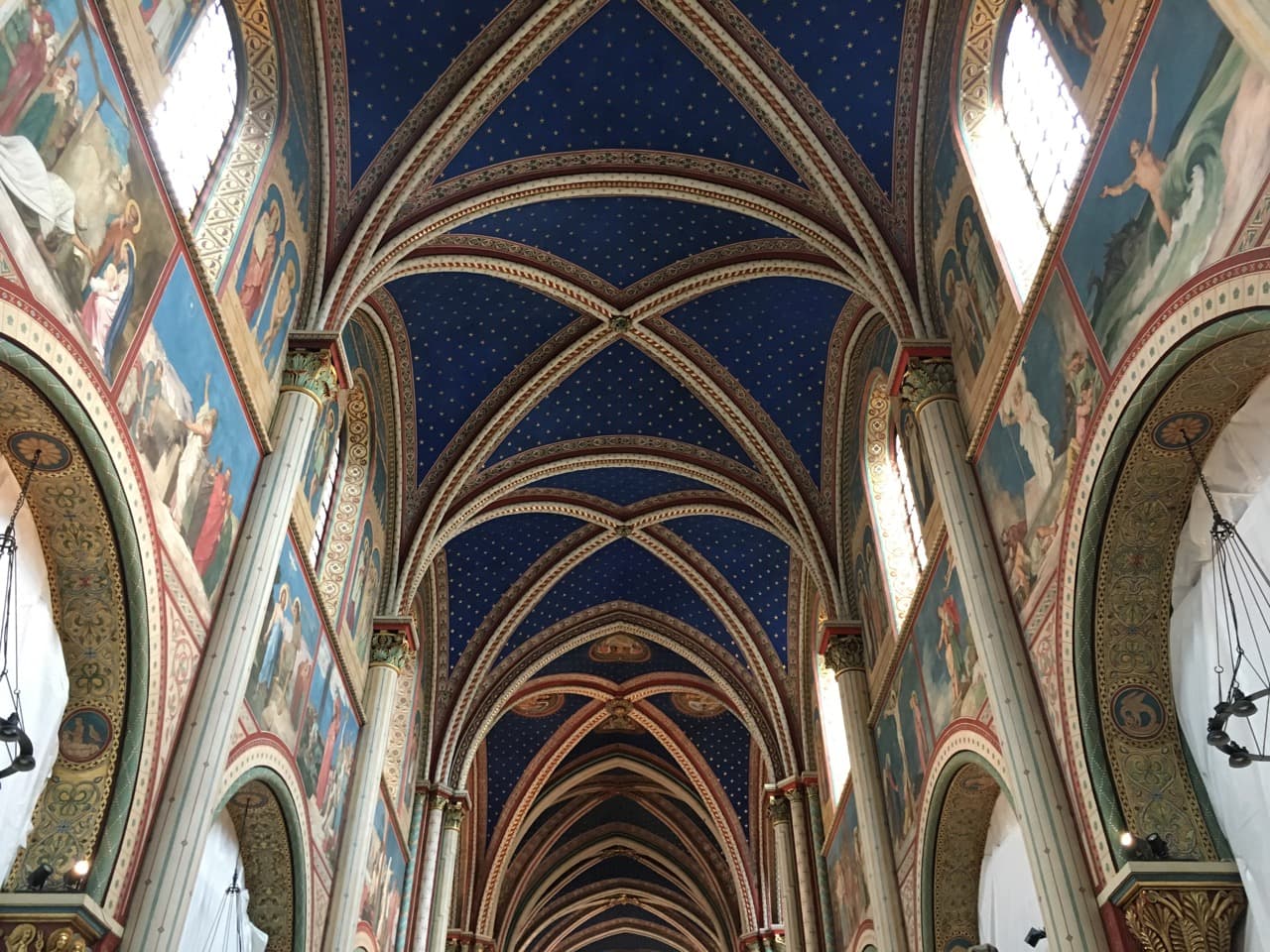
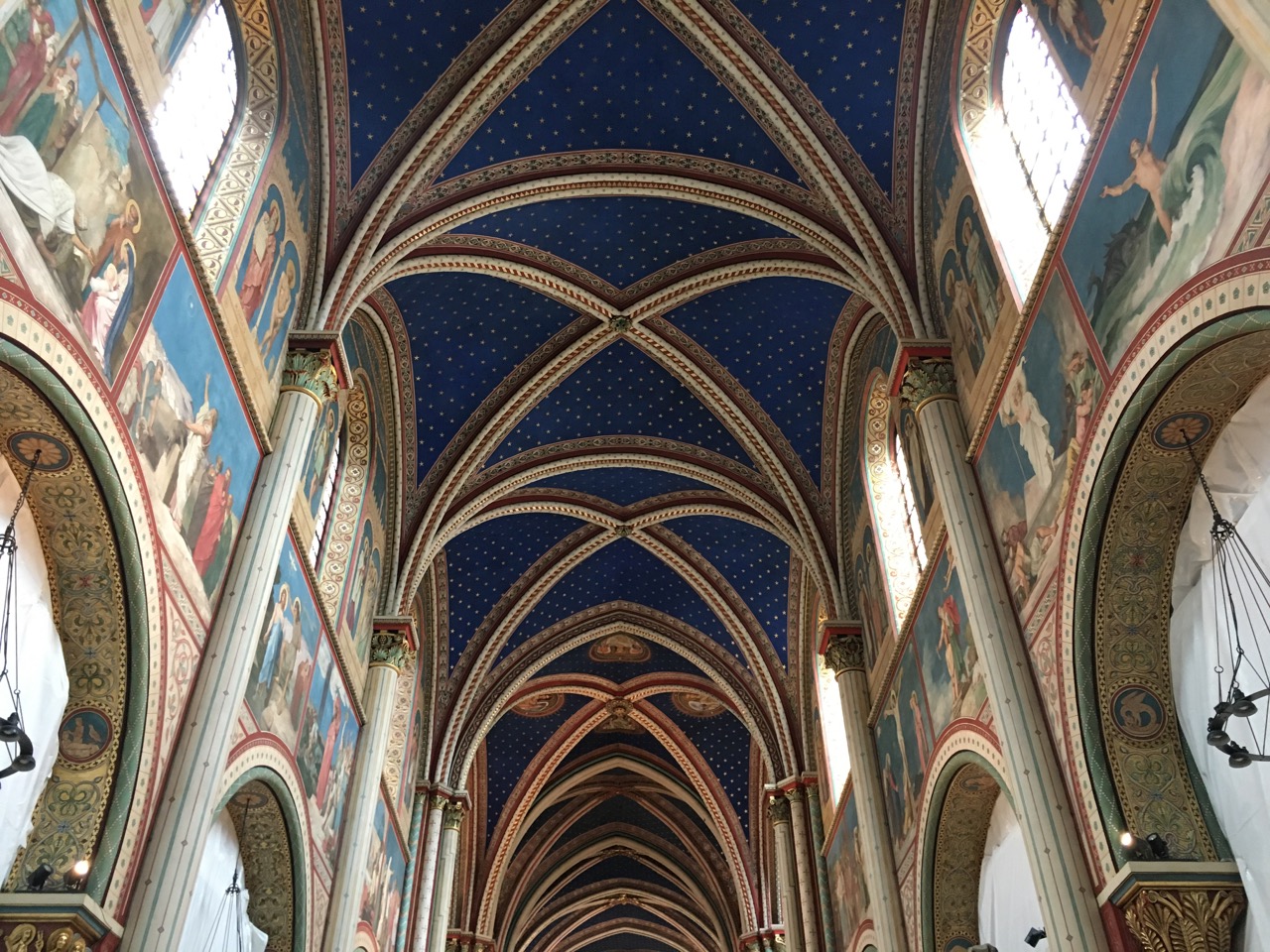
Saint-Germain-des-Près Church is one of Paris’s legendary landmarks. Known as one of the oldest churches in the capital, it’s seen some dark days, quite literally: there was little light, and soot and pollution had darkened the decoration and paintings. If you visited at the end of the last century, you know what I’m talking about! But it’s finally back to its former glory, and now it’s a jewel bursting with color.
Saint-Germain-des-Prés Church: A Brief History
Saint-Germain-des-Prés Church was founded in the sixth century by Childebert, son of Clovis, to house the relics of Saint-Vincent-Sainte-Croix and, later, those of Saint-Germain, bishop of Paris. It was the first royal burial site, before the basilica of Saint-Denis. It saw days of glory and darker ones, too. In the mid-ninth century, the Normans repeatedly attacked the church and threatened to destroy it, occupying it several times, looting it and ransacking its buildings. In the Middle Ages, it came back to life. And it was from the 12th century onward that it began to change, gaining a Gothic sanctuary, an ambulatory and its radiating chapels.
During the Revolution, the church nearly disappeared again and was turned into a saltpeter refinery.
The church may also have narrowly escaped demolition during baron d'Haussmann’s rebuilding of Paris. As part of his plans to reshape the capital, he considered extending the rue de Rennes all the way to the Seine! But it’s still here, and since 2016, a major restoration project has been underway to bring back its brilliance.
Saint Germain des Près: The Restoration
The restoration of Saint-Germain-des-Près Church is now in its third phase, which focuses on the nave.
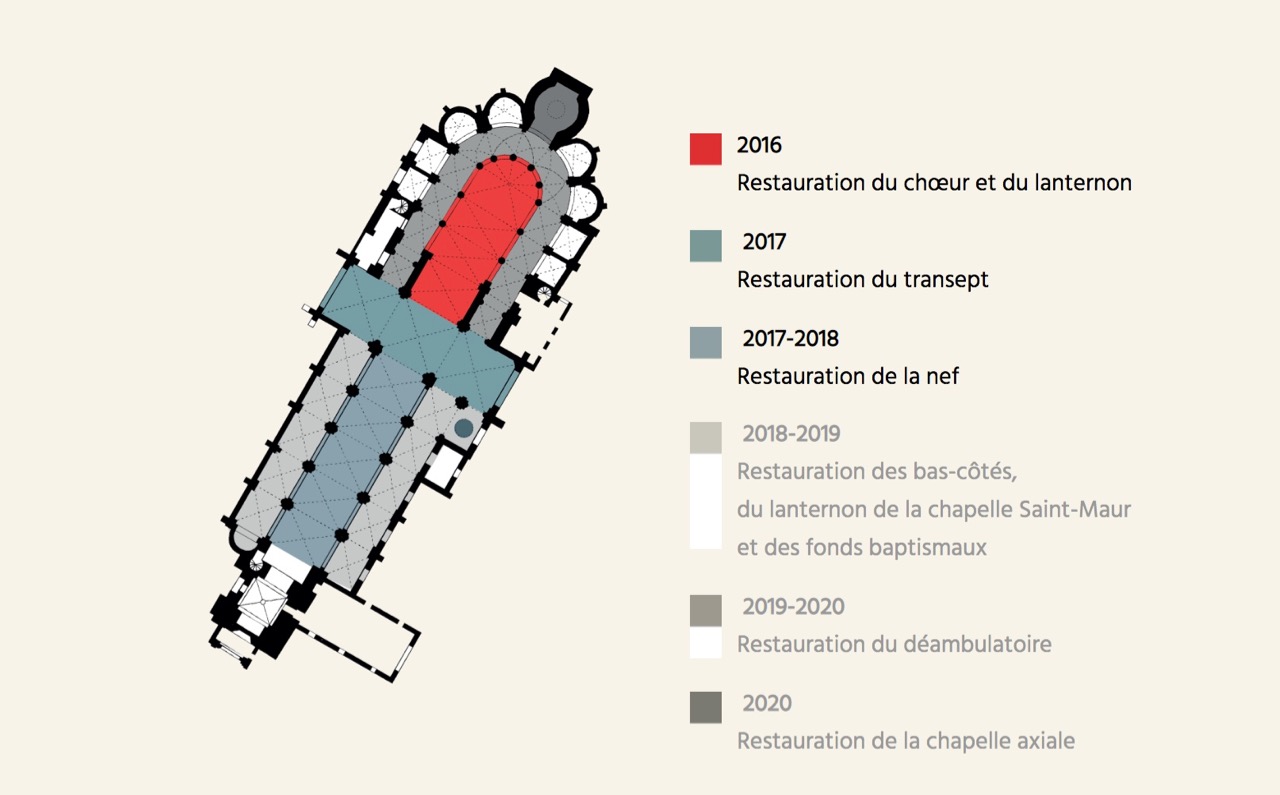
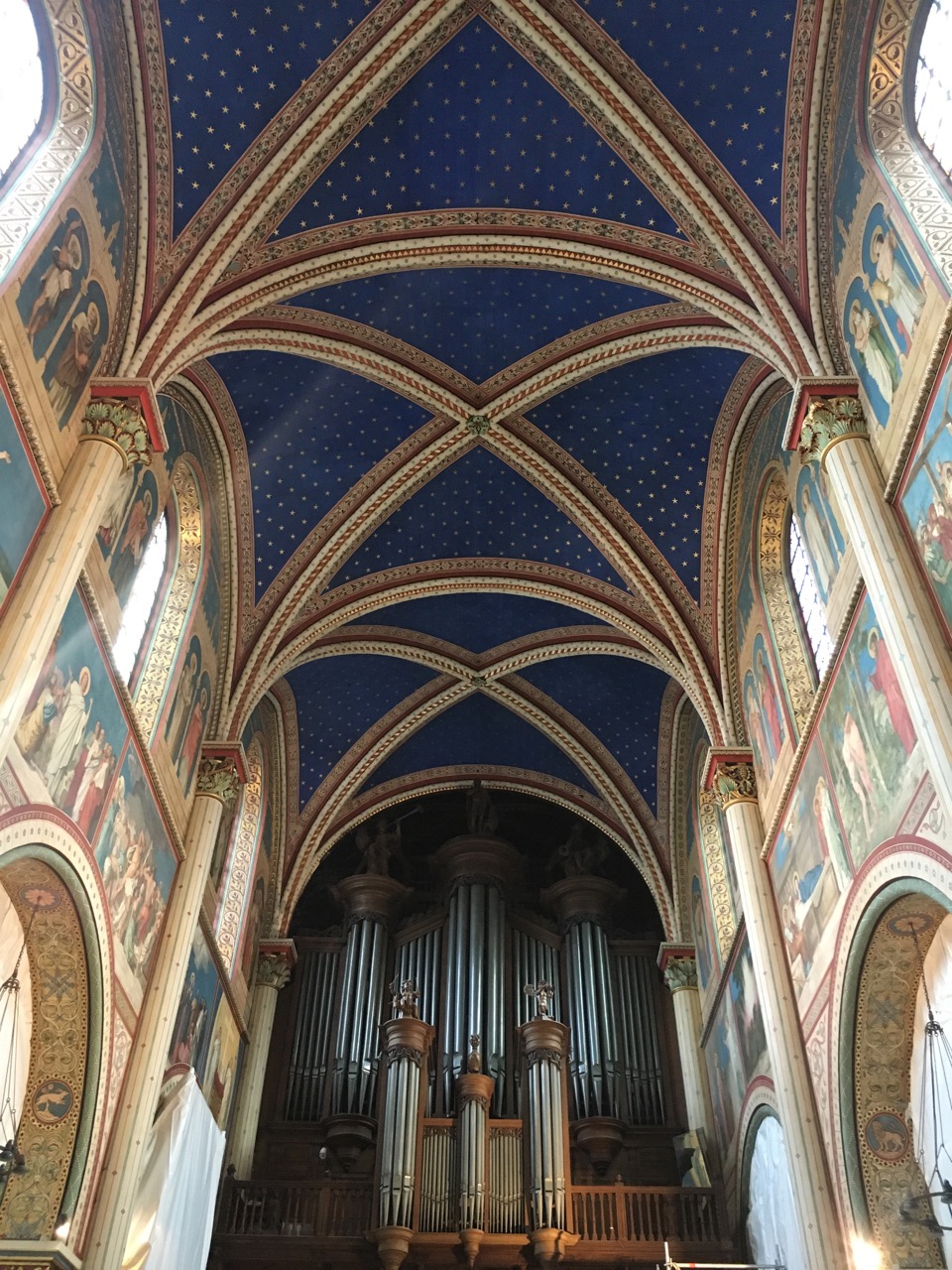
In the 19th century, Hippolyte Flandrin decorated the monks’ choir (1842–1846), part of the transept (1847), and the nave (1856–1864). His mural painting technique involved mixing oil and wax and applying the mixture directly to the plaster. For the restoration, the team carried out a “conservation treatment of the painted decoration” without repainting: they removed dust, secured the paint layer, and gently cleaned the surface. Restoring the nave took eleven months, and now you can admire it in its entirety.