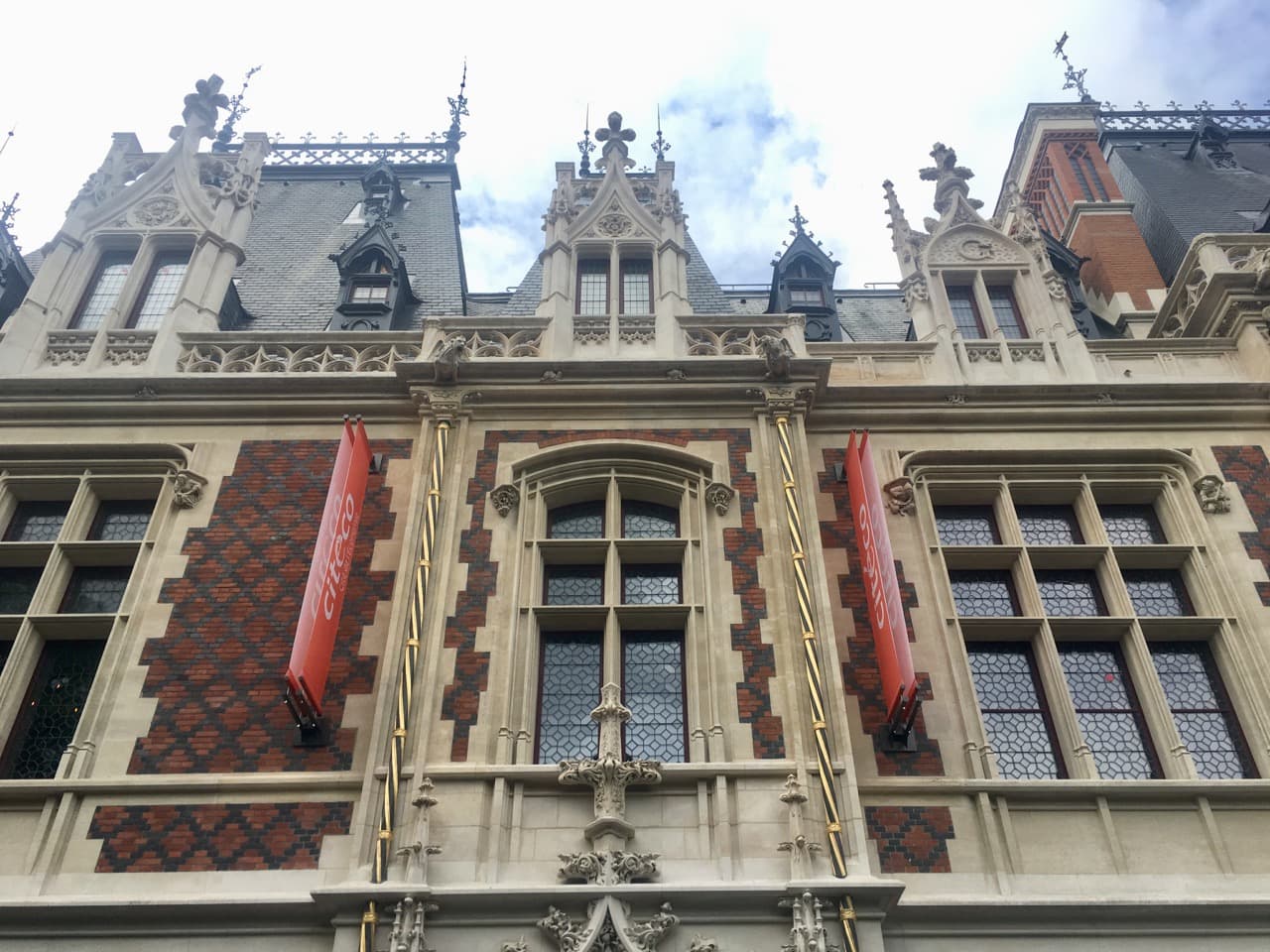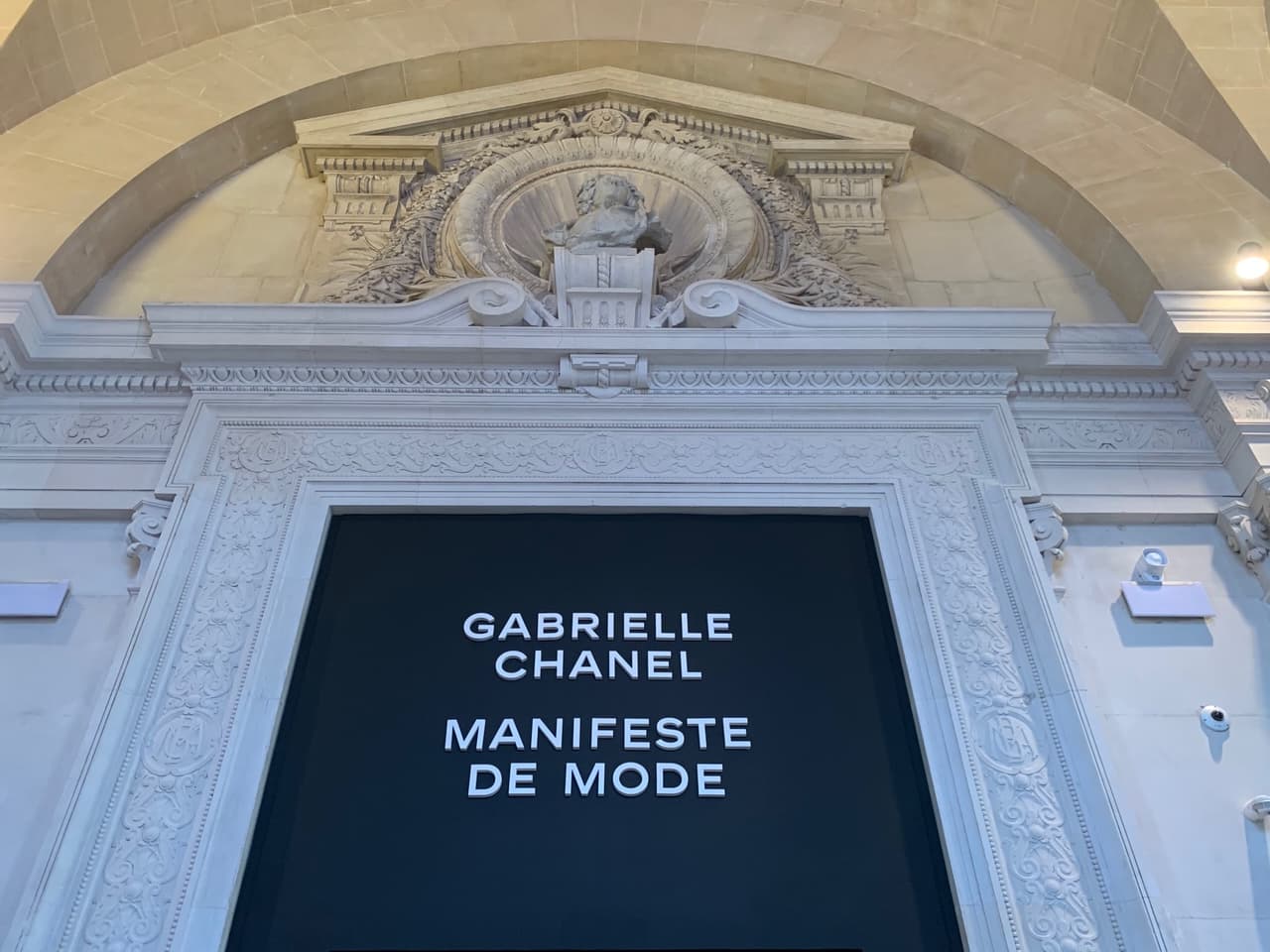
If there’s one place that’s just right for France’s first CHANEL retrospective, it’s this one: the Palais Galliera. To mark its reopening after an expansion, the fashion museum is presenting “Gabrielle Chanel: Fashion Manifesto.”
Gabrielle Chanel, Better Known as Coco: Light and Shadow
CHANEL is known the world over as the iconic brand that’s the last word in chic. And yet we know surprisingly little about the extraordinary life of its founder, Gabrielle Chanel, a young orphan who became the most sought-after fashion designer in Paris in the early 20th century. It’s as if someone wanted to erase the darker parts of her story for fear of tarnishing her image. The exhibition shines a light on the immense talent of a woman who rewrote the rules of how women dress as early as World War I. To me, it’s the perfect chance to learn more about the woman behind the fashion icon. So I dug a little deeper into the bits and pieces I already knew. Here, then, is the life of Gabrielle Chanel in a few key dates.
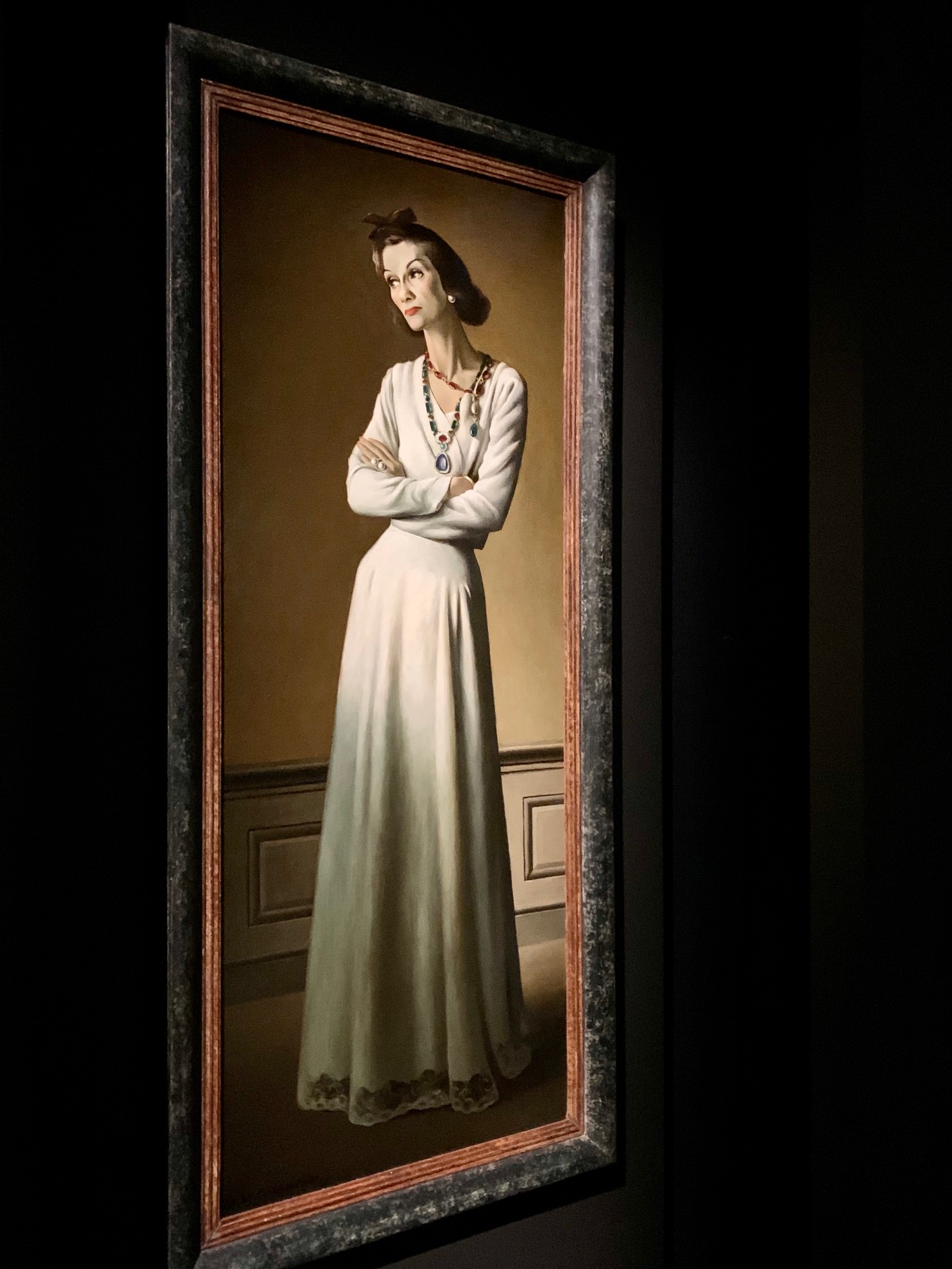
Key Dates
August 19, 1983: Gabrielle Chanel is born. She loses her mother at a young age, never knows her father, and grows up in an orphanage (or with two aunts) in Thiers. Neither version has been proven to this day. But this is when she learns to sew.
1907–1908: She meets military officers at the music cafés where she sings “Qui qu'a vu Coco dans l'Trocadéro ?” That’s where she picks up the nickname COCO, which sticks with her for the rest of her life.
1909: She becomes the mistress of Boy Capel, a wealthy young English officer, and follows him to Paris. There she starts putting her talents as a milliner to work. In 1910, with Capel’s help, she opens her shop at what is now a famous address: 21 Rue Cambon.
1912: Boy Capel helps her open her first boutique in Deauville, where they spend their summers. She starts out selling her famous hats, then adds jackets and skirts to her line. She creates her first jersey outfits, a revolution at the time.
Between the Wars, Gabrielle Chanel Builds Her Empire
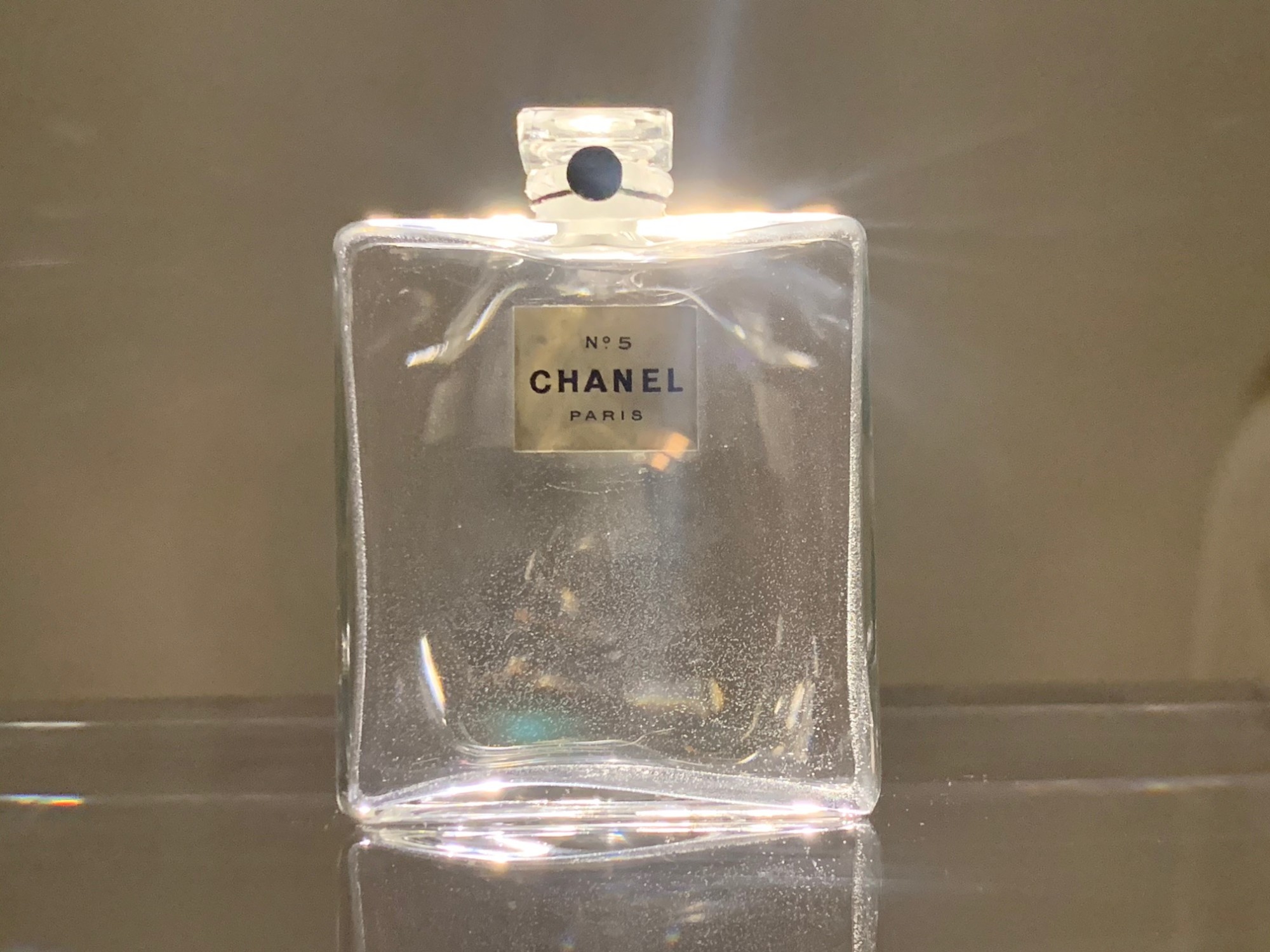
1921: The perfume is born. After trying five samples, she picks the one that will become her signature: Chanel N°5. To produce it, she partners with Pierre Wertheimer, who owns the Bourgeois company with his brother.
1924: She opens her first costume jewelry workshop.
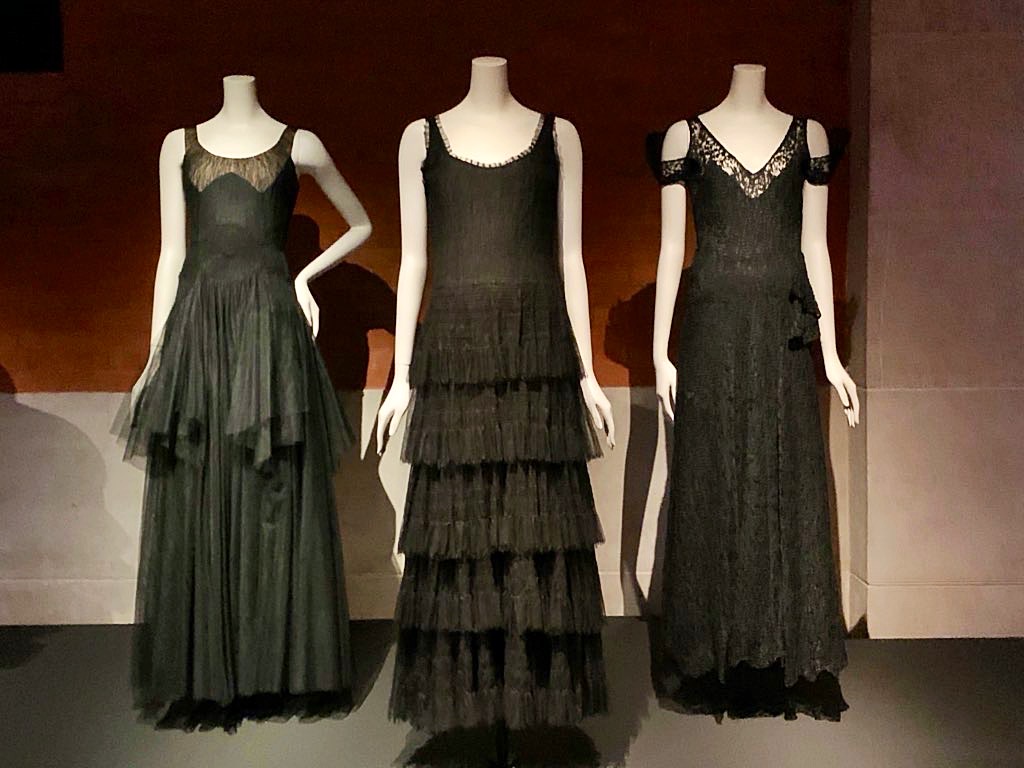
1926: Along comes her little black dress, which takes its cues from the flapper look: a straight, collarless cut that skims over the curves.
1932: Her first fine jewelry collection.
World War II: Troubled Years
1939: With 4,000 women working for her, she finds herself in a dispute with her staff. She decides to lay them off and close up shop.
She then forms controversial relationships in openly antisemitic circles. Although she owns only 10% of the company, she also tries to wrest Pierre Wertheimer’s majority stake in CHANEL perfumes from him.
1941: She asks the German authorities to grant her ownership, citing the Wertheimer family’s departure for the United States. She doesn’t get her way: the Wertheimers had entrusted control of the perfume business to a non-Jewish friend, who returns it to them after the war.
1941–1944: She continues to live at the Ritz, even though it has become the Luftwaffe headquarters. There she has an affair with a German embassy attaché suspected of working to promote collaboration. It’s even thought that she was recruited as a German agent at the time.
1944: She goes into exile in Switzerland after being questioned by the FFI (French Forces of the Interior) and released. There’s speculation that someone high up intervened, and in any case, the evidence we know about today wasn’t available to the authorities then. She stays in Switzerland for 10 years.
After Exile
1954: Her return brings her collections back to life and introduces new signatures that are here to stay. This is when she creates the famous tweed suit and the 2.55, the quilted leather handbag that goes on to become an icon. She finds success again.
1960s: As fashion moves on and skirts get shorter, she sticks to the traditional lines of her signature suit.
1971: Gabrielle Chanel dies.
Gabrielle Chanel: A Walk Through Her Career
The first part of the exhibition unfolds chronologically. We follow Chanel from humble milliner to fashion revolutionary, from Paris to Deauville by way of Biarritz.
You spot the Chanel signature right away: a simple chic that borrows from menswear and frees women from the stiff clothes of the day.


She swaps them for fluid fabrics that are sensual, feminine, and comfortable to wear.
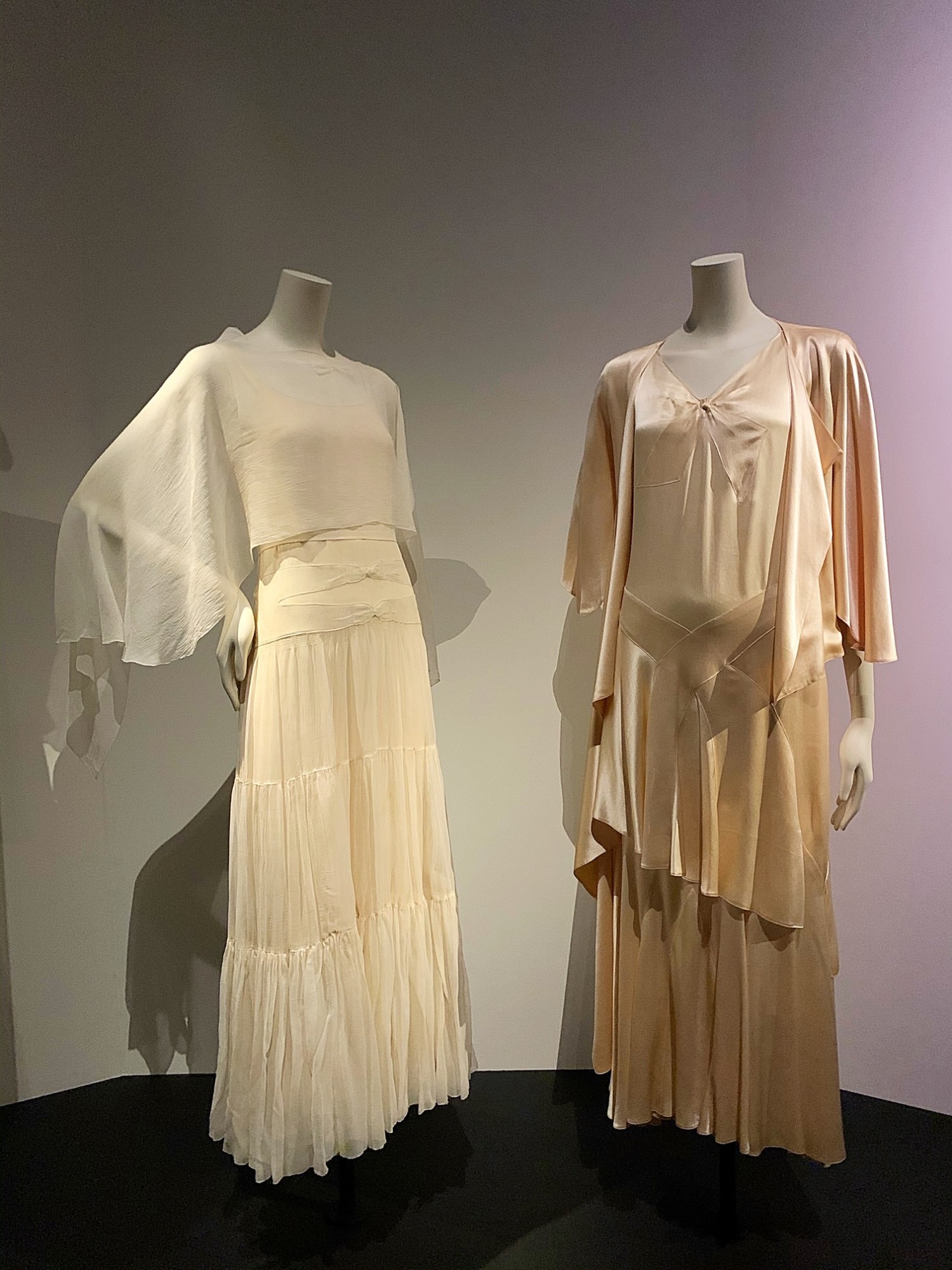
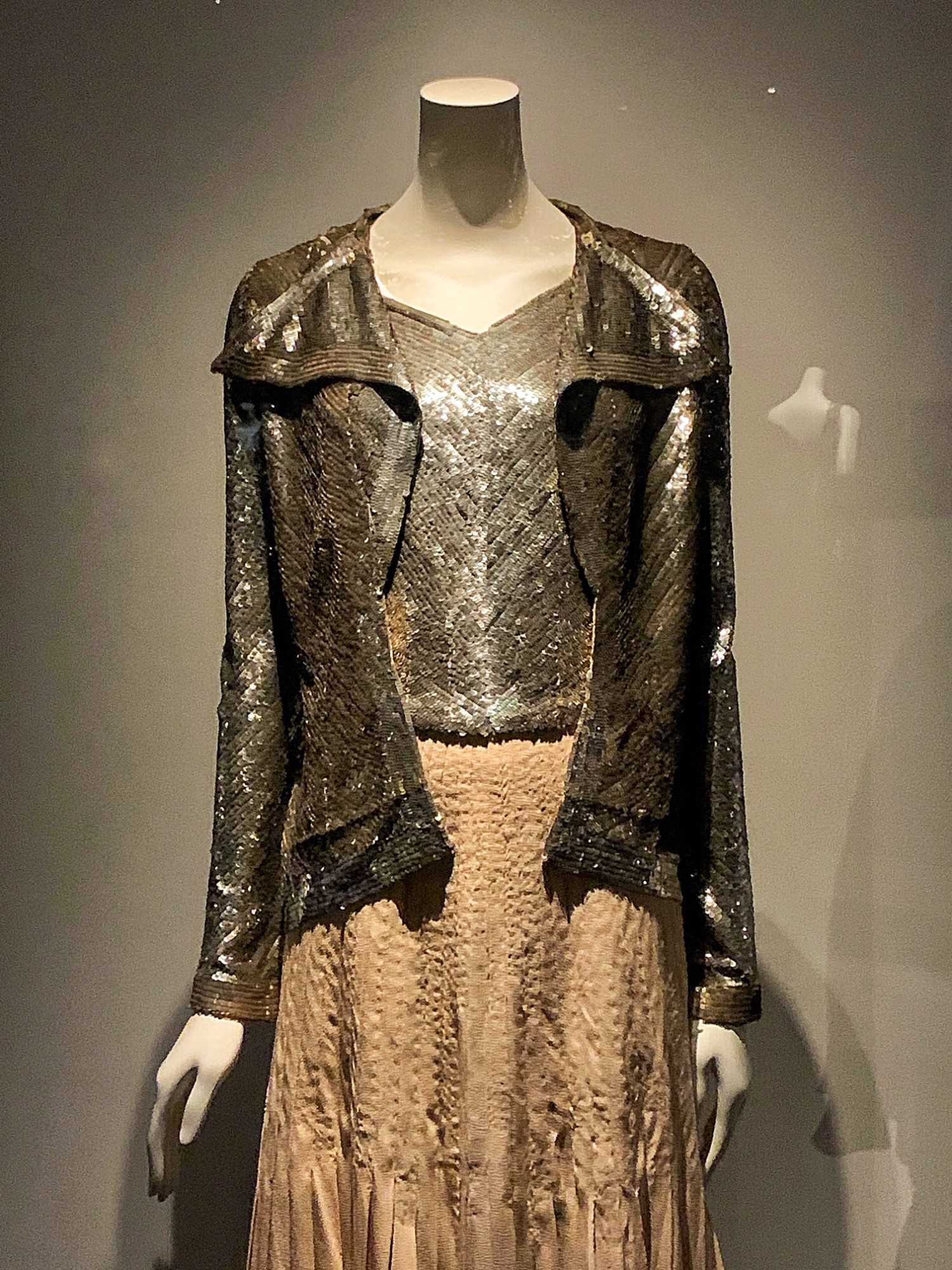
We go from the little black dresses and sporty designs of the Roaring Twenties to the sophisticated gowns of the 1930s.


And of course, there’s a room devoted to N°5 along the way. The soundtrack is Marylin Monroe’s voice.
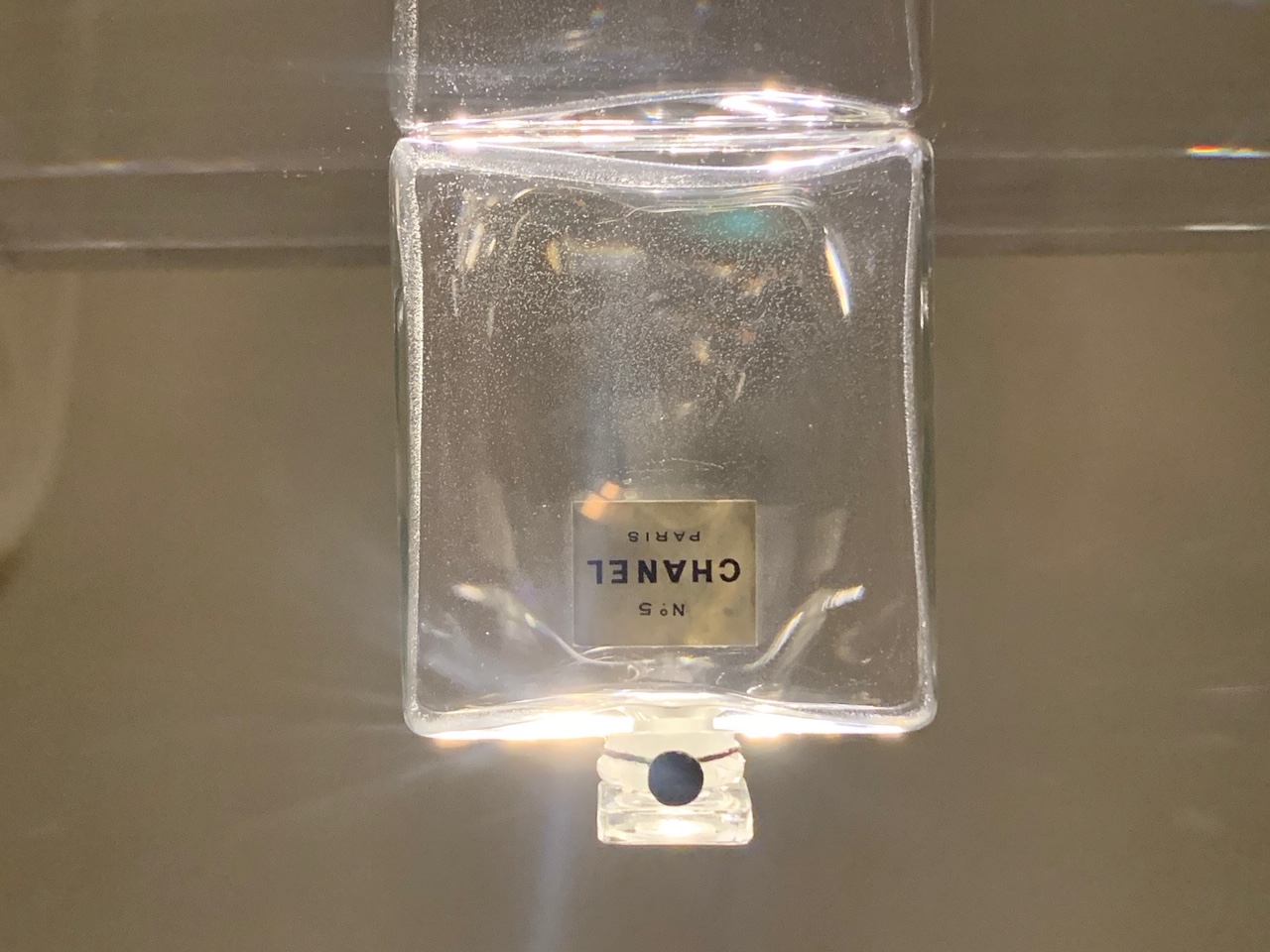
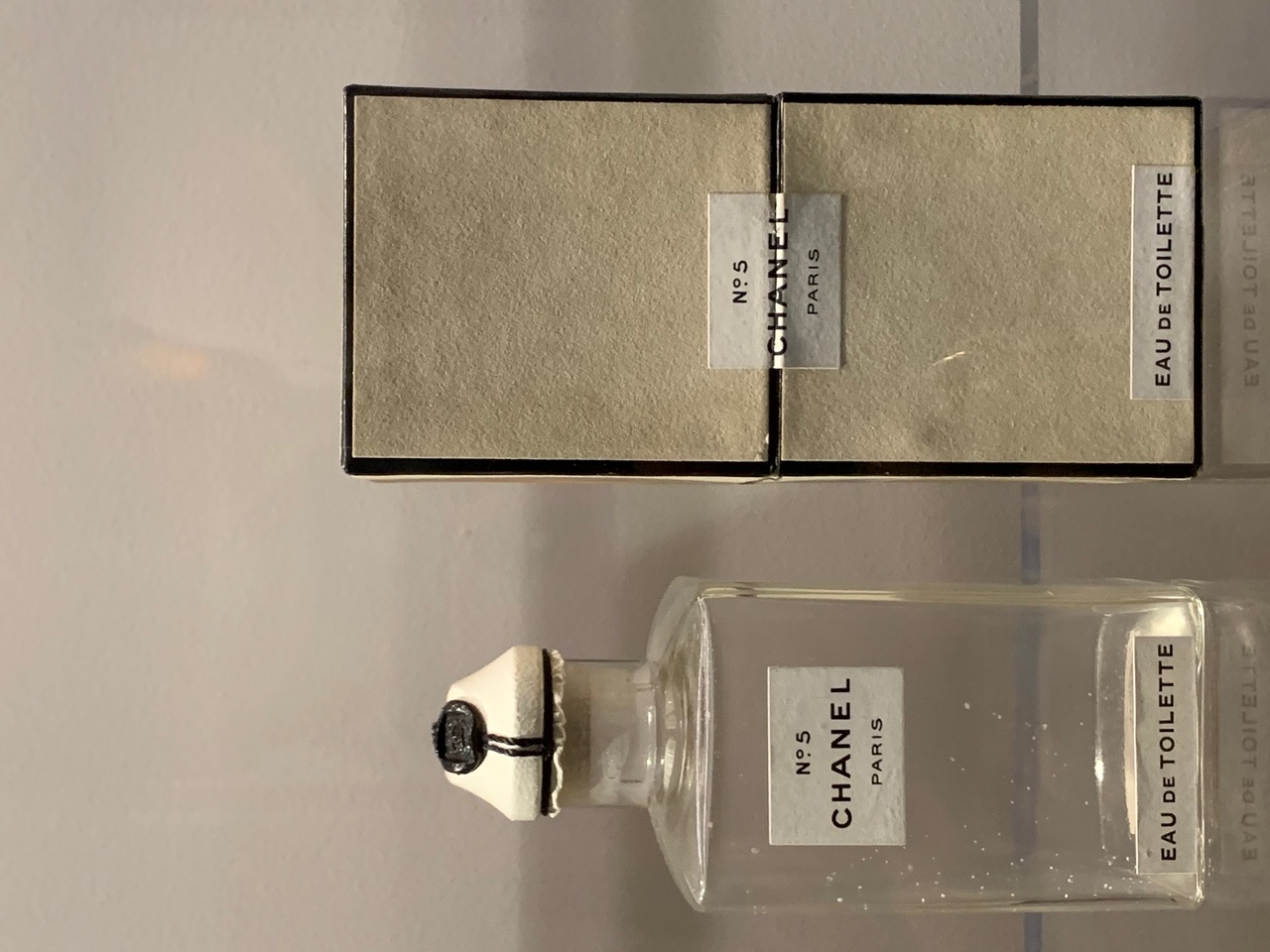
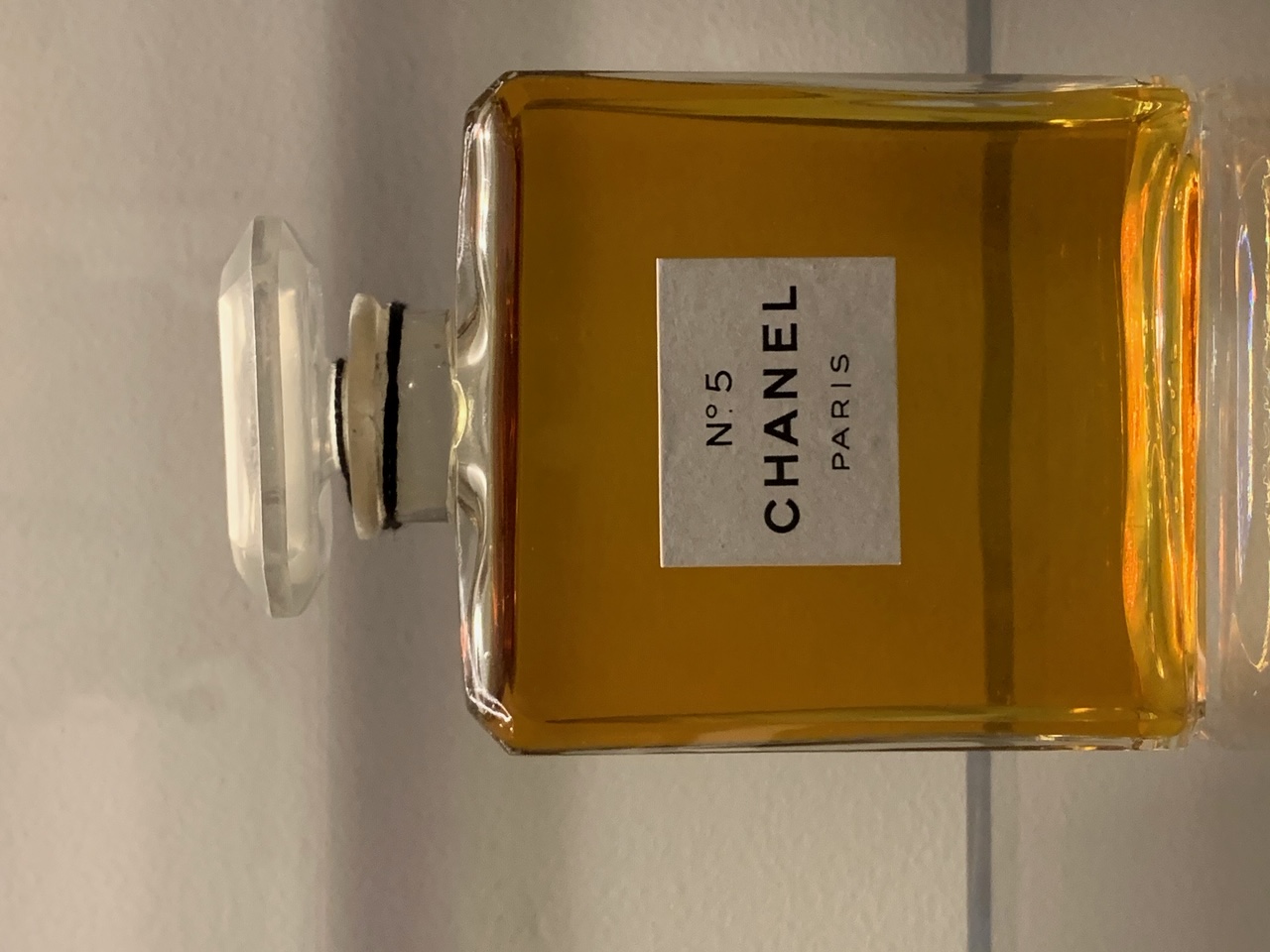
Style comes first, always: clean lines and an almost austere luxury. As for color, the outfits are monochromatic, often in understated ecru or black. But deep reds and midnight blues liven up the palette.

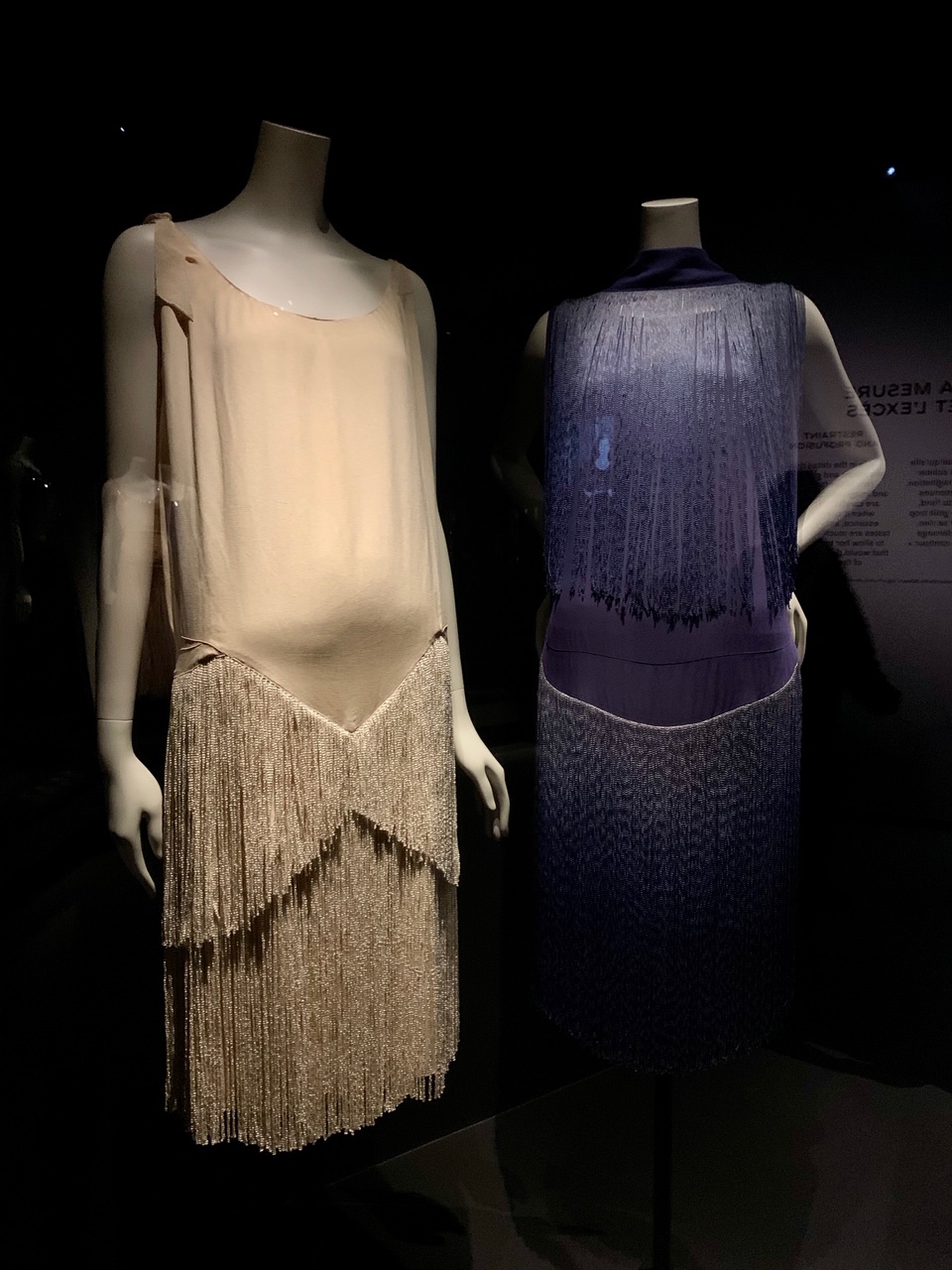
Sometimes we swing between restraint and excess, too…
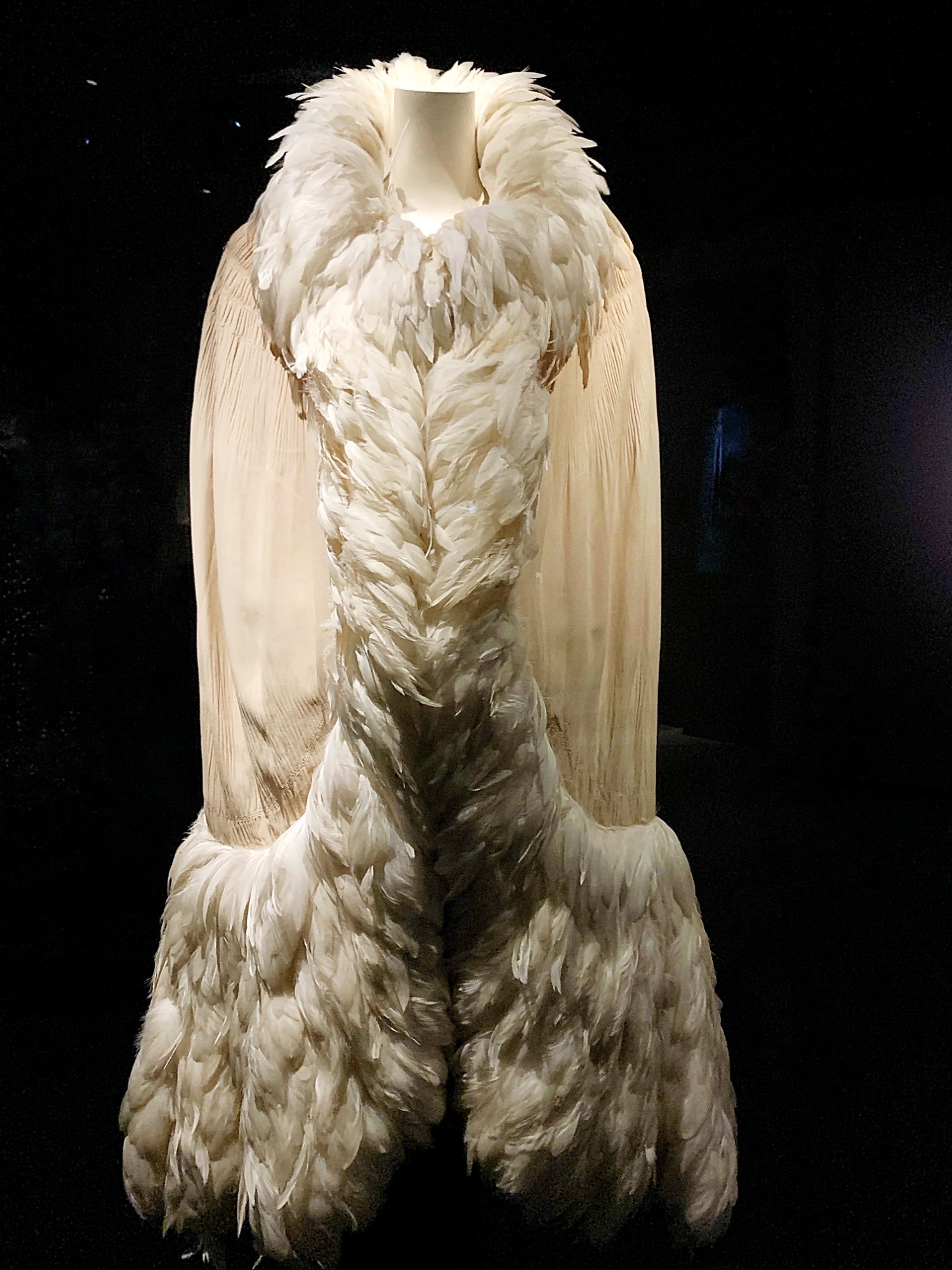
But it’s the modernity that wins out.
Fashion Manifesto: The CHANEL Signatures
The second part of the exhibition invites you to decode the CHANEL look.
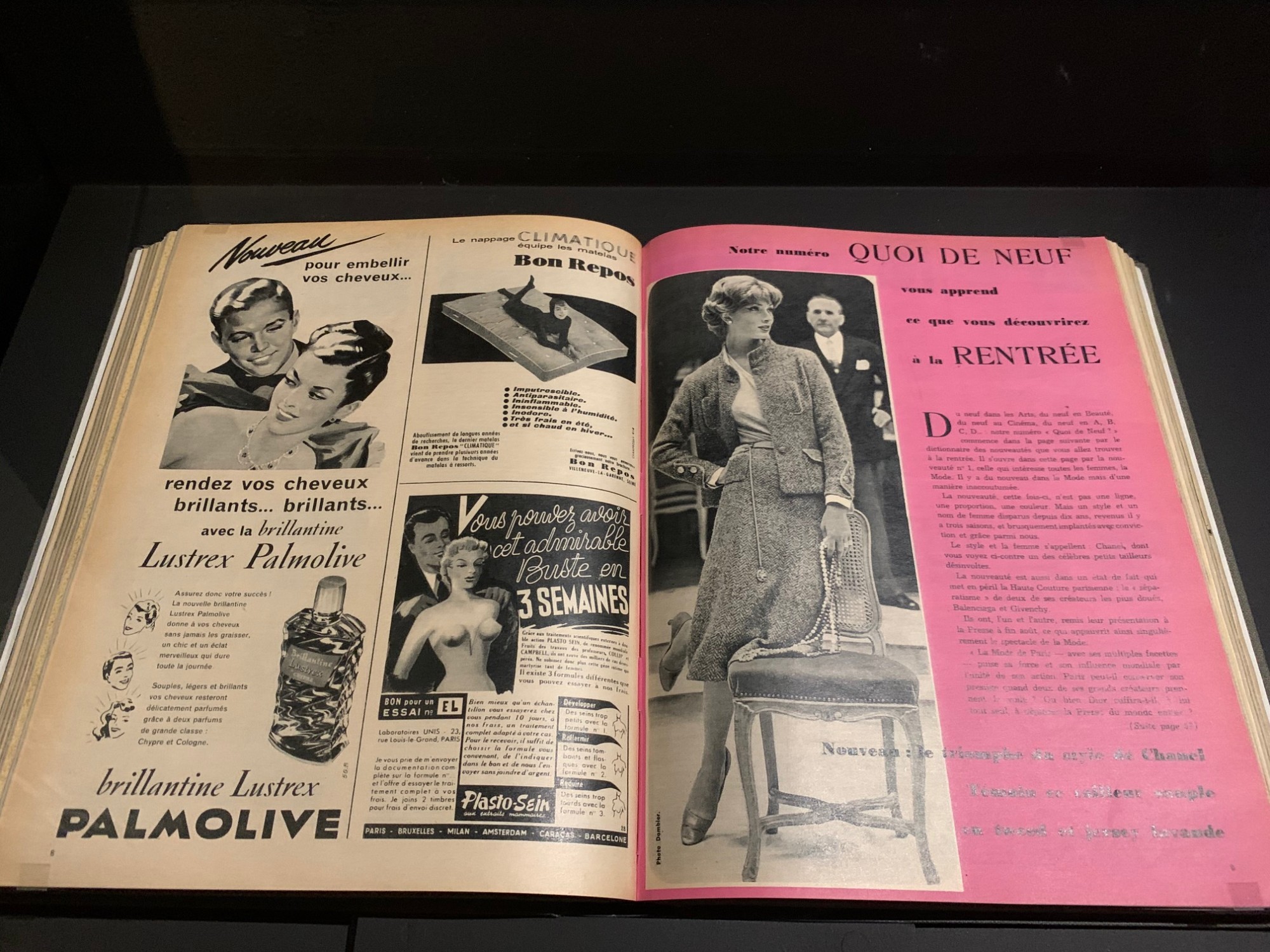
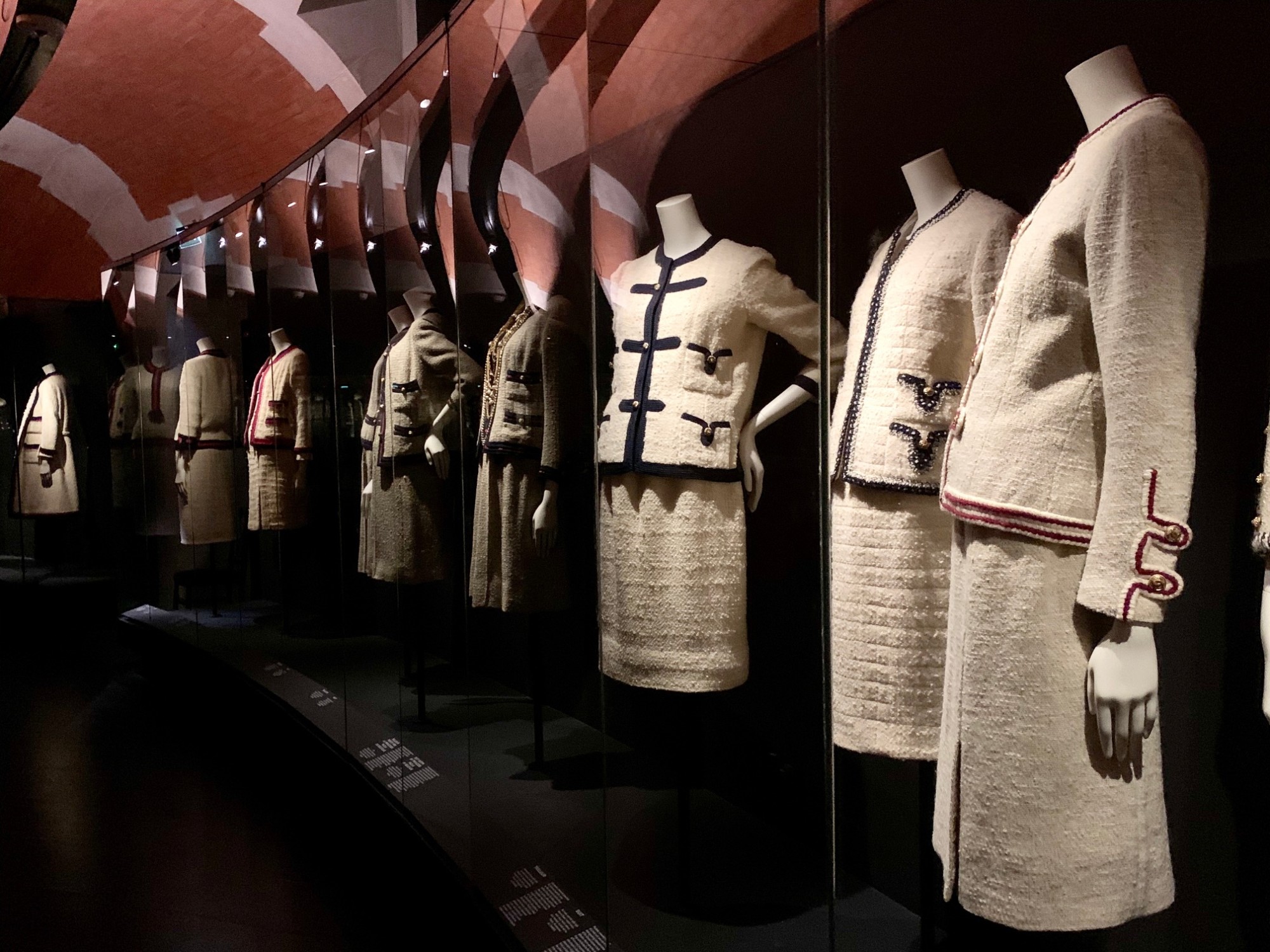
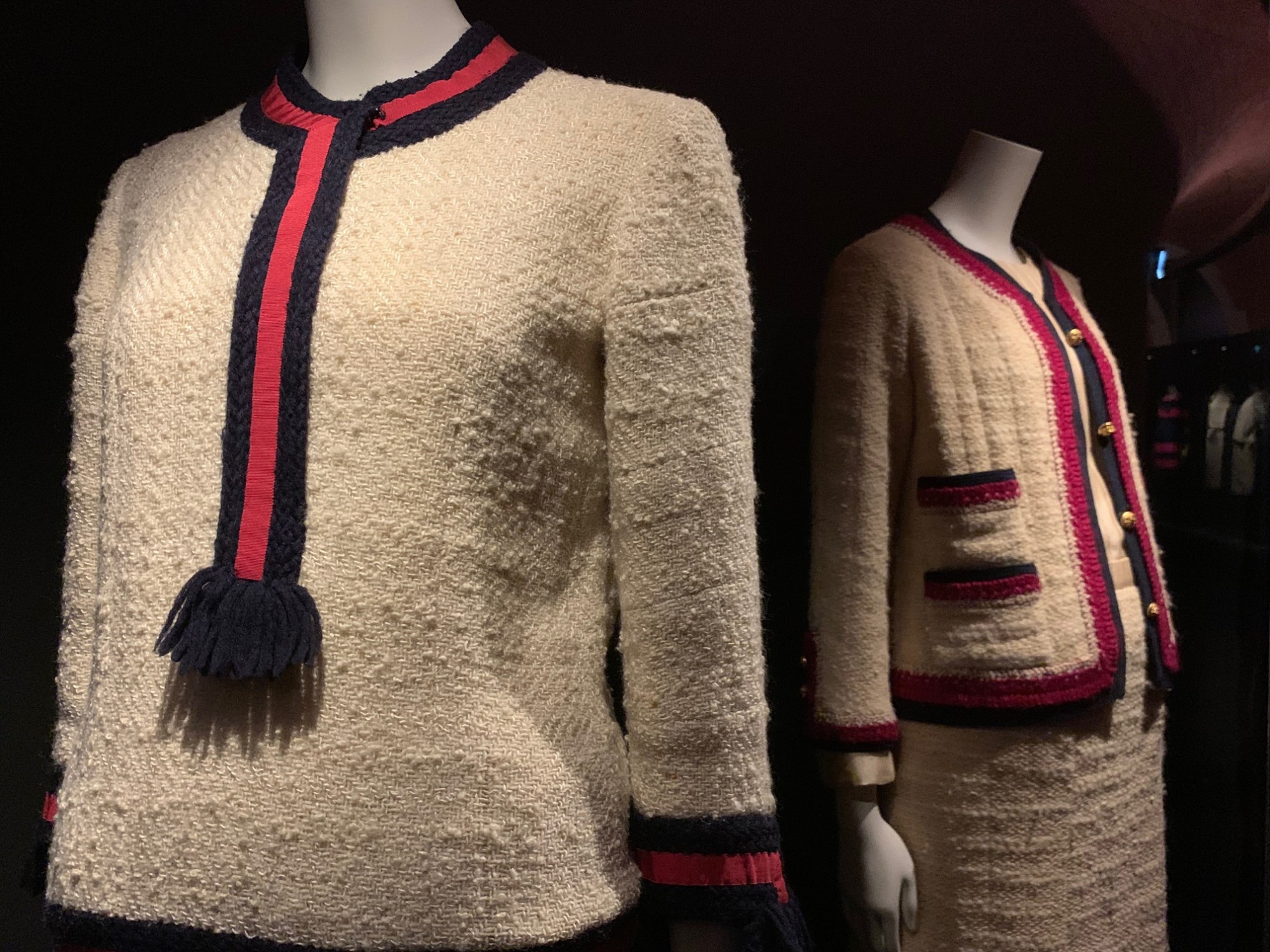
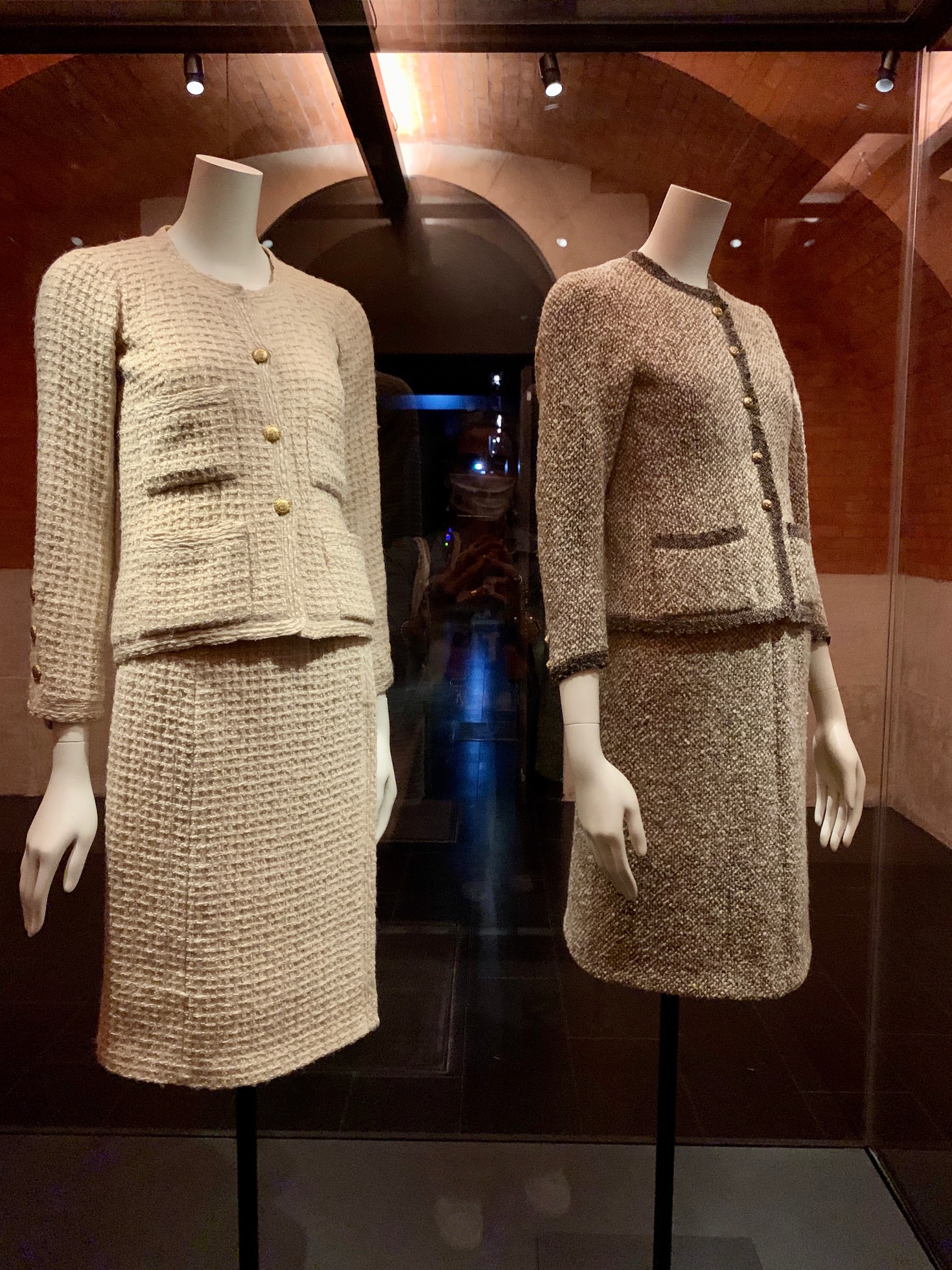 The braid-trimmed tweed suit takes center stage in the very first room. There’s an area devoted to what the press wrote about it at the time.
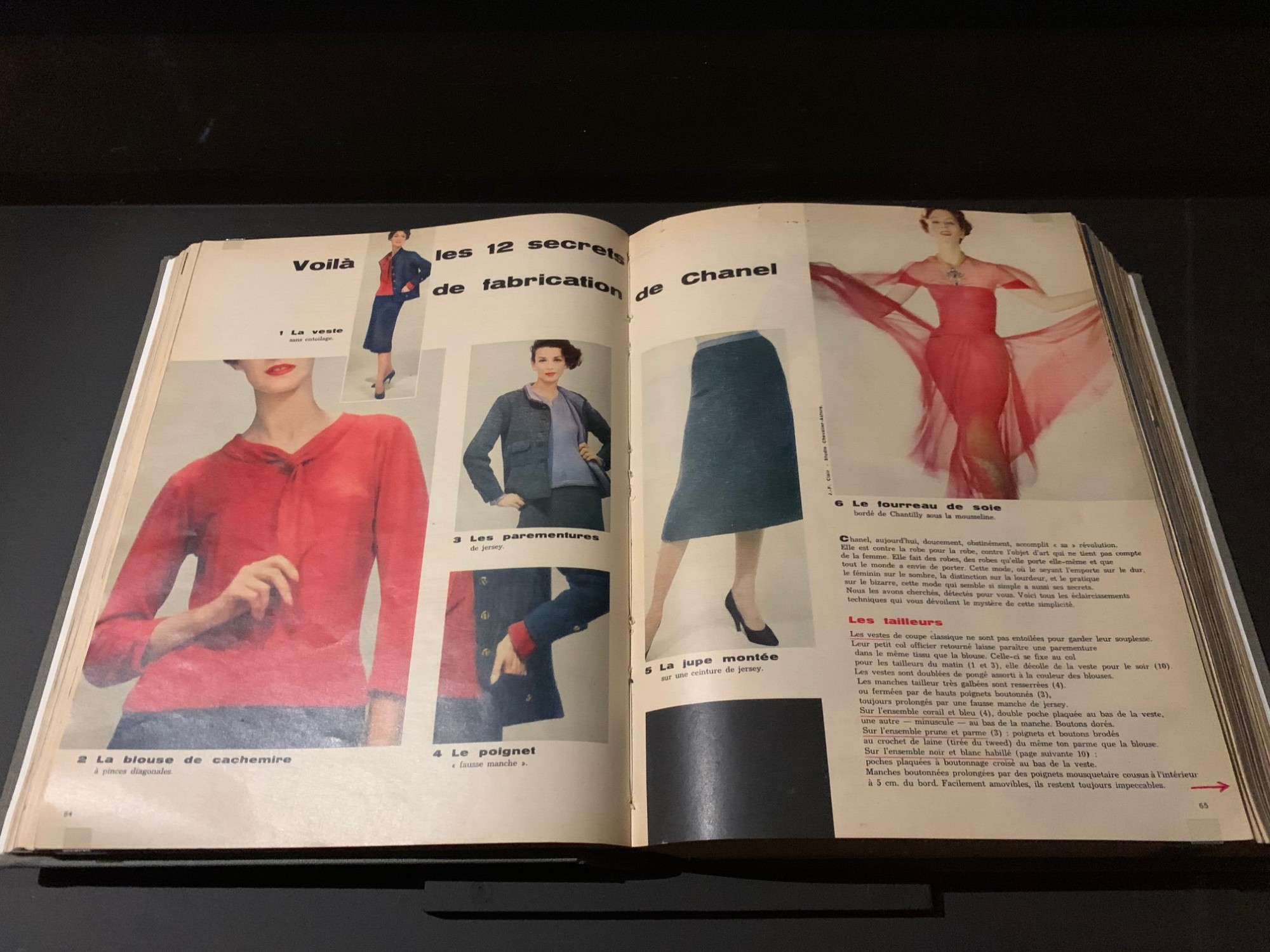
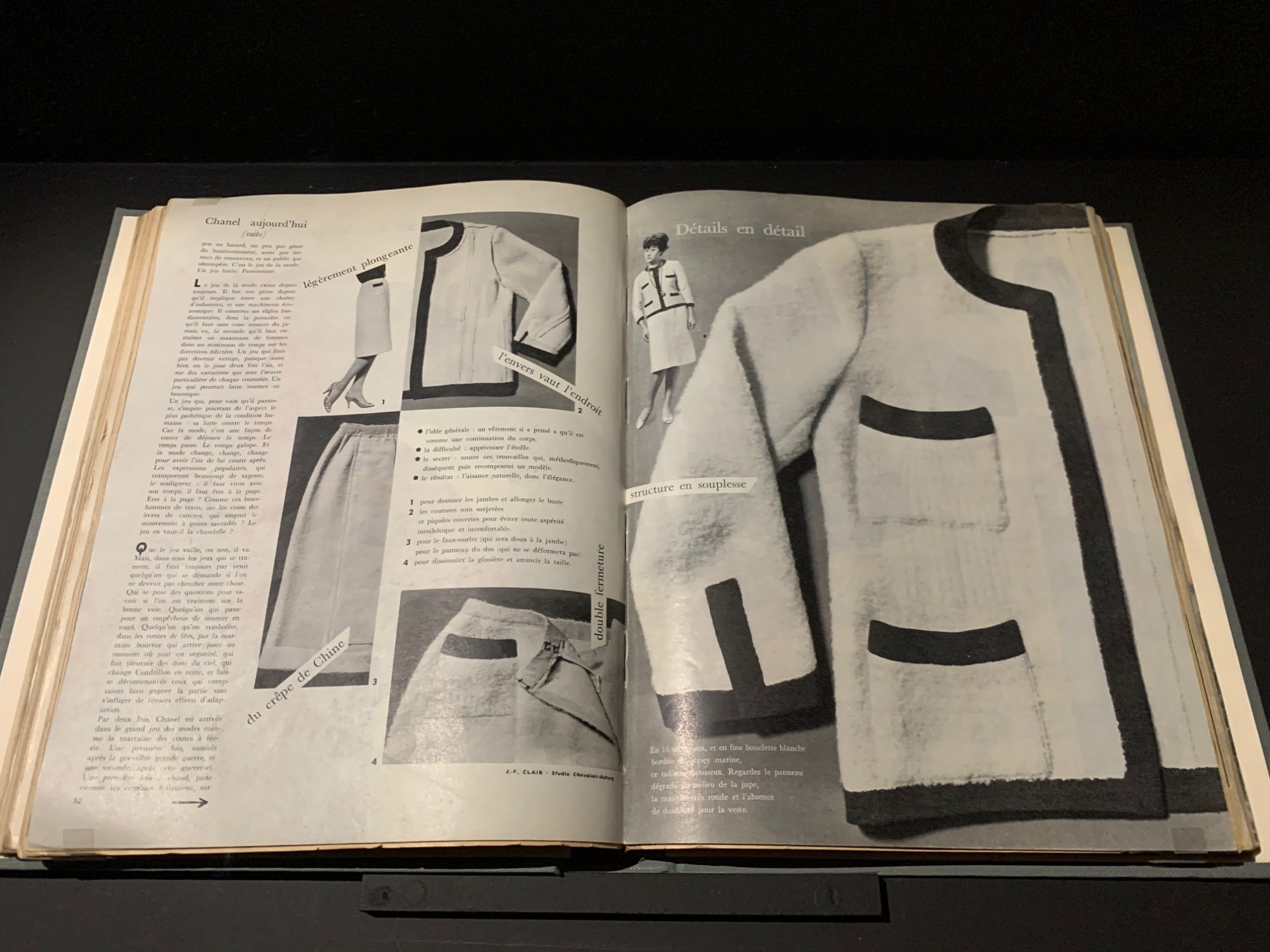
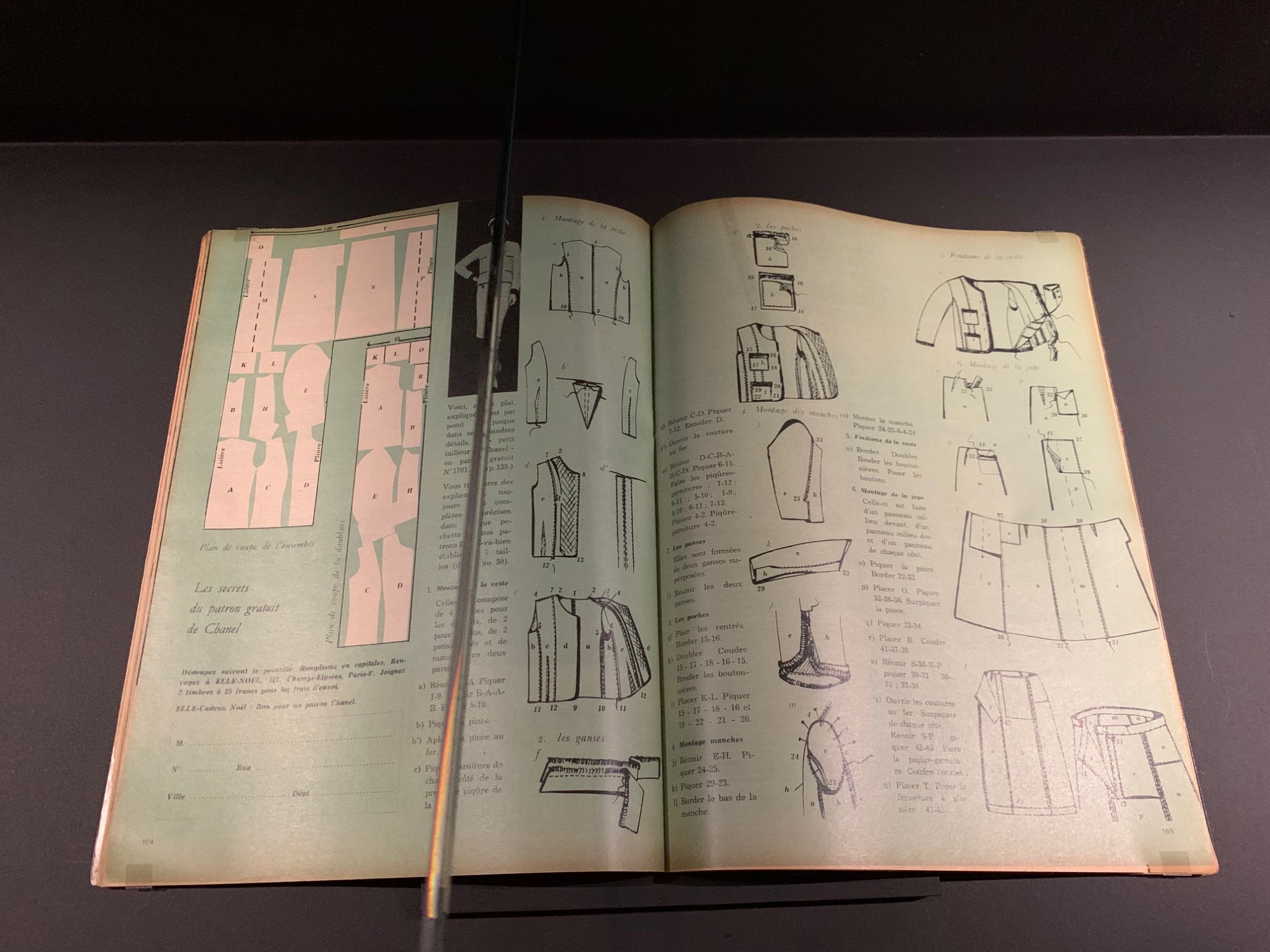
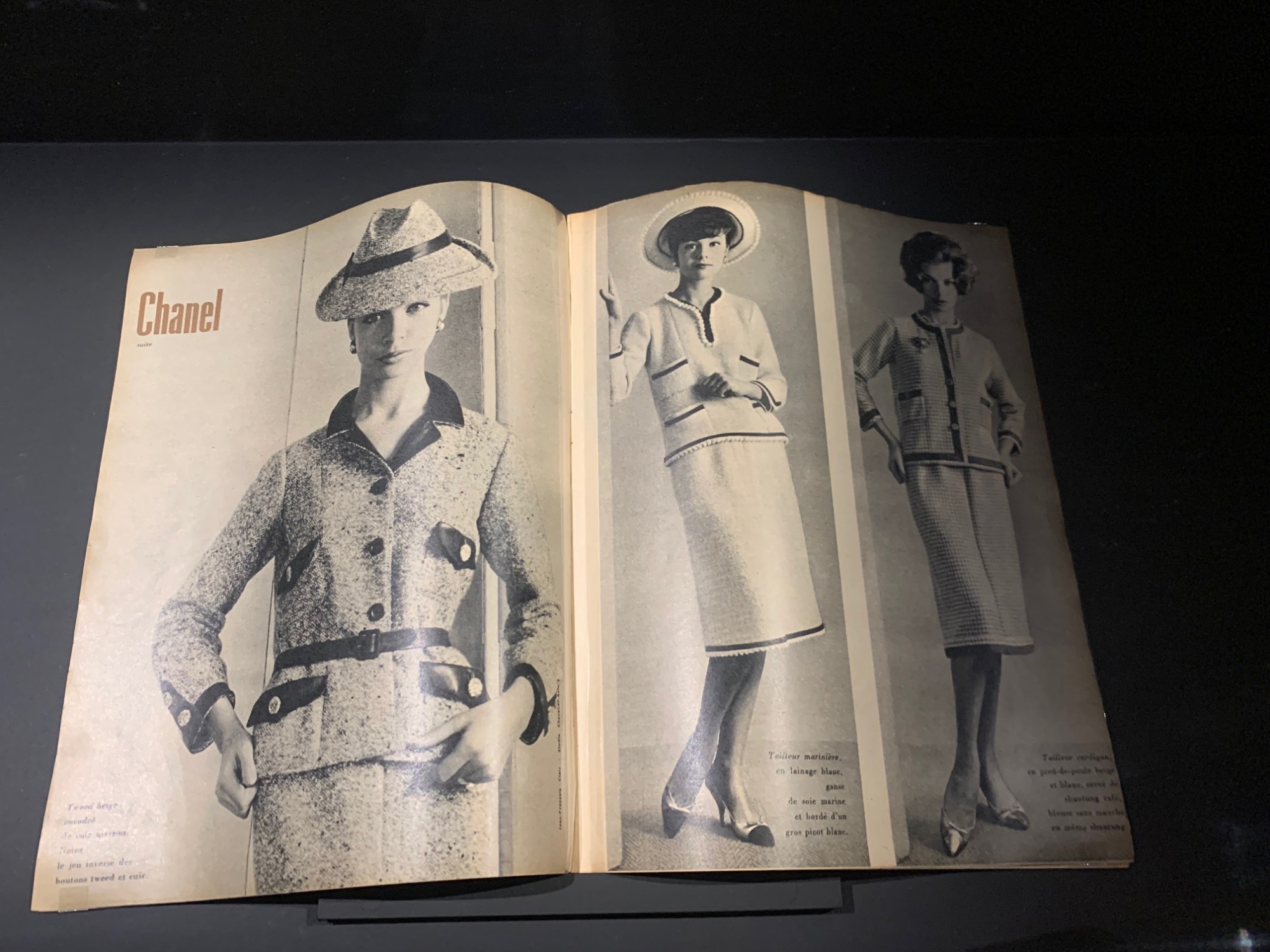
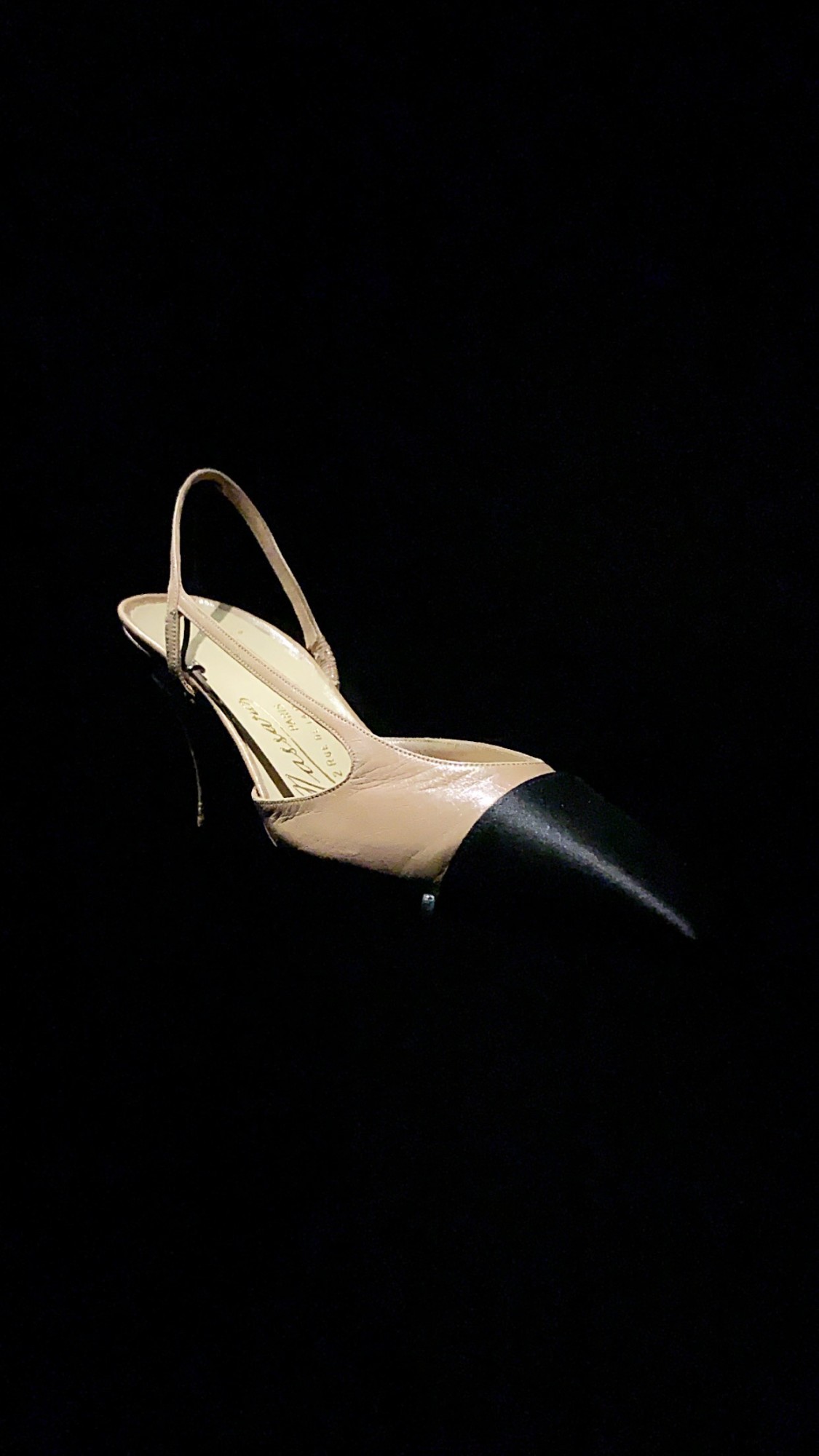
Next comes the prototype of the two-tone pump.
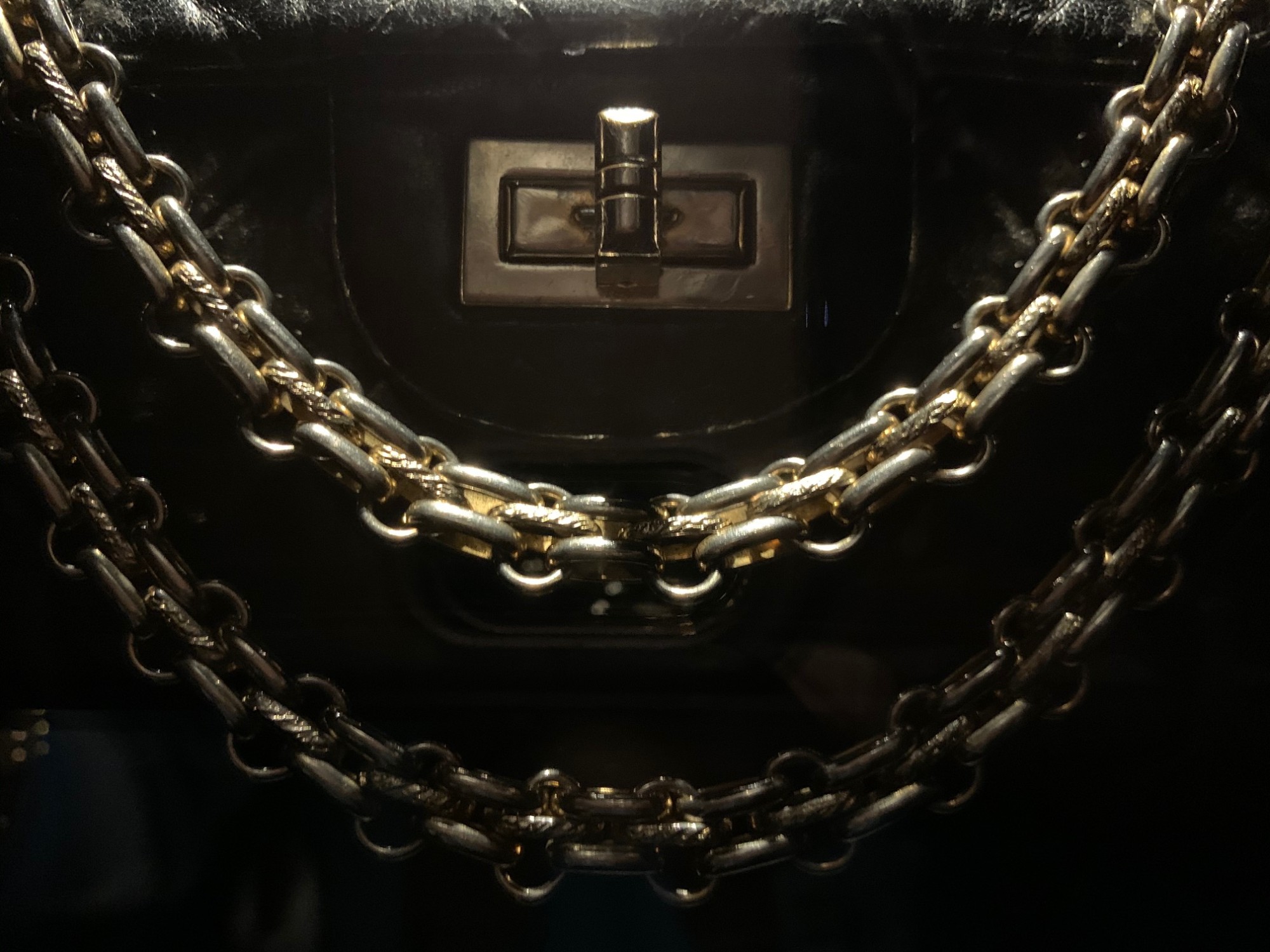
 The legendary quilted 2.55 bag gets pride of place.
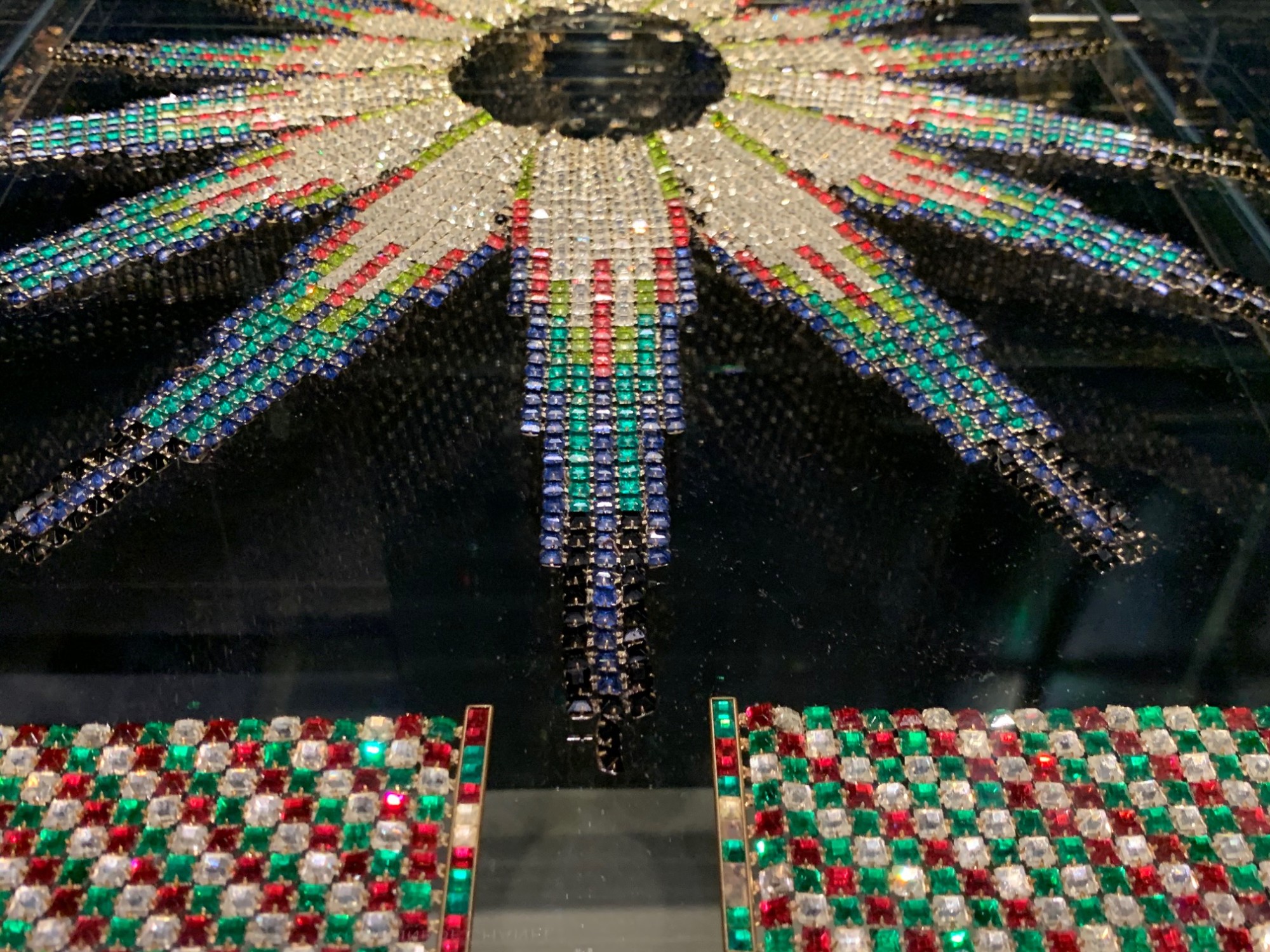
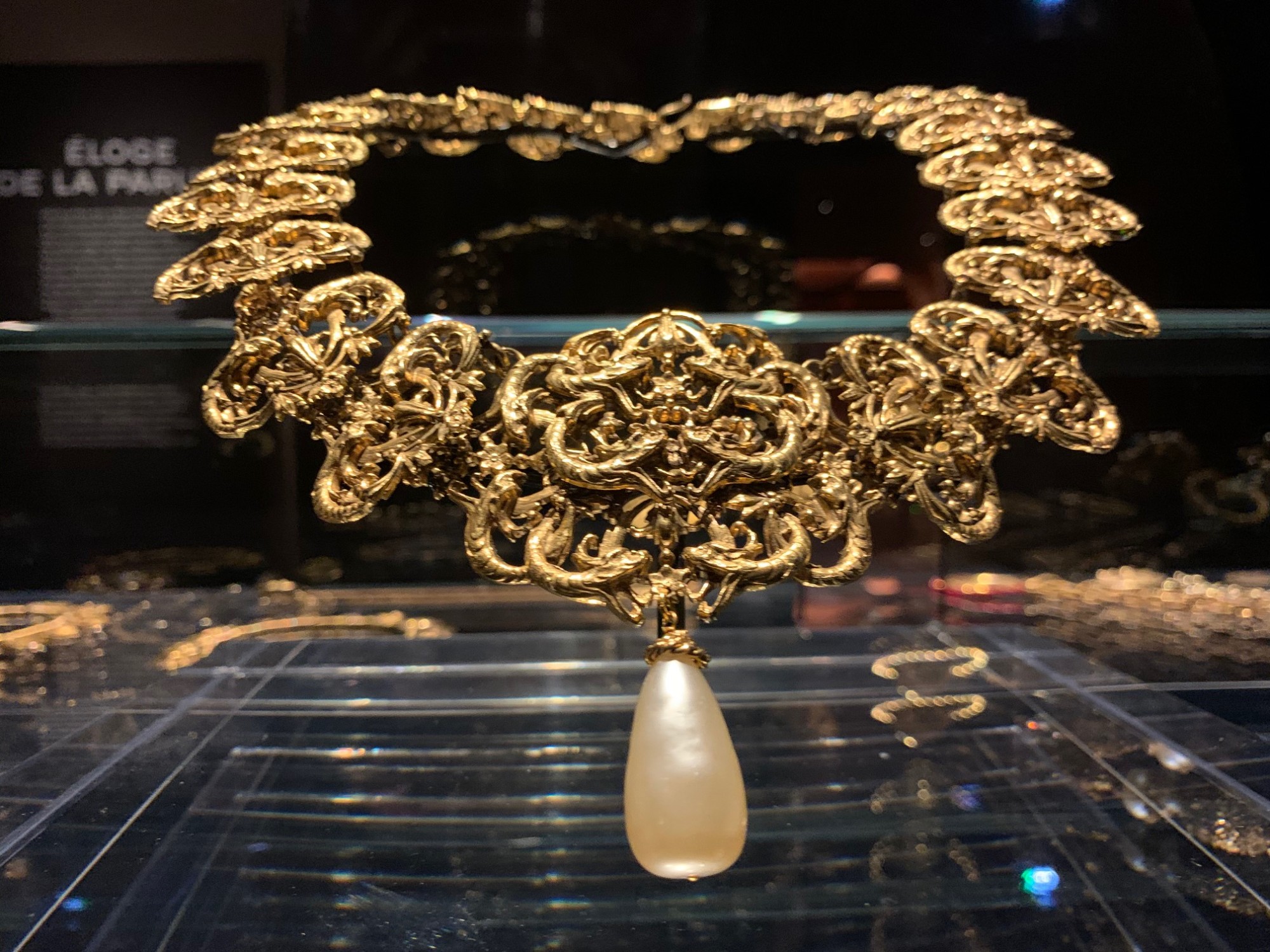
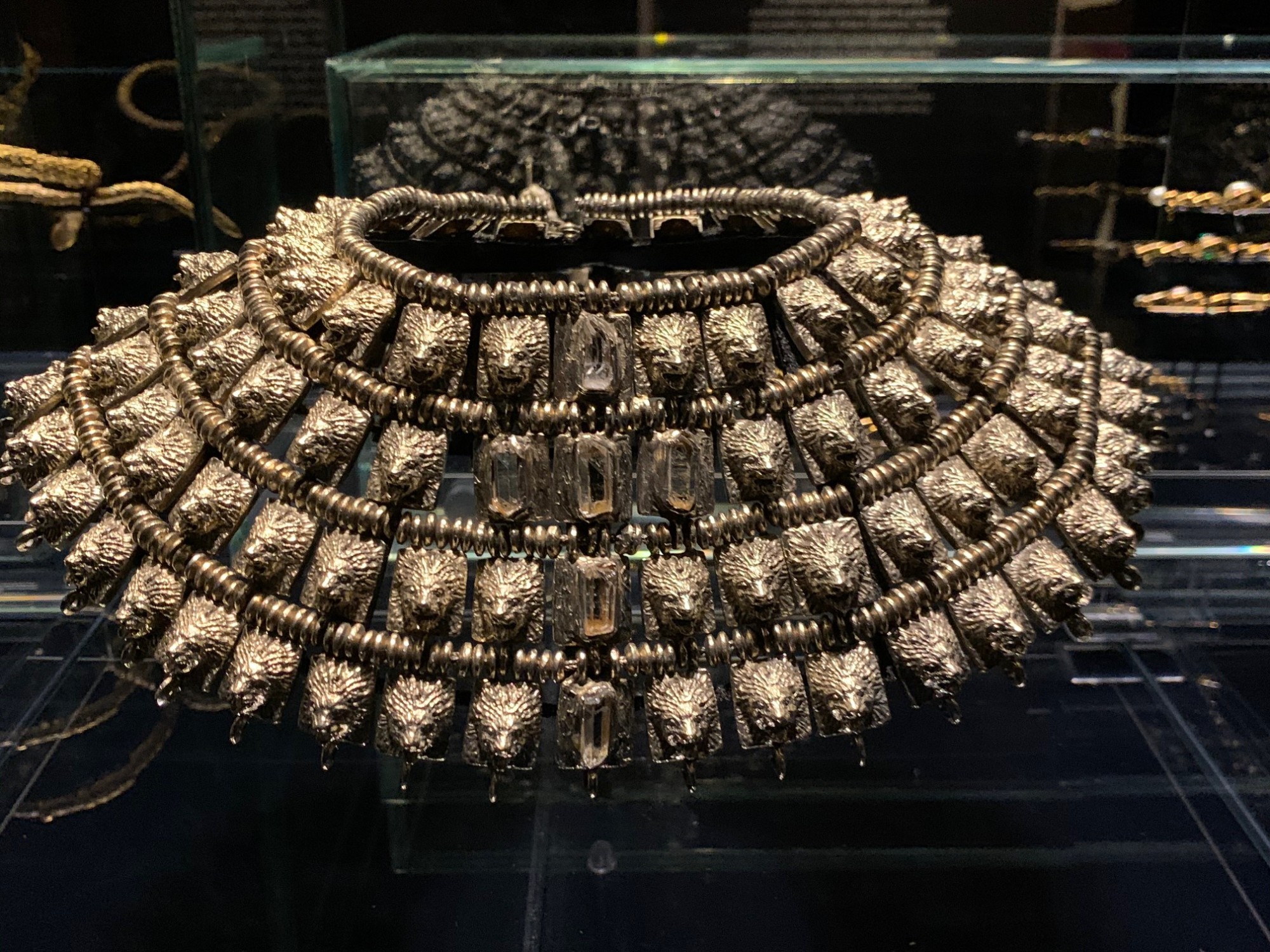
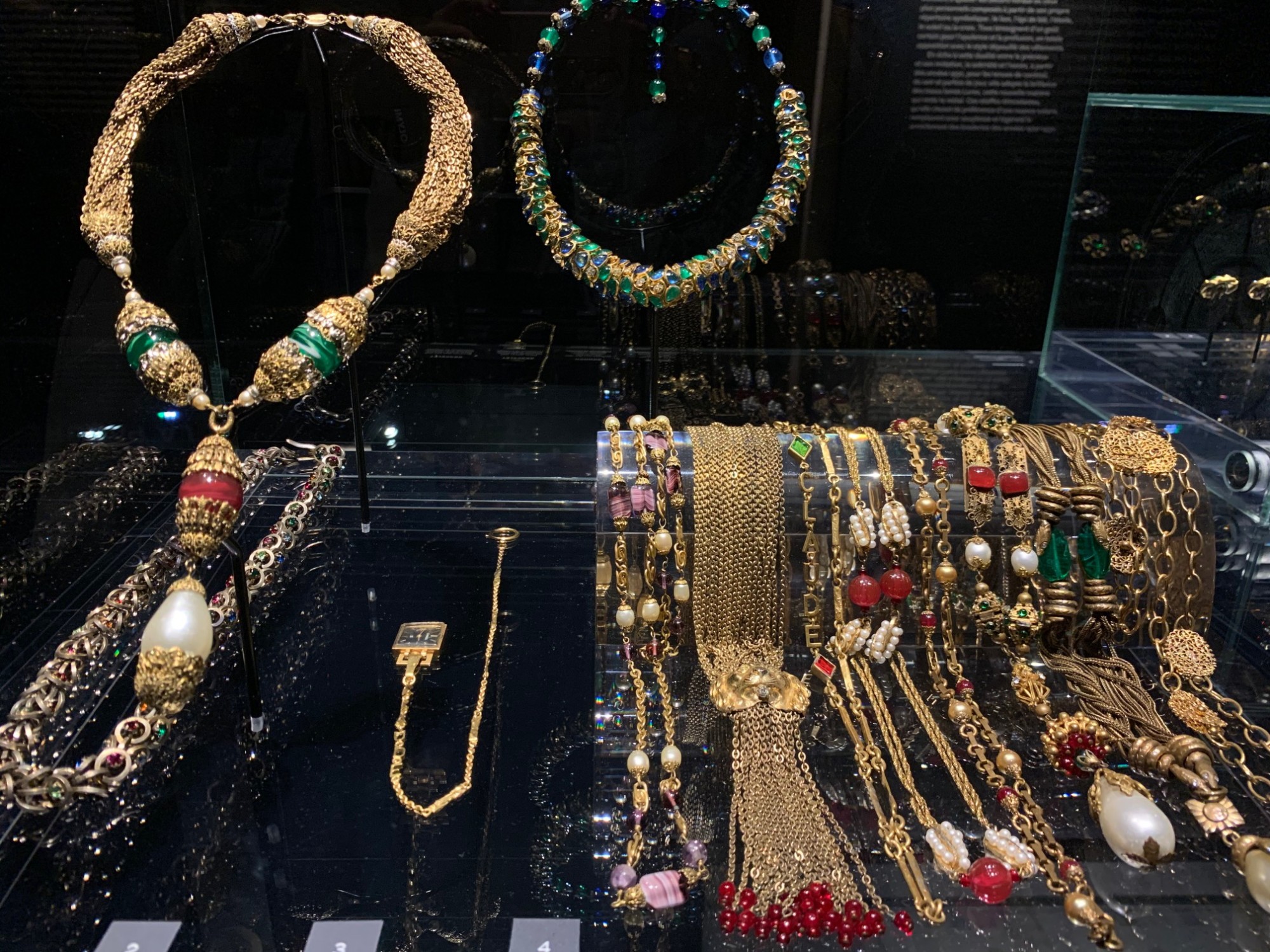
 Accessories mattered enormously to Chanel, as the cases displaying her costume jewelry and fine jewelry make clear.
And the real showstopper is the hallway lined with all of the designer’s most iconic outfits.
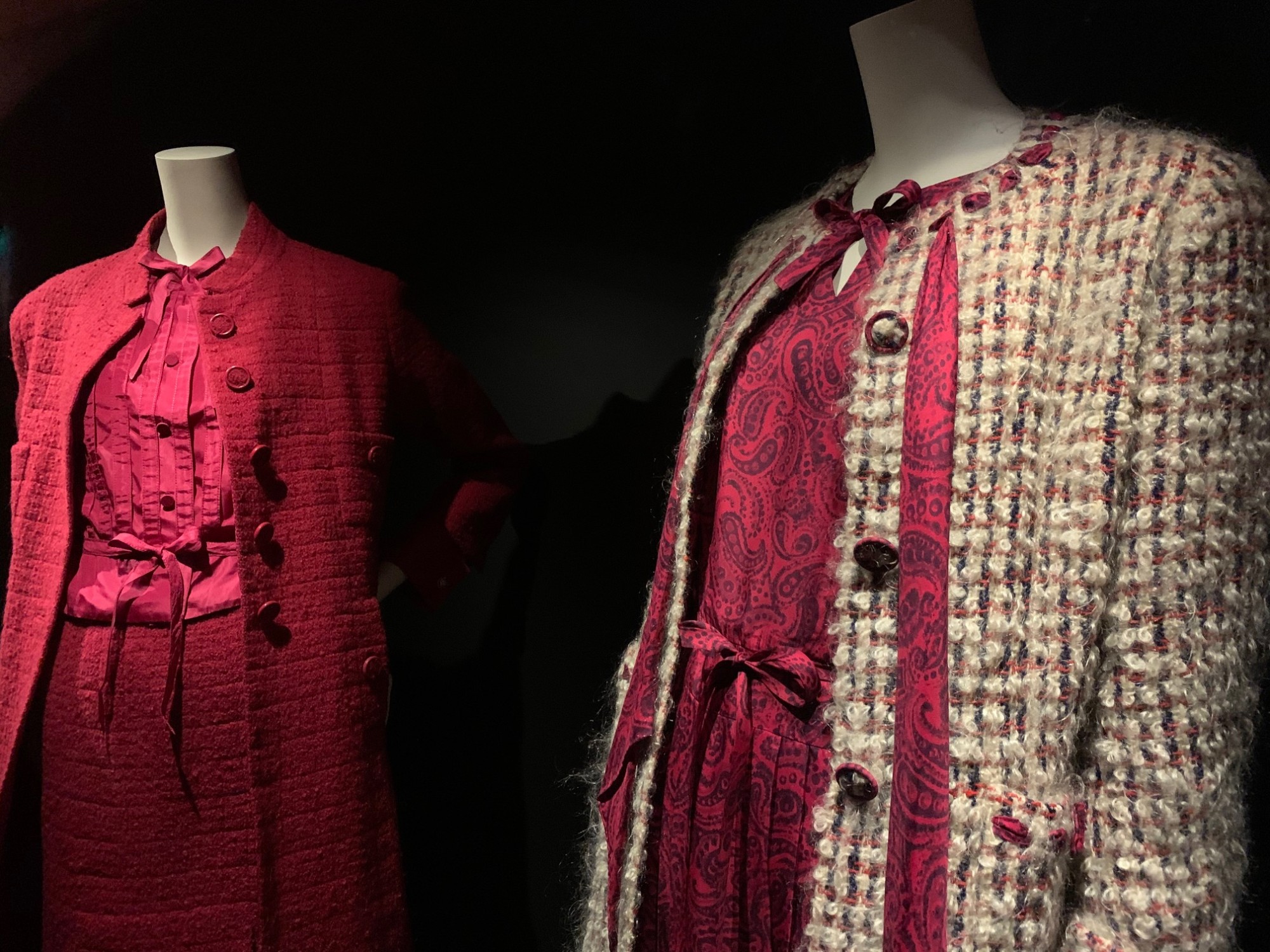
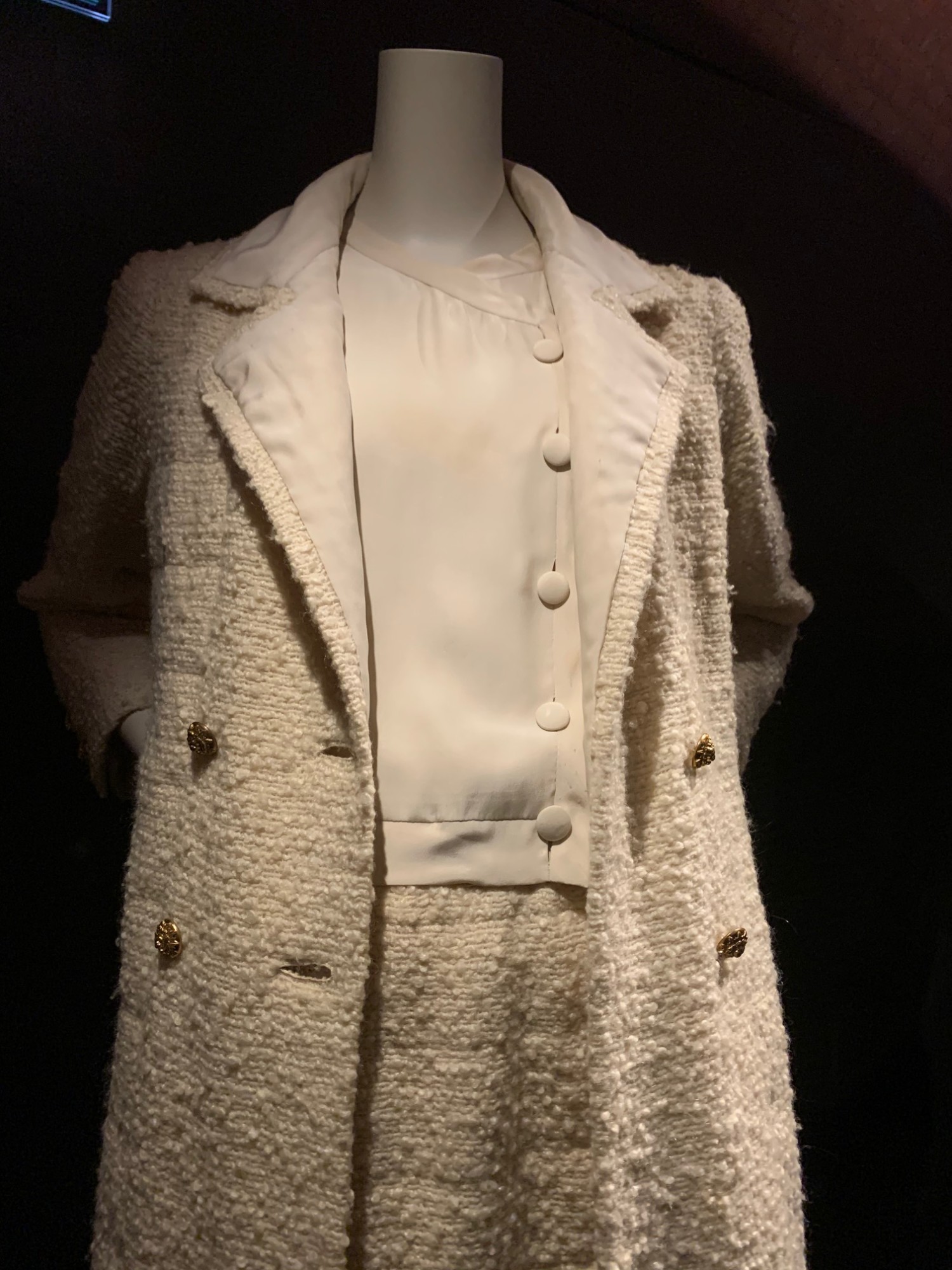

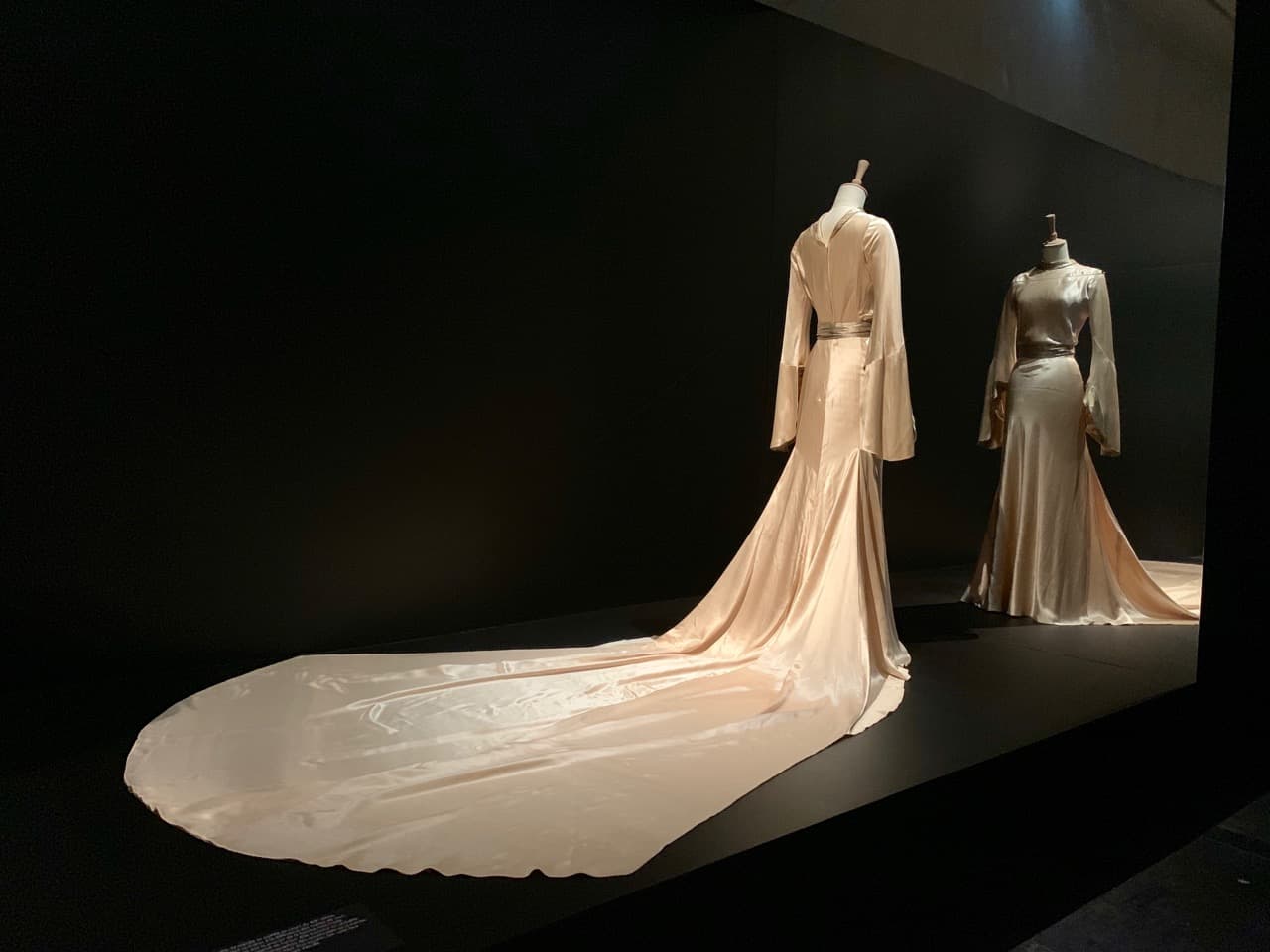
And let’s not forget the room that seems to stretch on forever, thanks to a clever play of mirrors and deliberately dim lighting, where some truly regal gowns hold court.
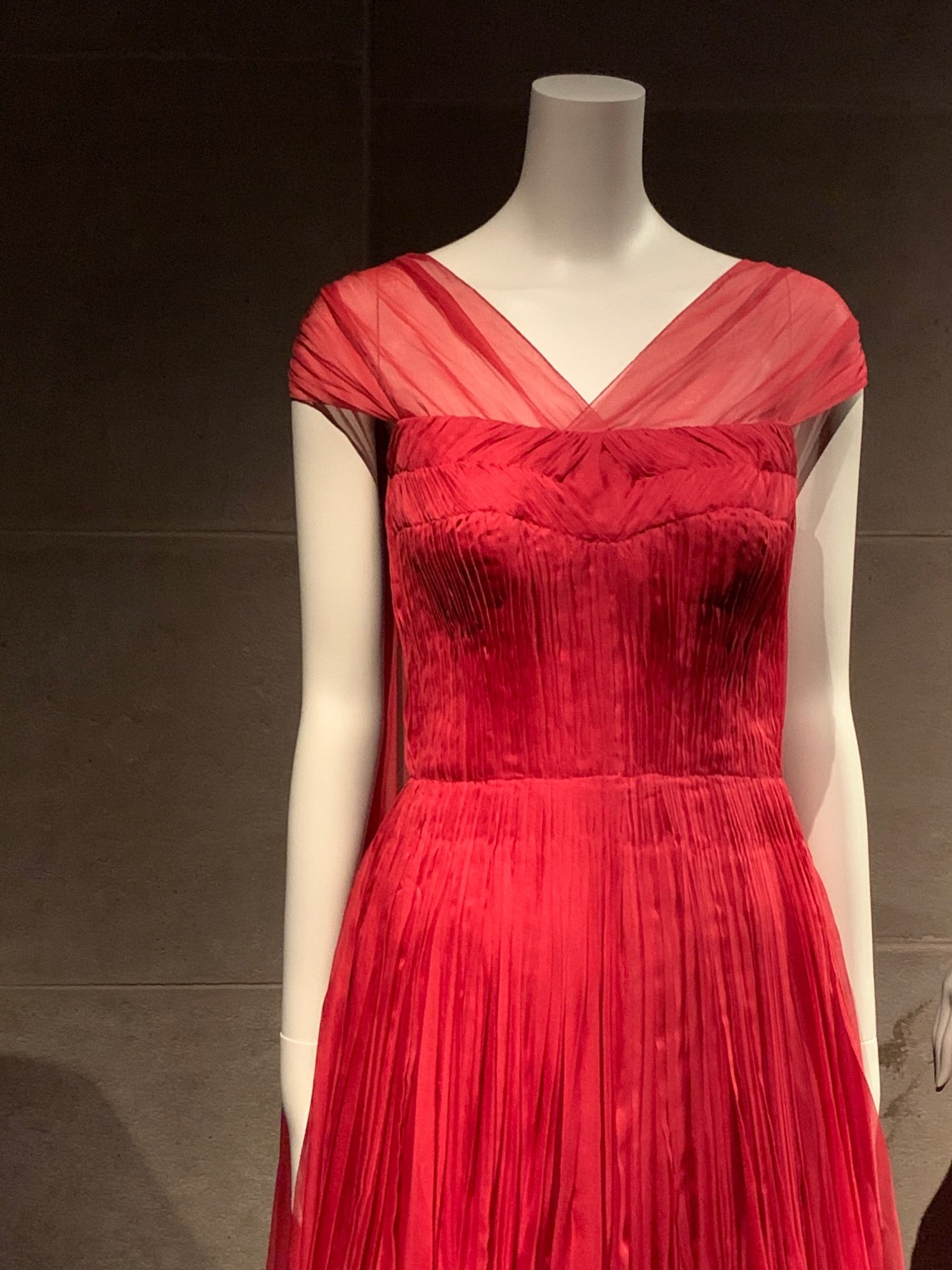
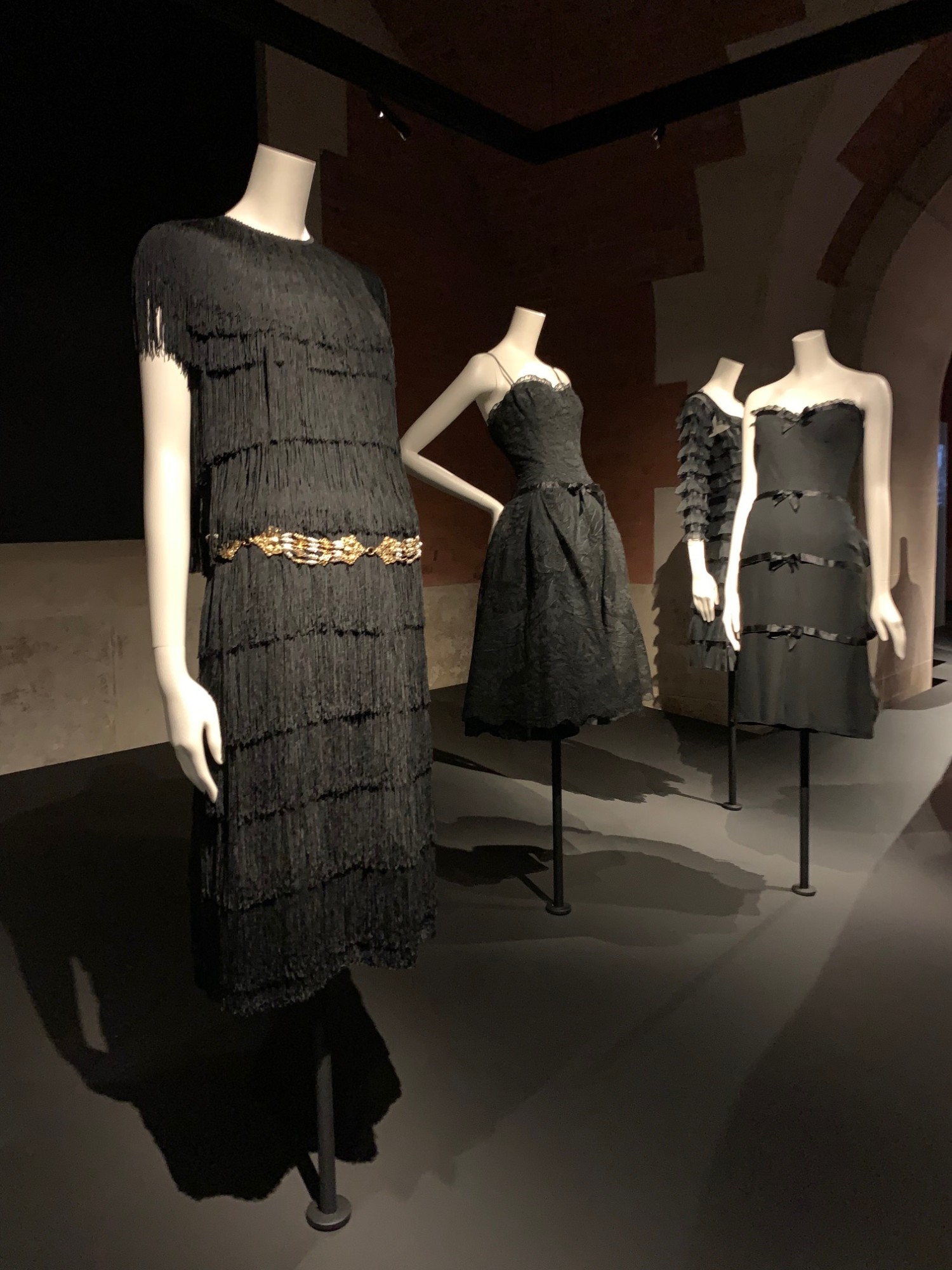
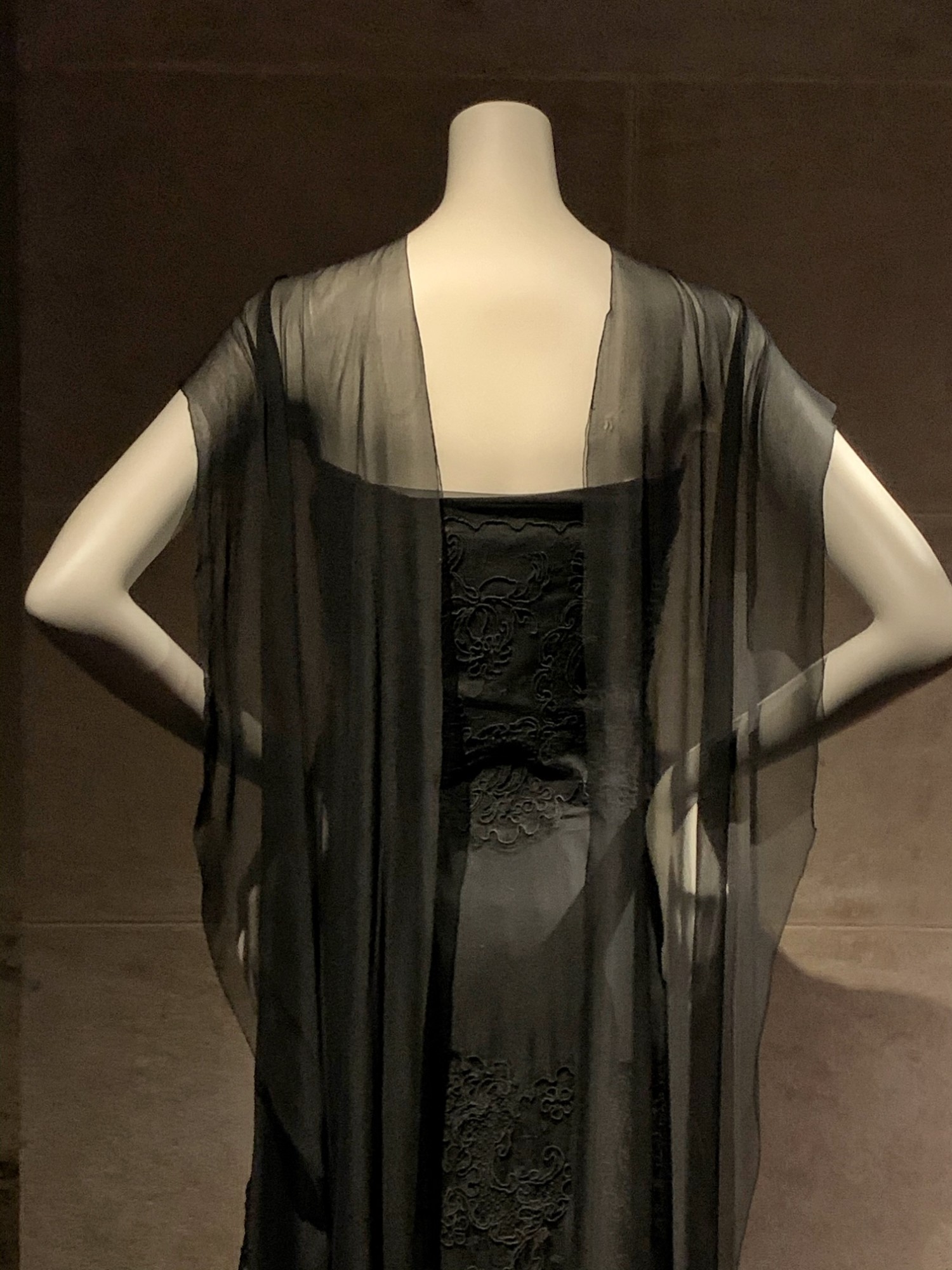
So I’ll see you at the Palais Galliera starting October 1.
Gabrielle Chanel: Fashion Manifesto, October 1, 2020 to July 18, 2021
Palais Galliera 10, Avenue Pierre Ier de Serbie 75116 Paris
Tel: 01 56 52 86 00
Where Should We Eat After the Exhibition?
I have two options for you. If all you want is a simple lunch at a bistro with a classic menu, I recommend WAKNINE, right across from the museum.
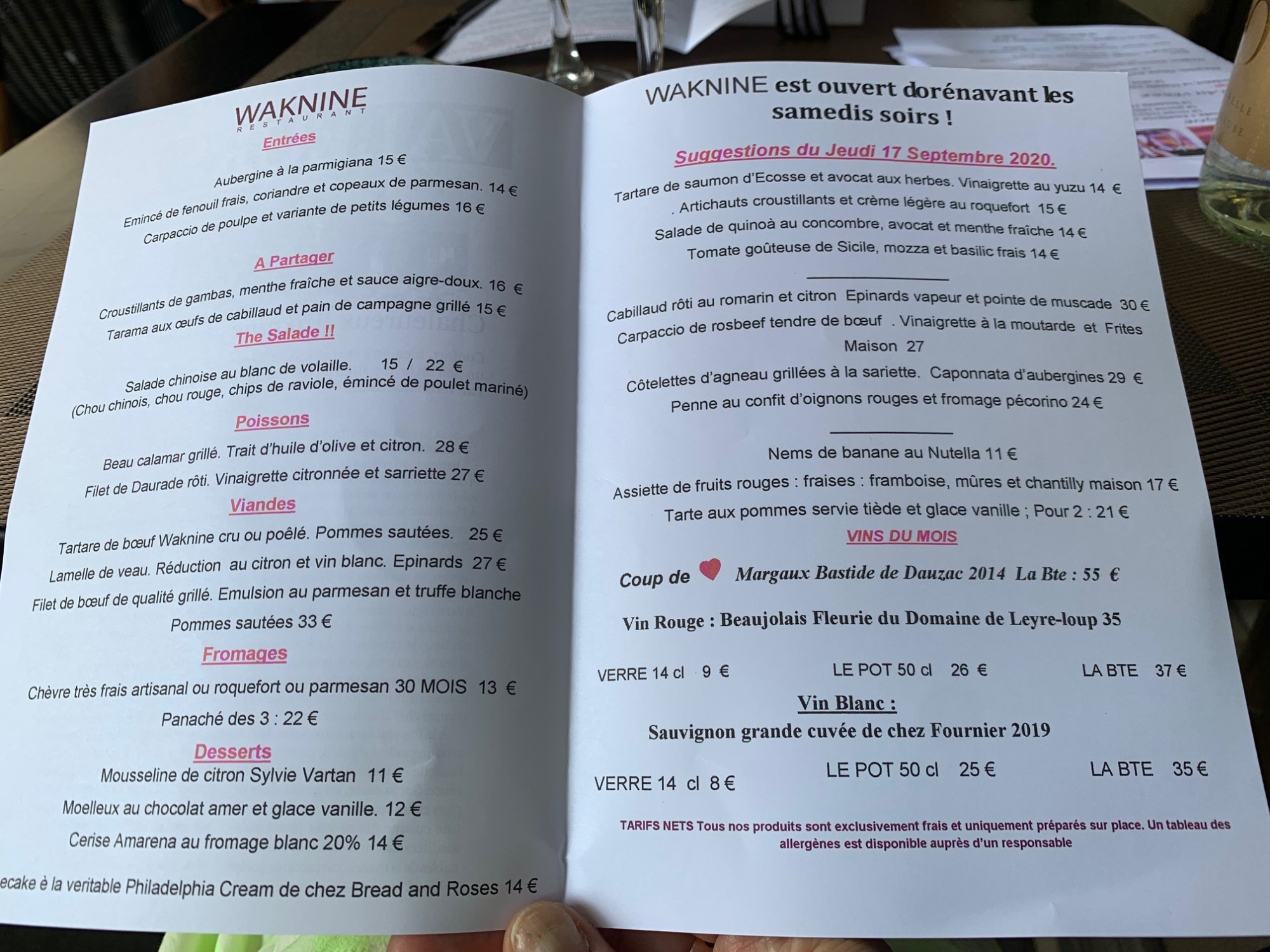
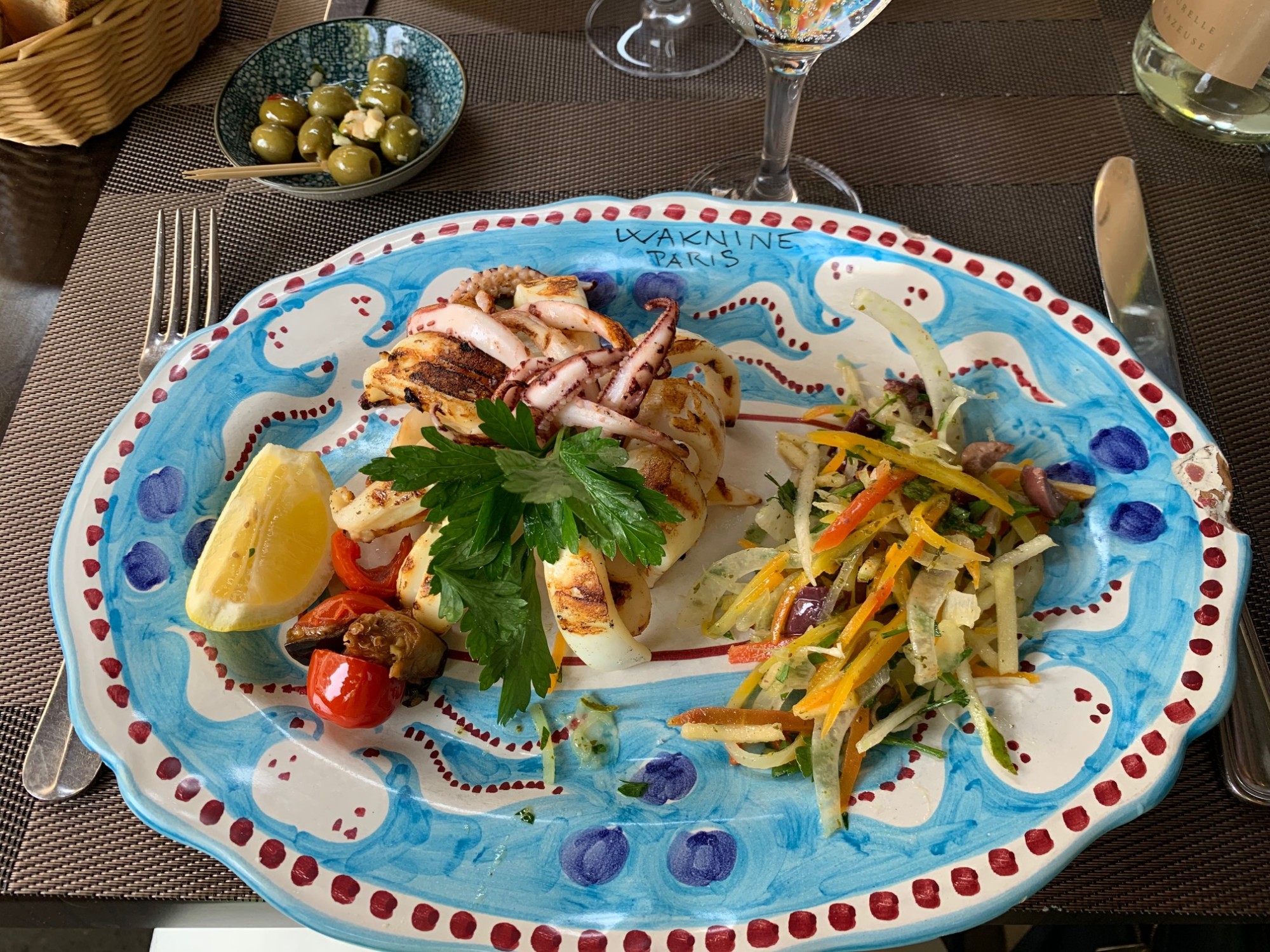
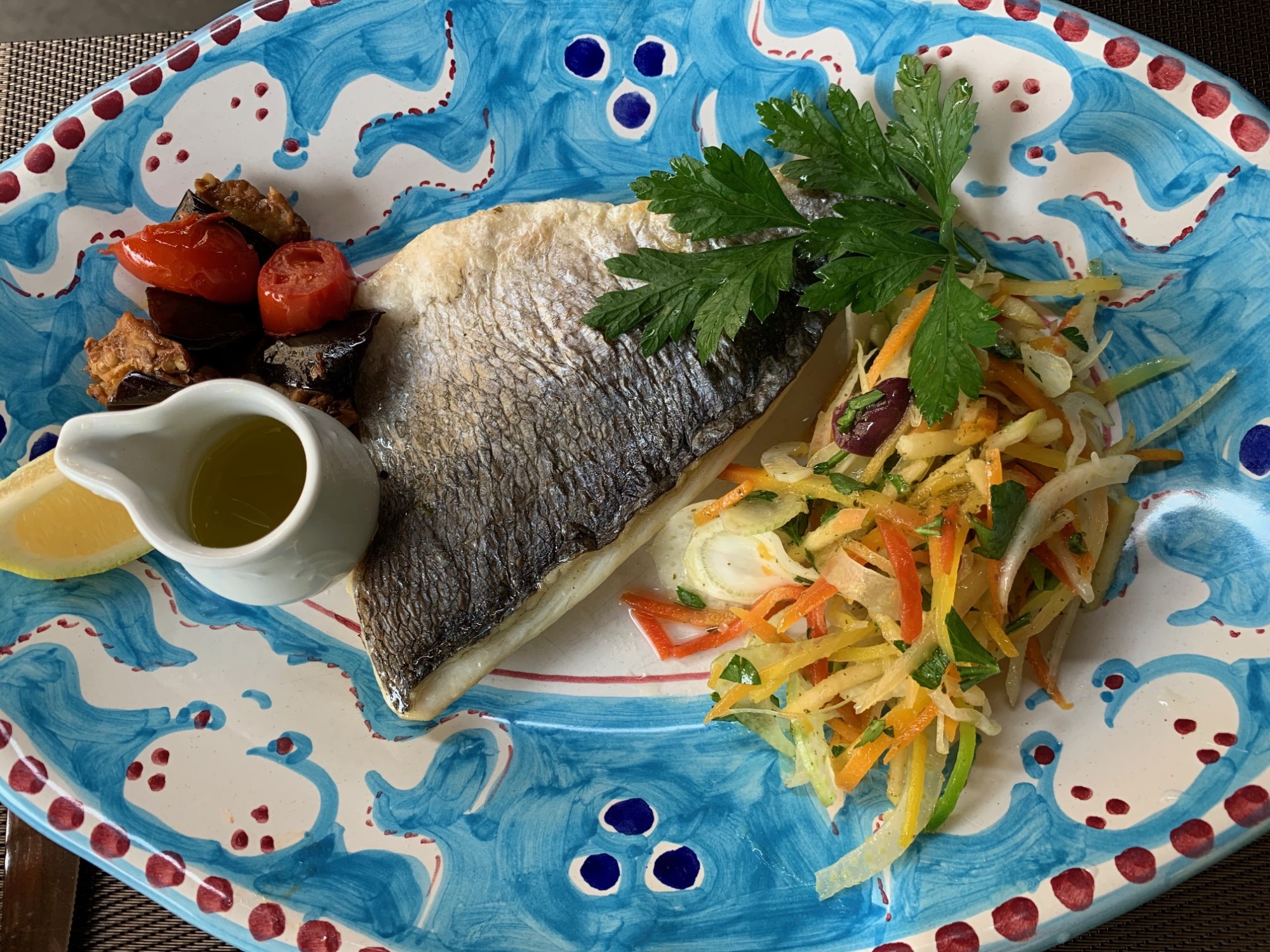
One nice thing is that you can stop in at any time for a bite to eat, a drink, or even a pastry.
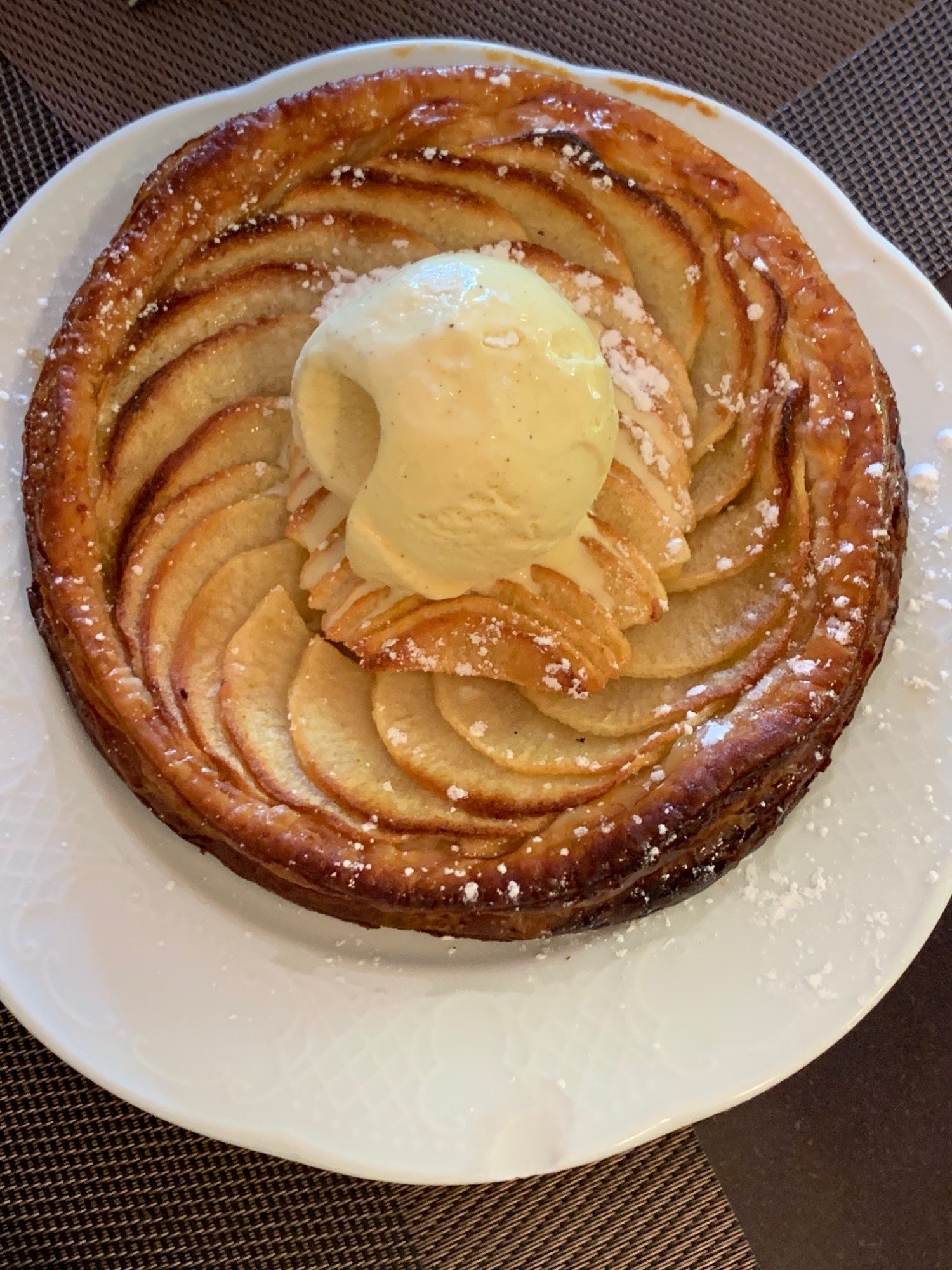
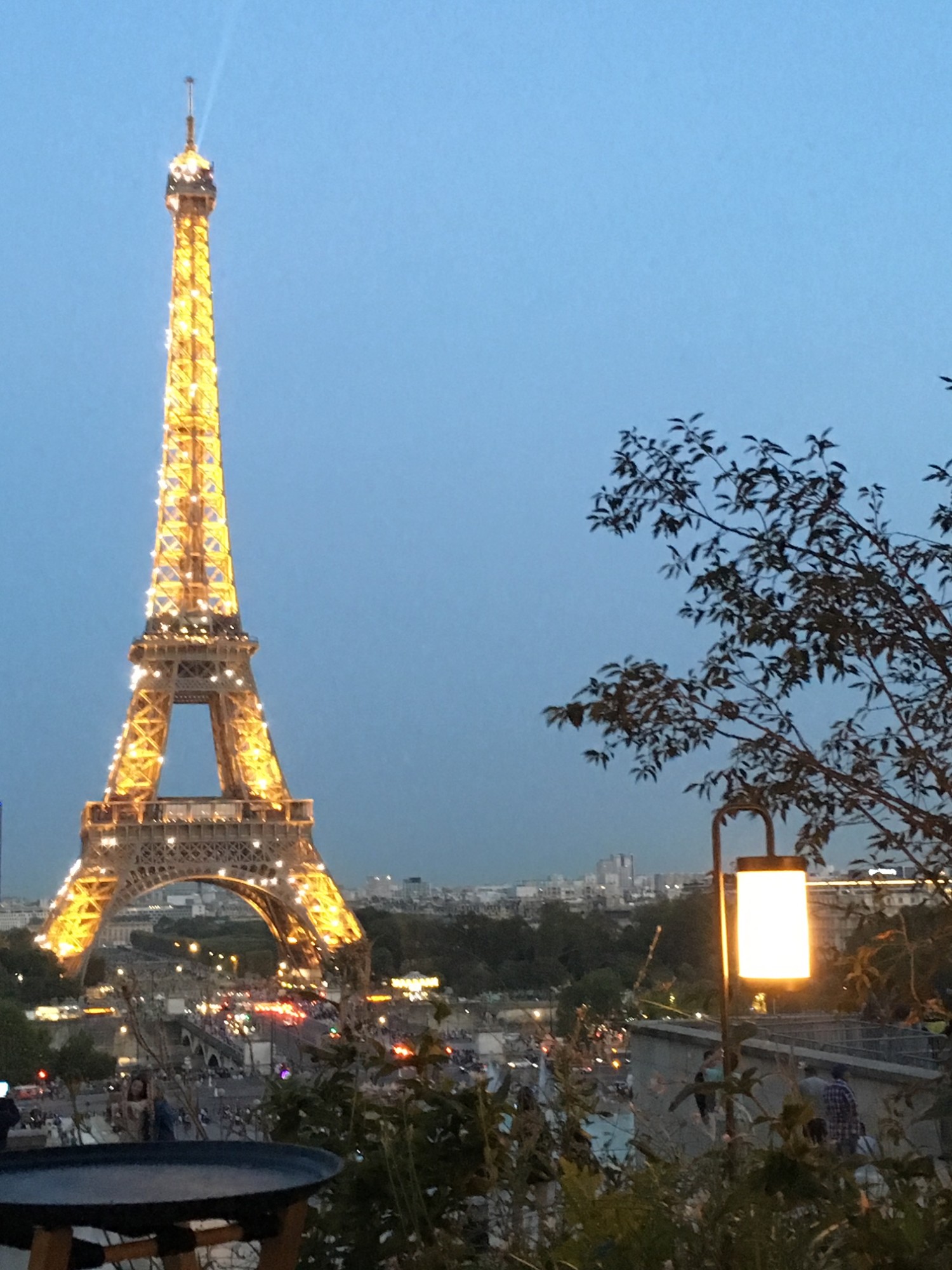
Second option: if you’d like to follow your visit with an evening with a view, Girafe is waiting for you at the Trocadéro, just a few steps away. The specialties are fish and shellfish, and best of all, there’s an unobstructed view of the Iron Lady!
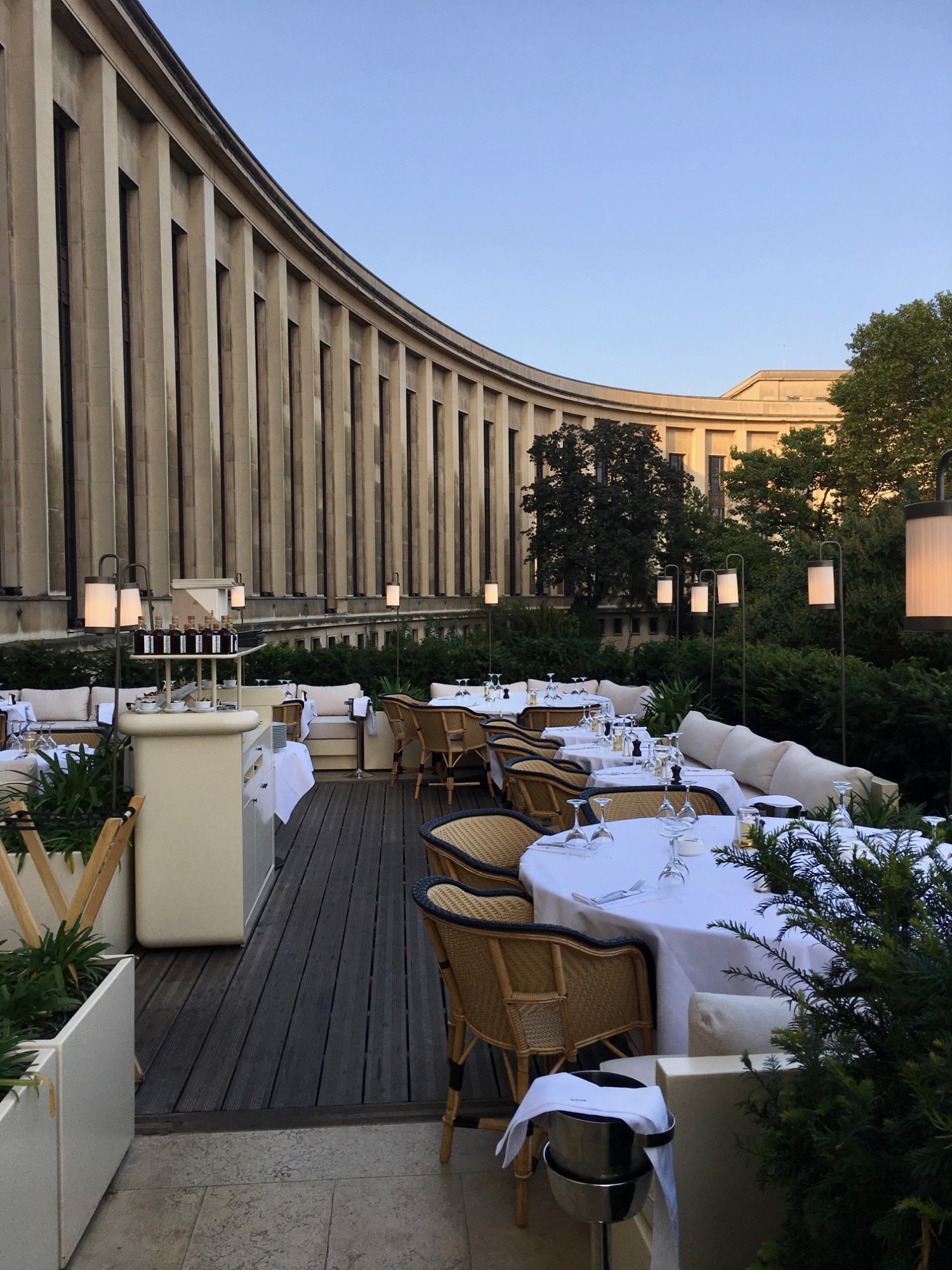
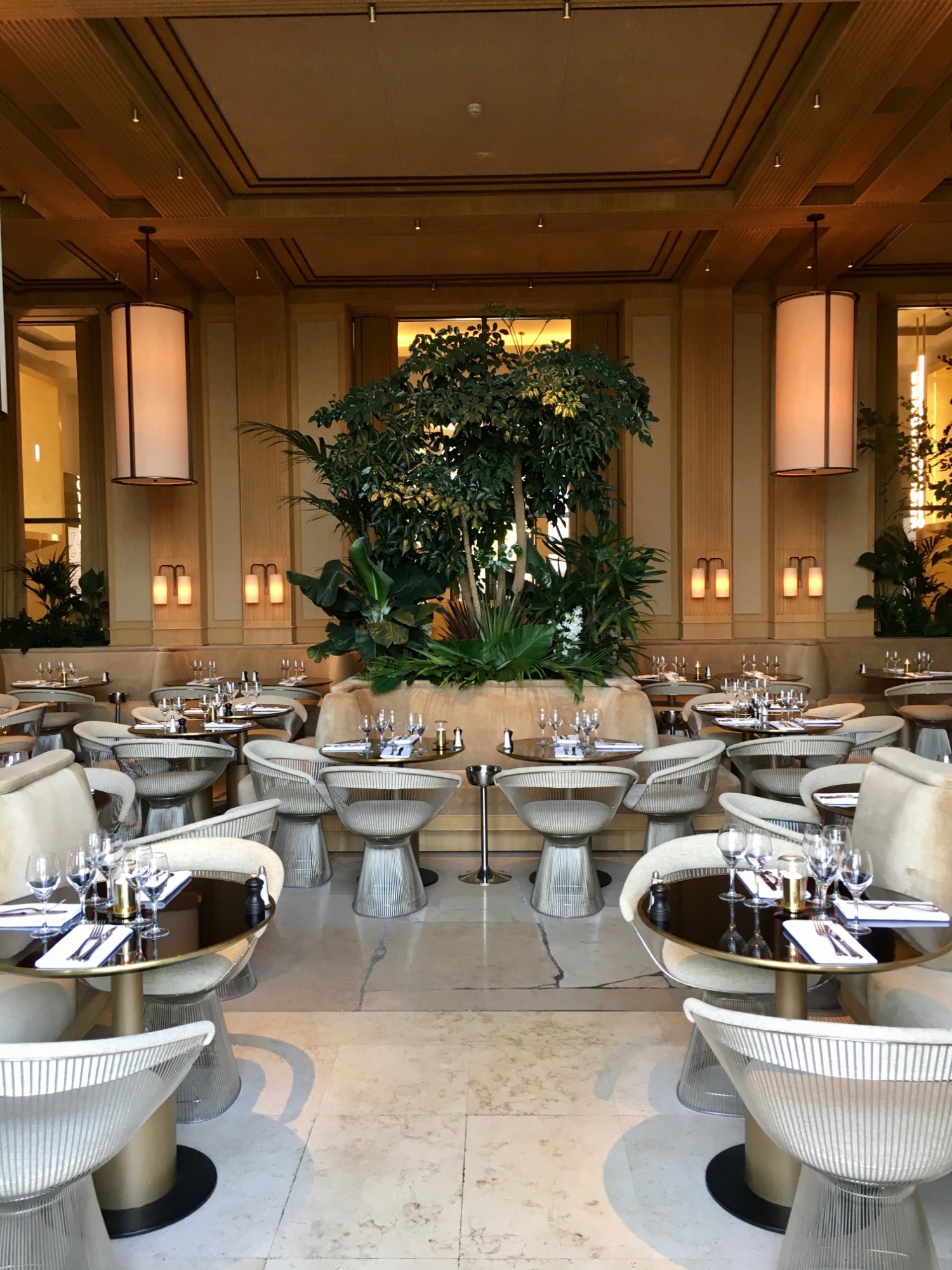
And let’s not forget the most important thing: what’s on the plate!
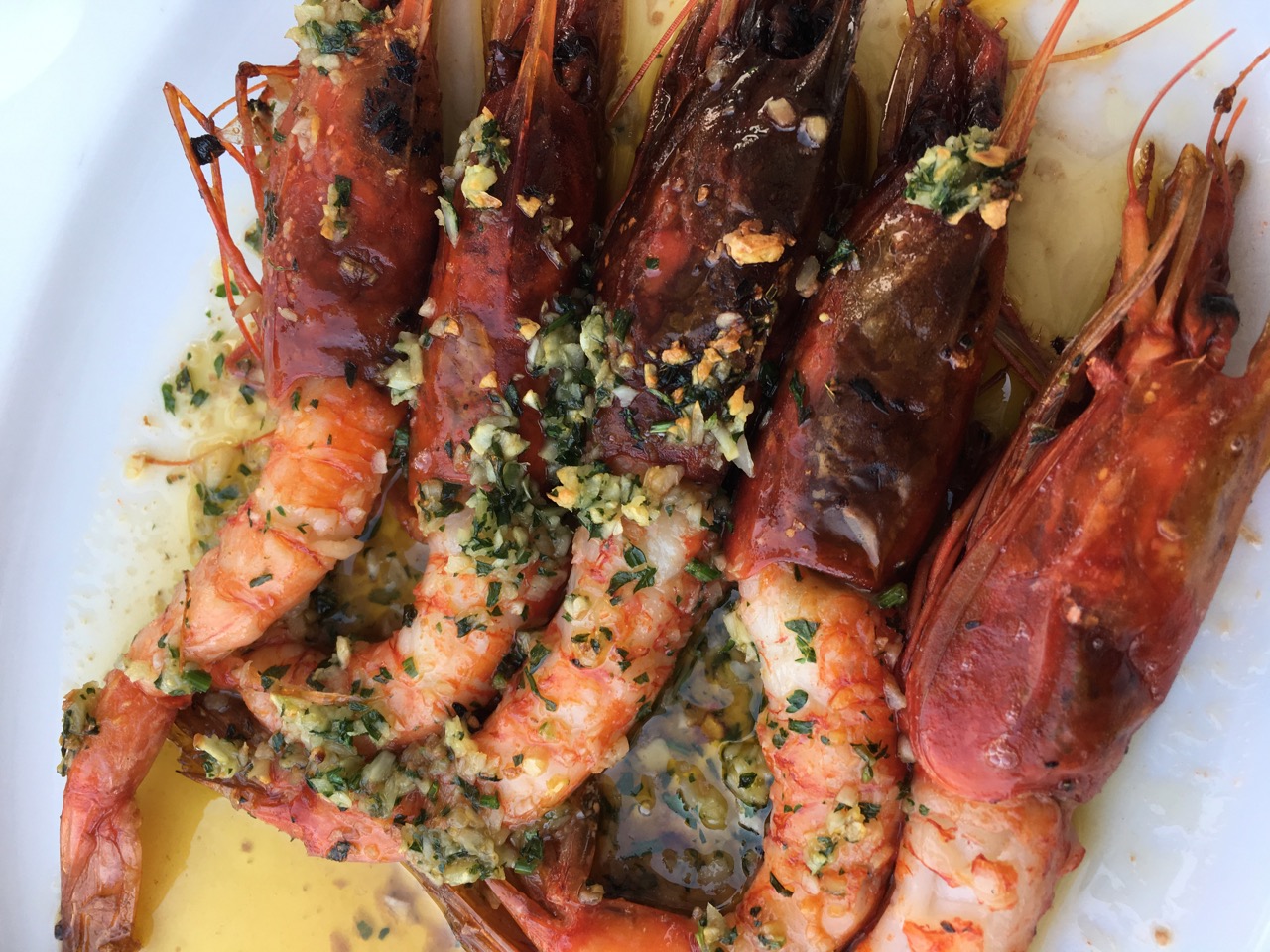
Restaurant Girafe 1 Place du Trocadéro et du 11 Novembre, 75016 Paris