
The title of Royal Square isn’t handed out lightly. That’s exactly why people are still debating how many there are in Paris! Let’s take a closer look and see how many, in the end, there really are of these royal squares in Paris.
Royal Squares: A Definition
How about we start with the basics? What exactly is a Royal Square?
It’s all about symmetry and harmony when it comes to a royal square. Here’s how art historian Pascal Piéra defines it: “An original French creation that pairs a formally laid-out square with a statue of the sovereign, the royal square is most often enclosed by a group of matching houses or mansions built to a common design.” Notice one key detail: there’s a statue of the sovereign in the square itself. But we’ll come back to that. The royal square first appeared in the 17th century. As for the very first one, today we know it as Place des Vosges. In fact, it went by the name Place Royale until 1800.
Place des Vosges: The First of Them All
There’s some debate over how many royal squares Paris has. But one thing’s for sure: Place des Vosges is one of them, and it was the very first. Construction began in 1605 on the orders of King Henri IV. What had been a horse market was about to become a magnificent square. Its layout is symmetrical, organized around the two main pavilions that tower over the rest.
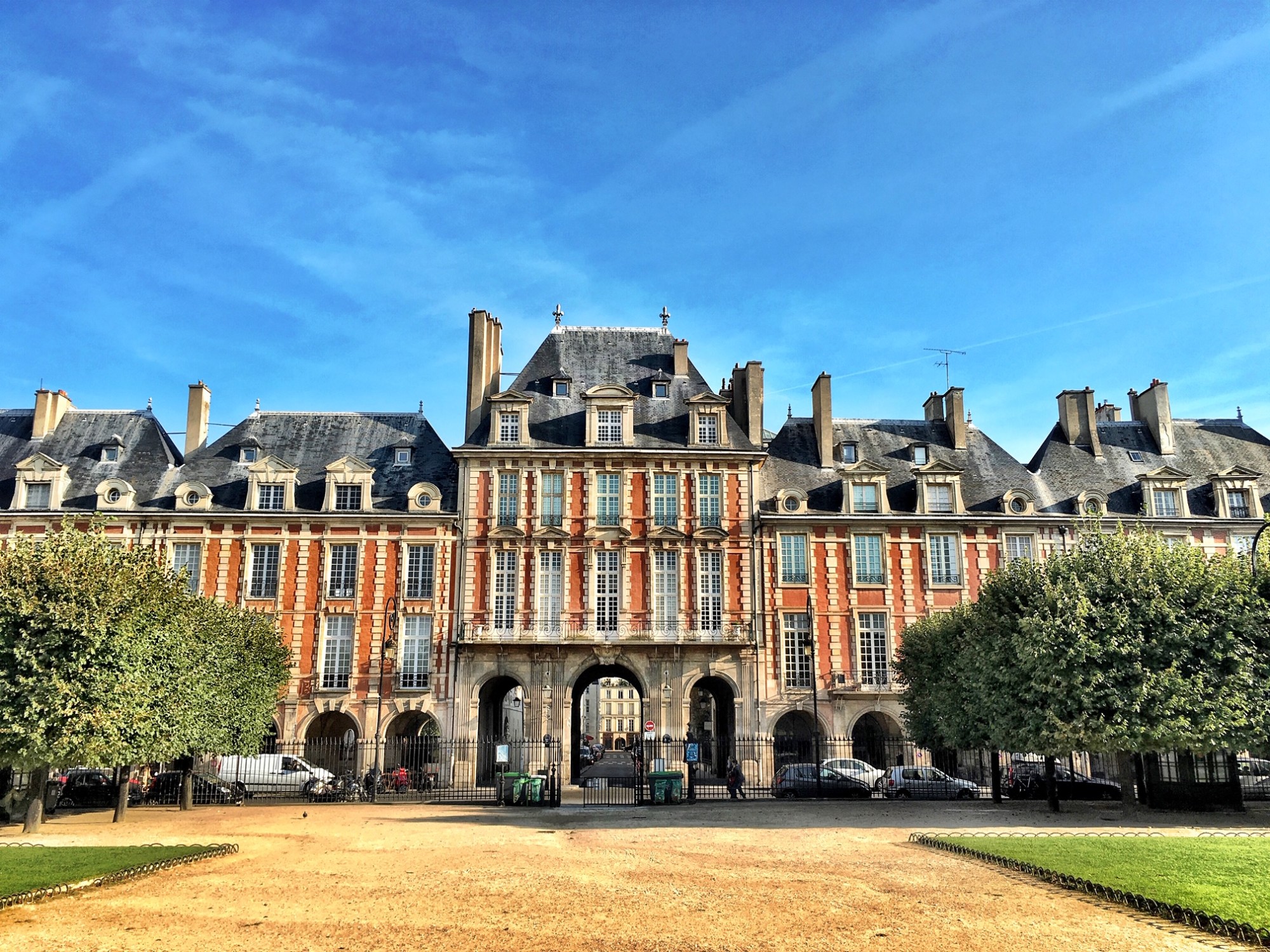
The first to go up was the Pavillon du Roi on the south side, taller than all the other buildings. It faces the Pavillon de la Reine, which also rises above the rest. In all, 36 pavilions surround the square. All built to the same design, they sit atop arcades and have two stories with four tall windows, topped by two attic levels. Place Royale opened in 1612, after Henri IV’s death. At its center are an enclosed garden and a statue of the reigning monarch at the time: King Louis XIII. It was renamed Place des Vosges in 1800 in honor of the Vosges department, the first to pay its taxes in full during the French Revolution. Henri IV wanted to give Parisians a place to stroll, and that’s exactly what it’s still used for today!
Place Dauphine: Is It Really Royal?
Next in chronological order comes Place Dauphine, which we also owe to Henri IV, one of the kings who helped build Paris.
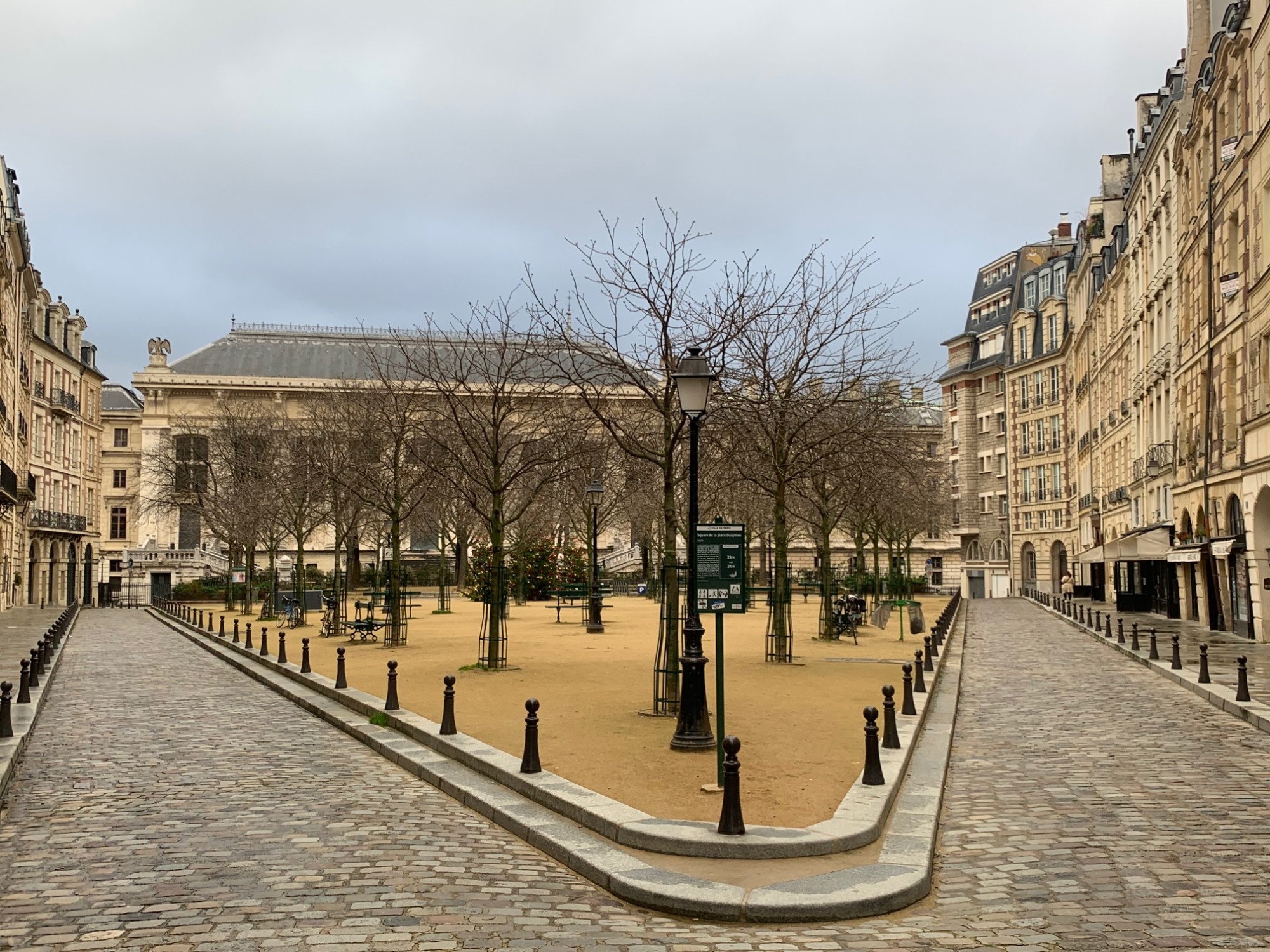
After the opening of Pont Neuf, Henri IV wanted to develop the tip of the Île de la Cité, from behind the Palais all the way to this bridge, which was innovative in more ways than one. And so Place Dauphine was born, named for the king’s son, the Dauphin. The king’s instructions were precise. The new buildings were to be built in the spirit of Place Royale and follow this plan: a “promenade” surrounded by houses “of a uniform design”. Among the similarities, you can spot the arcades (closed off) at street level. Originally, the buildings were identical. The square was almost entirely enclosed, with an opening on either side. But a royal statue in the middle? There never was one! The only statue of the king stands outside the square, at the tip of the island.
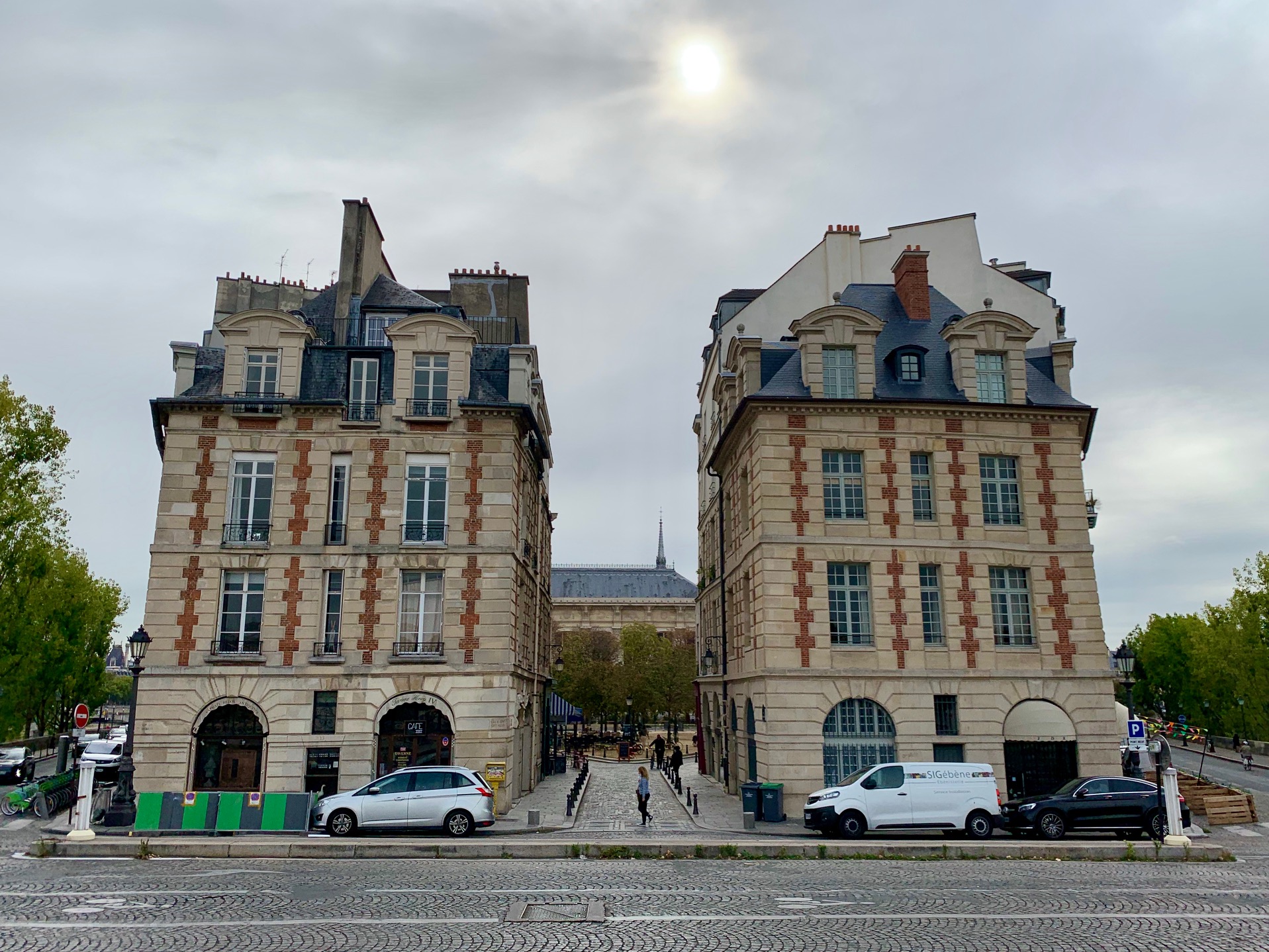
Over the centuries, the houses were torn down or replaced. The only two left from the original square flank its entrance from Pont Neuf. And still no royal statue. That’s why this square, though usually described as royal, doesn’t necessarily qualify in the eyes of some historians.
Place des Victoires: To the Glory of Louis XIV
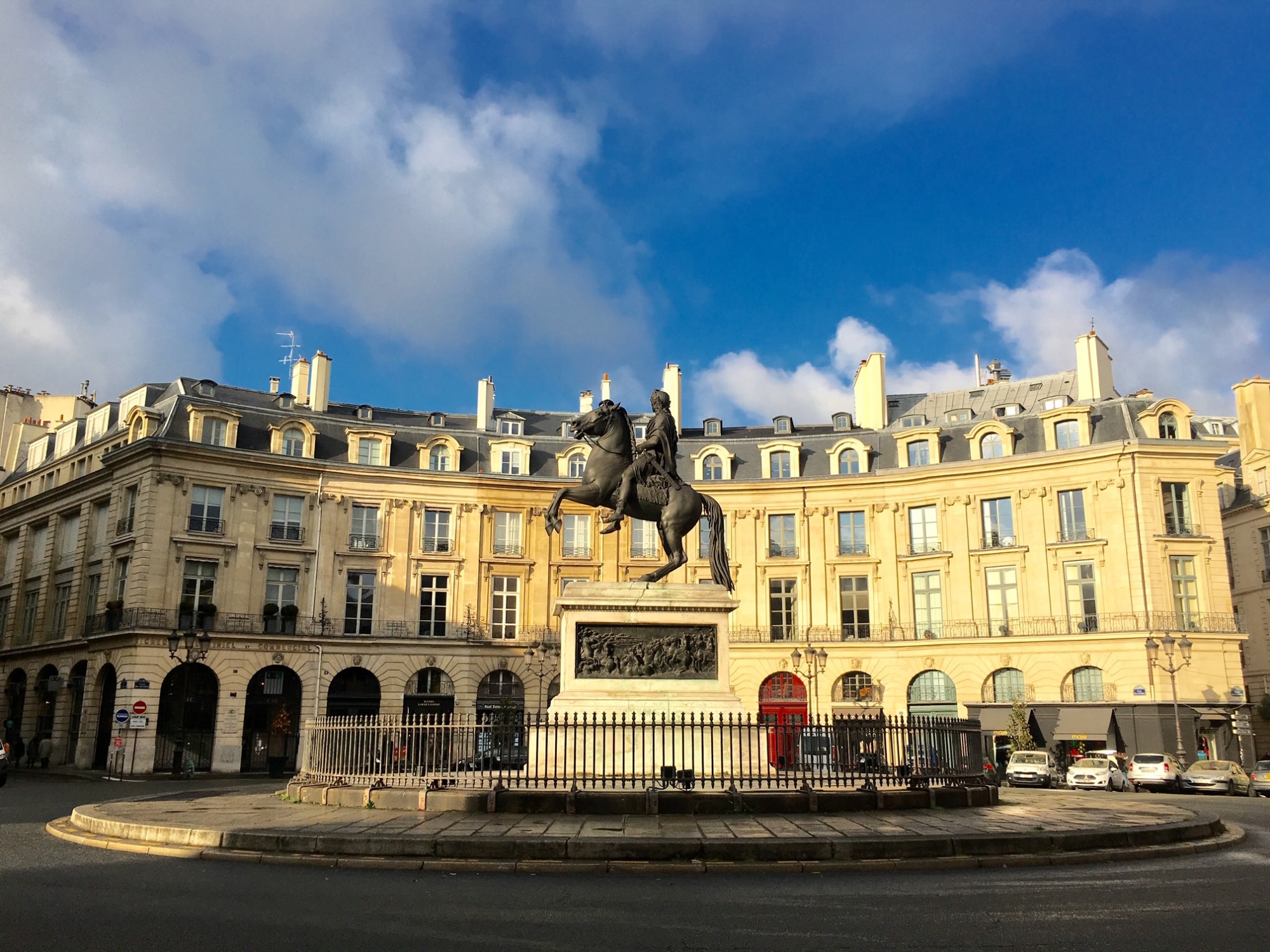
Place des Victoires is the very definition of a royal square. It was conceived and designed as a setting for a statue glorifying the sovereign. Marshal de la Feuillade oversaw its construction. From opening day, a statue of the sovereign stood at its center. But that very first statue showed him standing on foot. It was later pulled down during the Revolution. A wooden pyramid took its place. Finally, in 1822, the equestrian statue you can admire there today was installed.
Place Vendôme: A Symbol of Parisian Luxury
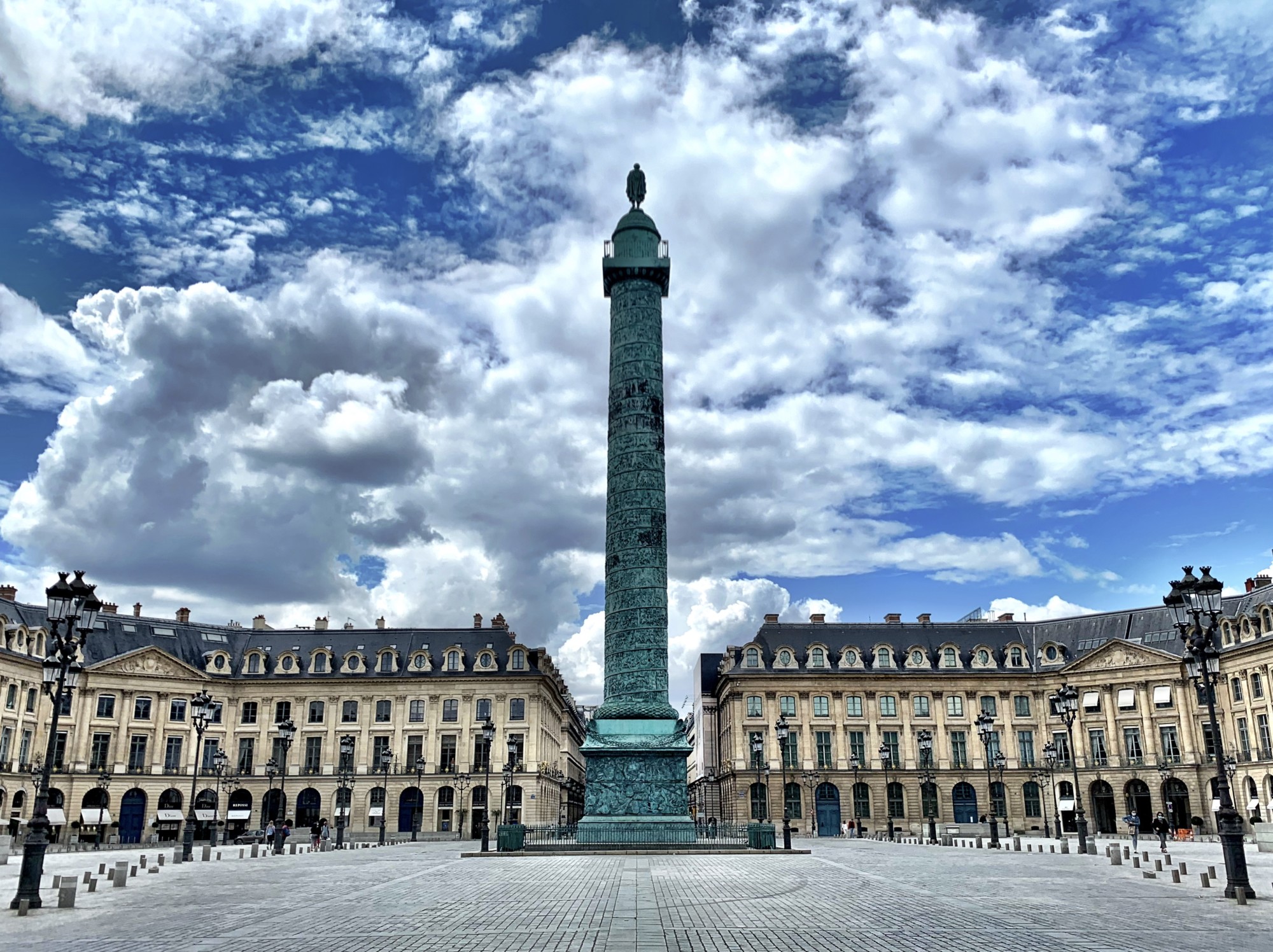
Mention Place Vendôme today, and luxury naturally comes to mind. Between a legendary hotel and the most prestigious jewelry brands, it has all the ingredients.
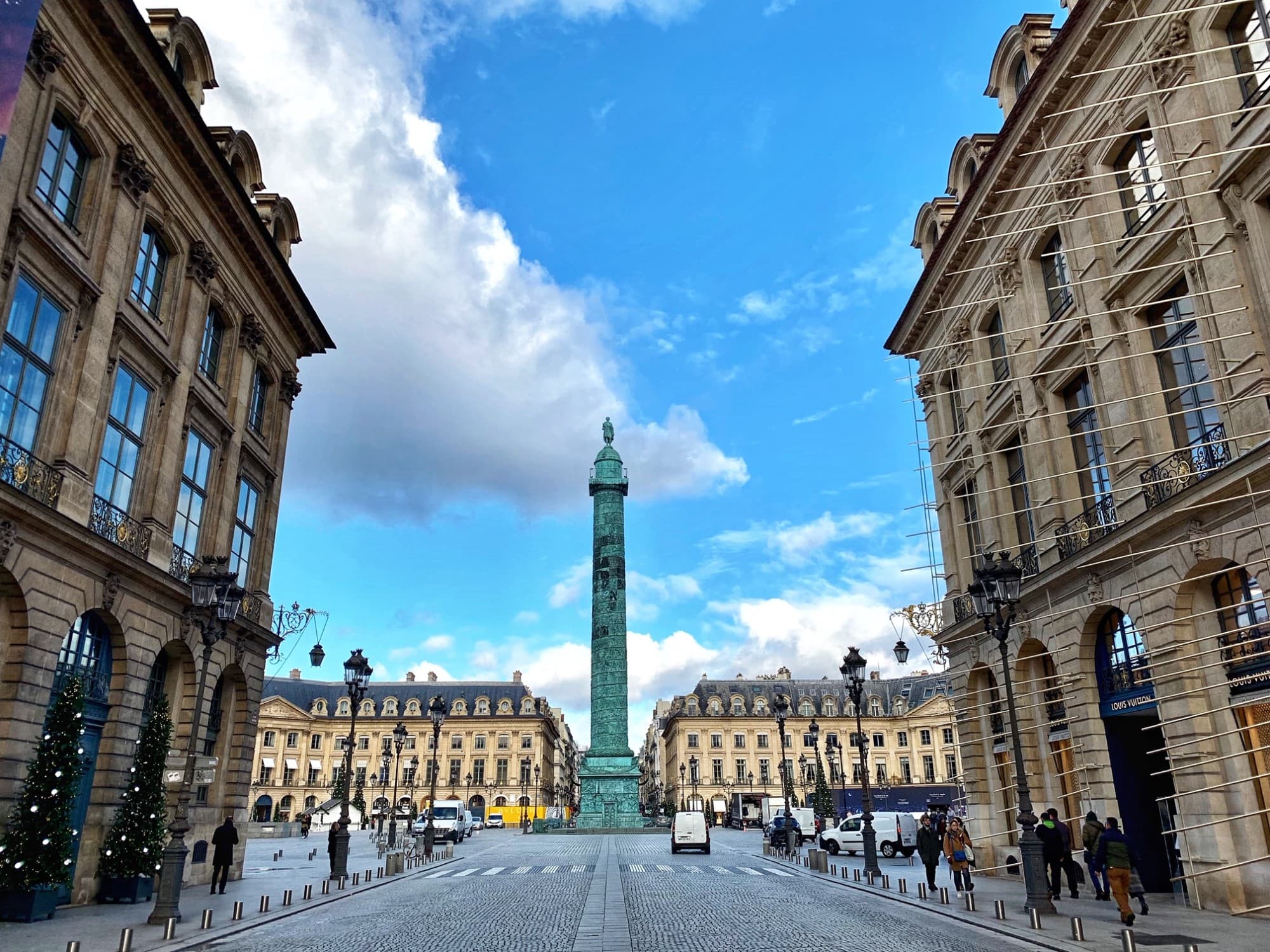
The history of Place Vendôme has had its share of twists and turns. The original idea, in 1685, was to build a rectangular square lined with magnificent public buildings, such as the royal library and the hôtel de la Monnaie. Work got underway, the facades went up, and a bronze equestrian statue of Louis XIV stood in the middle. But the royal project was abandoned in 1699. The land and the facades built on it were sold. The facades were torn down, and private mansions went up instead. As for the statue of the king, it was destroyed in 1789.
In 1810, a column was erected and topped with a statue of Napoléon dressed as Caesar. It was taken down during the Commune and later put back up. What a roller coaster for the most luxurious of Paris’s royal squares!
Place de la Concorde: The Most Spectacular of Them All
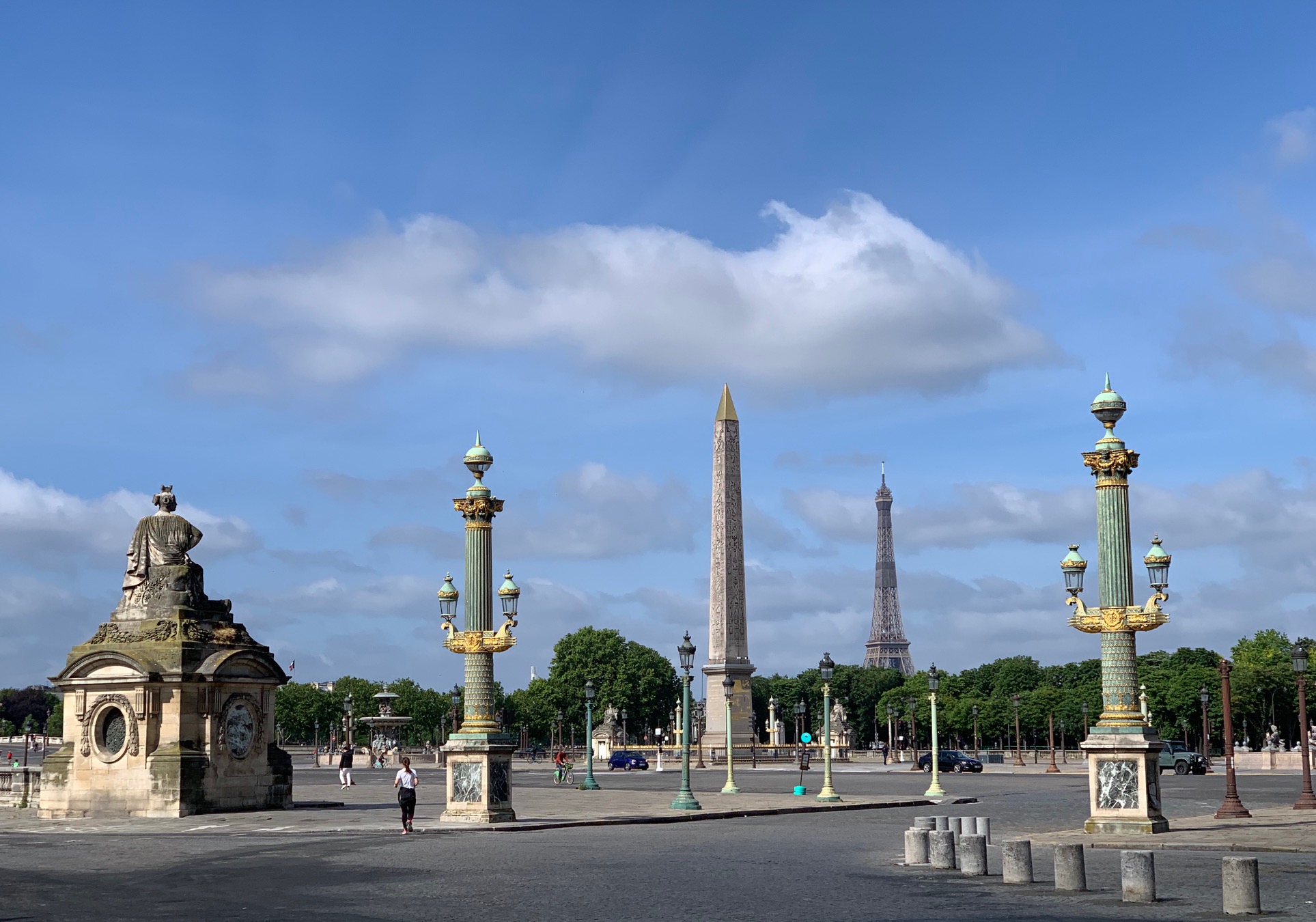
Last but not least, Place de la Concorde. It’s the largest, the most imposing, and it deserves every superlative you can think of. Its current name sends a political message: the Directory chose it to mark the reconciliation of the French people after the Reign of Terror. But before we get to that, it all started in 1748. The city of Paris decided to erect a statue of Louis XV to celebrate his recovery from an illness. A competition was then launched to turn what was just an open esplanade into a royal square. After plenty of twists and turns, the square was completed in 1772. After the Revolution, a guillotine took the place of the statue, which was sent off to be melted down.
As for the obelisk we know today, it dates to October 25, 1836. It was Louis Philippe who decided to erect this gift from the viceroy of Egypt, Méhémet Ali, on Place de la Concorde, where “it will call to mind no political event.”
And there you have it: we’ve made the rounds of all these Parisian wonders. Which one is your favorite?


