Marie Curie: A Woman in the Panthéon
This year we’re celebrating the 150th anniversary of the birth of Marie Curie, née Slodowska.
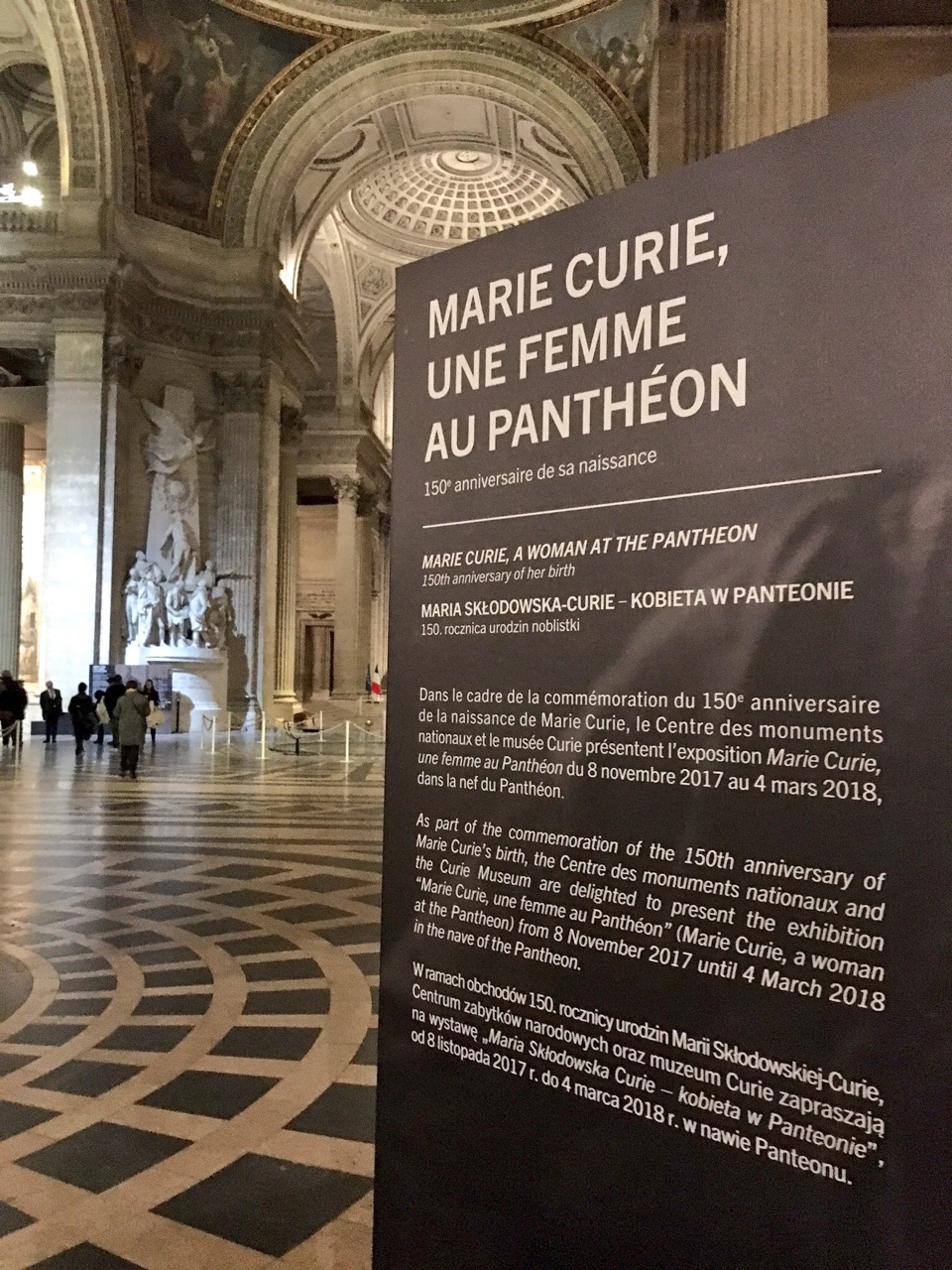
This Polish scientist, who made France her adopted home, revolutionized science with her discoveries about radioactivity. Of course we know her name, but the exhibition in her honor at the Panthéon tells us so much more about the woman, the scientist, the mother, the wife, and the feminist.
So Marie Curie is in the spotlight at the Panthéon. And it’s not the first time: she was the first woman to be interred in the Panthéon on her own merits, in 1995 (other women had been buried there, but only as somebody’s wife).
So come with me. Let’s get to know Marie Curie.
Marie Curie: The Exhibition
The exhibition unfolds in chronological order, with a prologue and five chapters.
Prologue
We learn that Marie Slodowska came to France from Poland to study, since women weren’t allowed to attend university in Poland.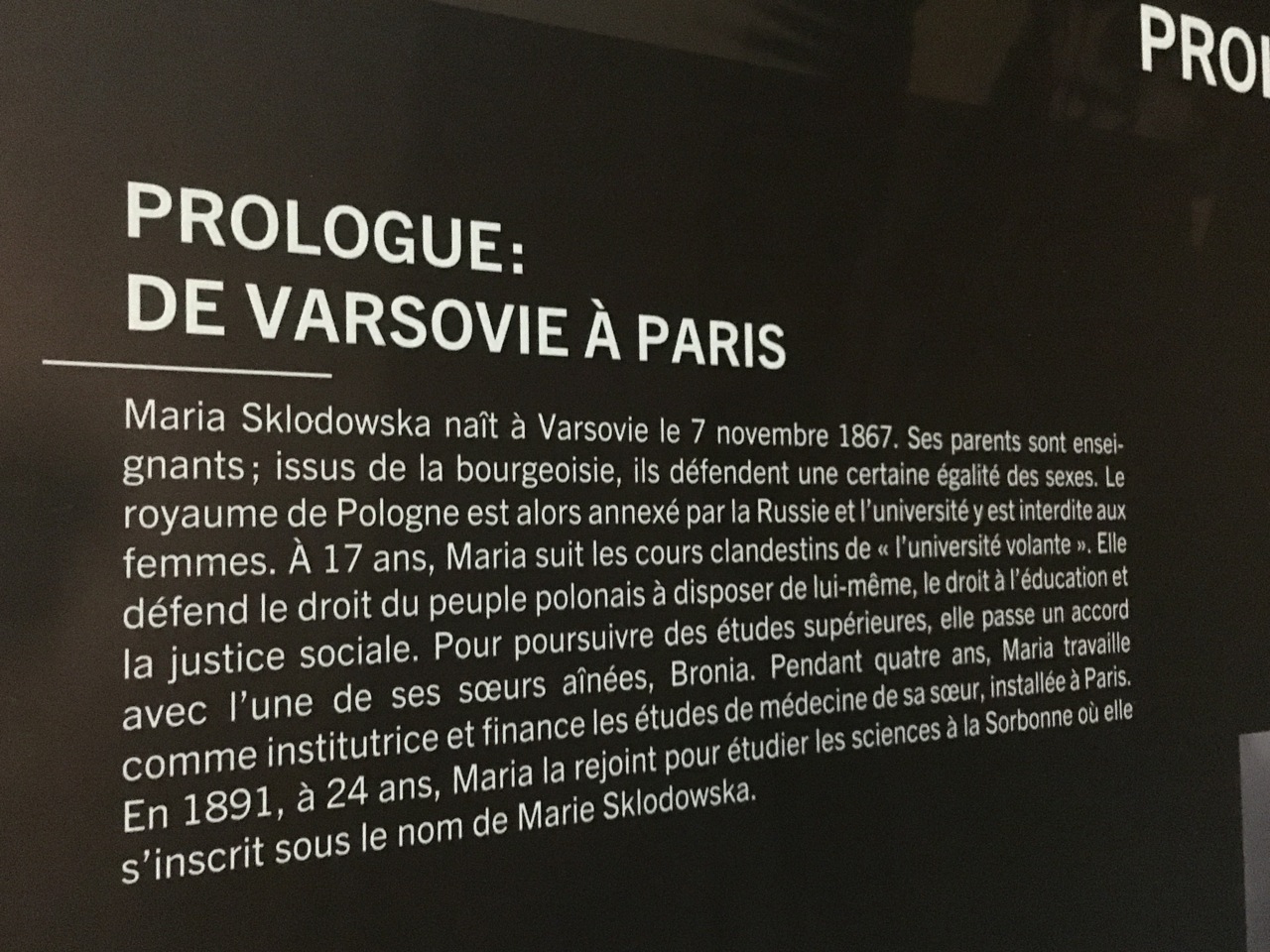
So it’s at the Sorbonne that she studies science. It doesn’t take long for her to show what she’s capable of.
Chapter 1: Pierre and Marie’s Work Together
She earns two degrees: one in mathematics and one in physics.
She catches the attention of her professors, especially Pierre Curie, and sets to work on a doctoral thesis on the radiation emitted by certain ores, particularly uranium. She takes her measurements with instruments made by Pierre Curie himself.
In this chapter, you can see one of Marie Curie’s research notebooks. It’s open to one particular page, but you can browse the rest digitally.
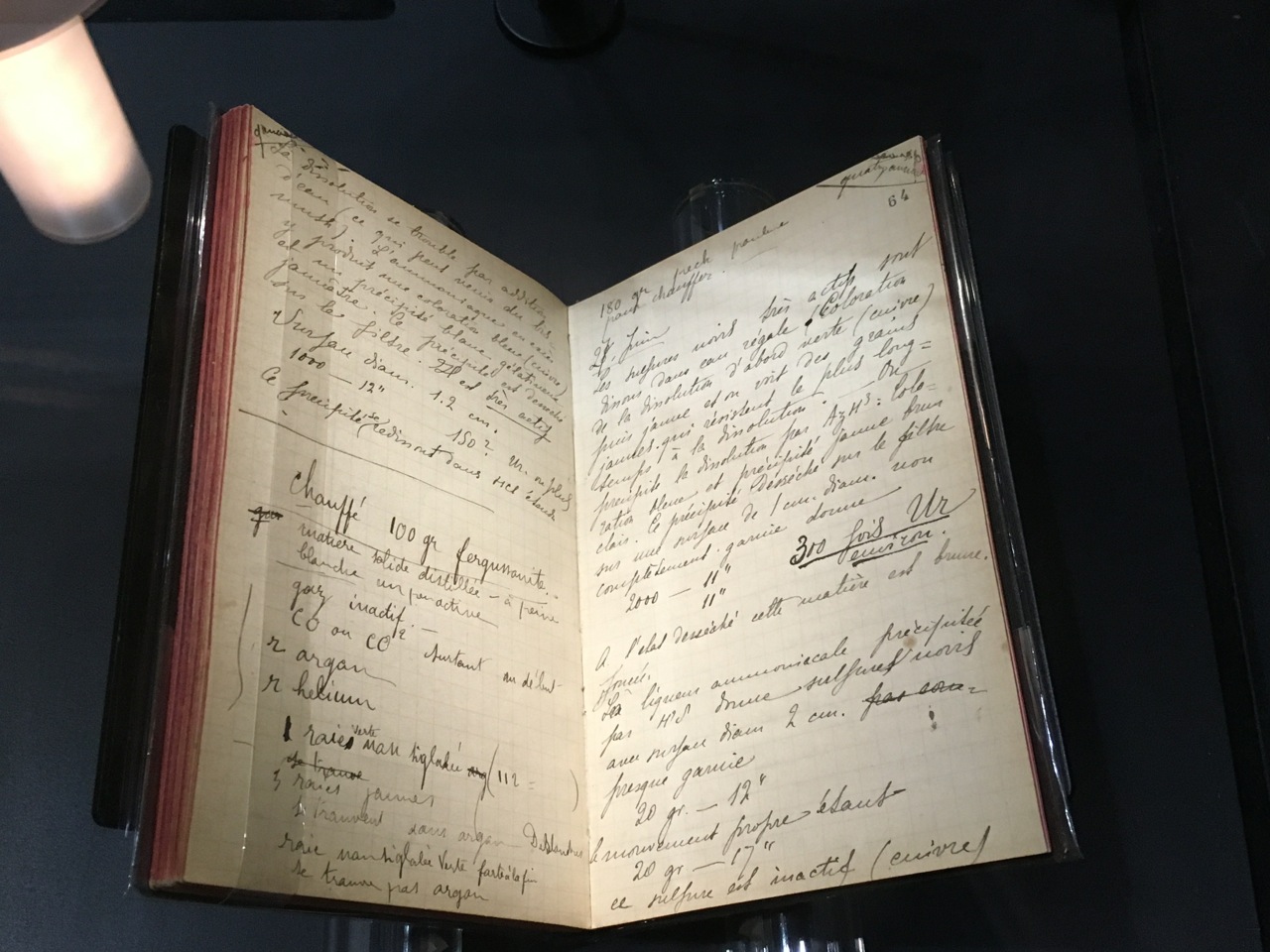
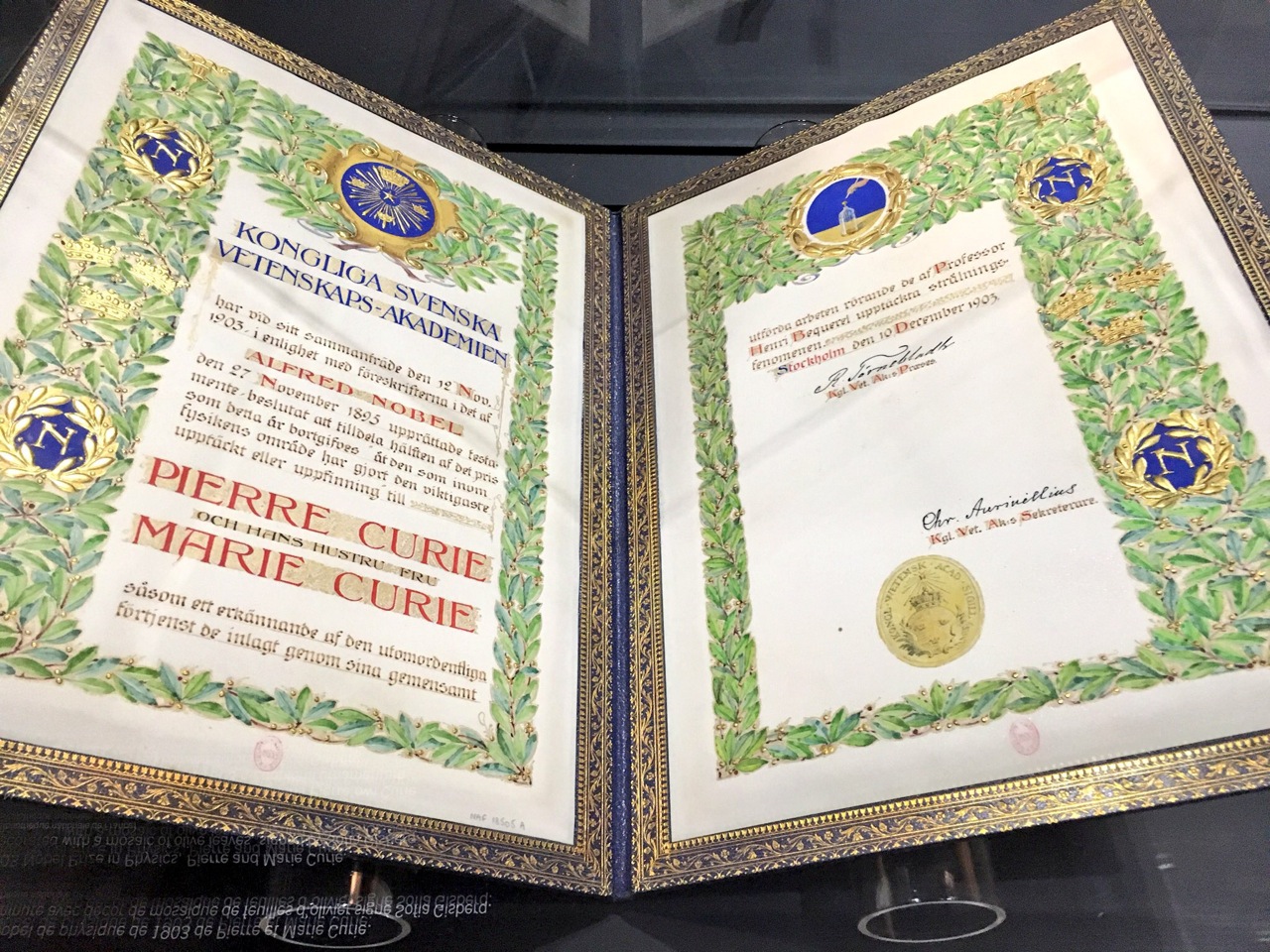
Her discoveries turn the physics of the day on its head. Marie Curie wins her first Nobel Prize alongside her professor, Pierre Curie.
The original Nobel Prize diploma is on display here. It’s quite moving to see it up close, almost close enough to touch.
 Chapter 2: Marie Curie, the Woman and the Mother
Next we get to know the woman. The one smiling in her wedding photo.
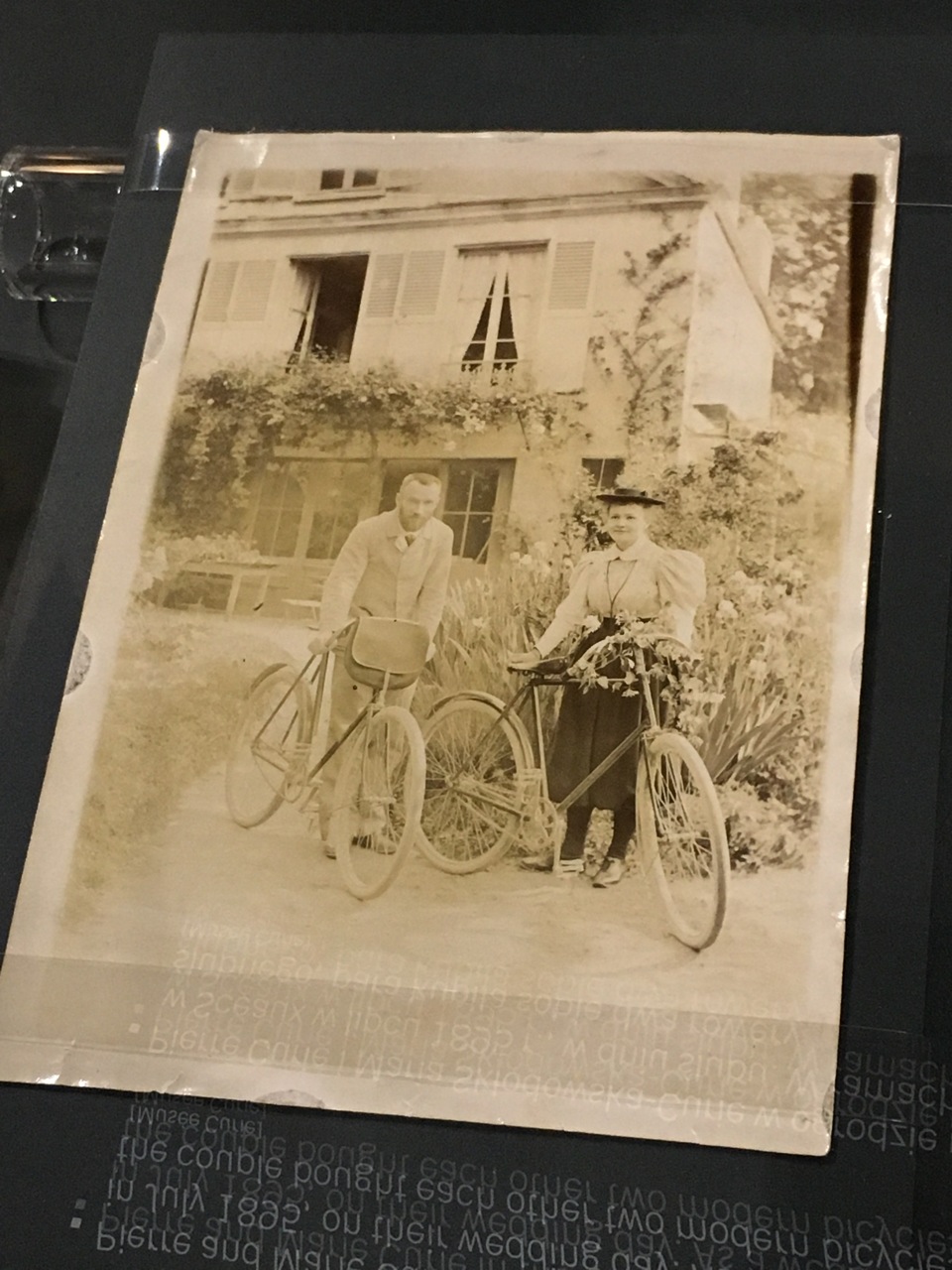
And the mother, too, writing captions for photos of her children in the albums she put together.
There’s also the letter Pierre sent Marie after she’d gone back to Poland, the one that persuaded her to return.
But there’s also the announcement of Pierre’s death in a traffic accident.
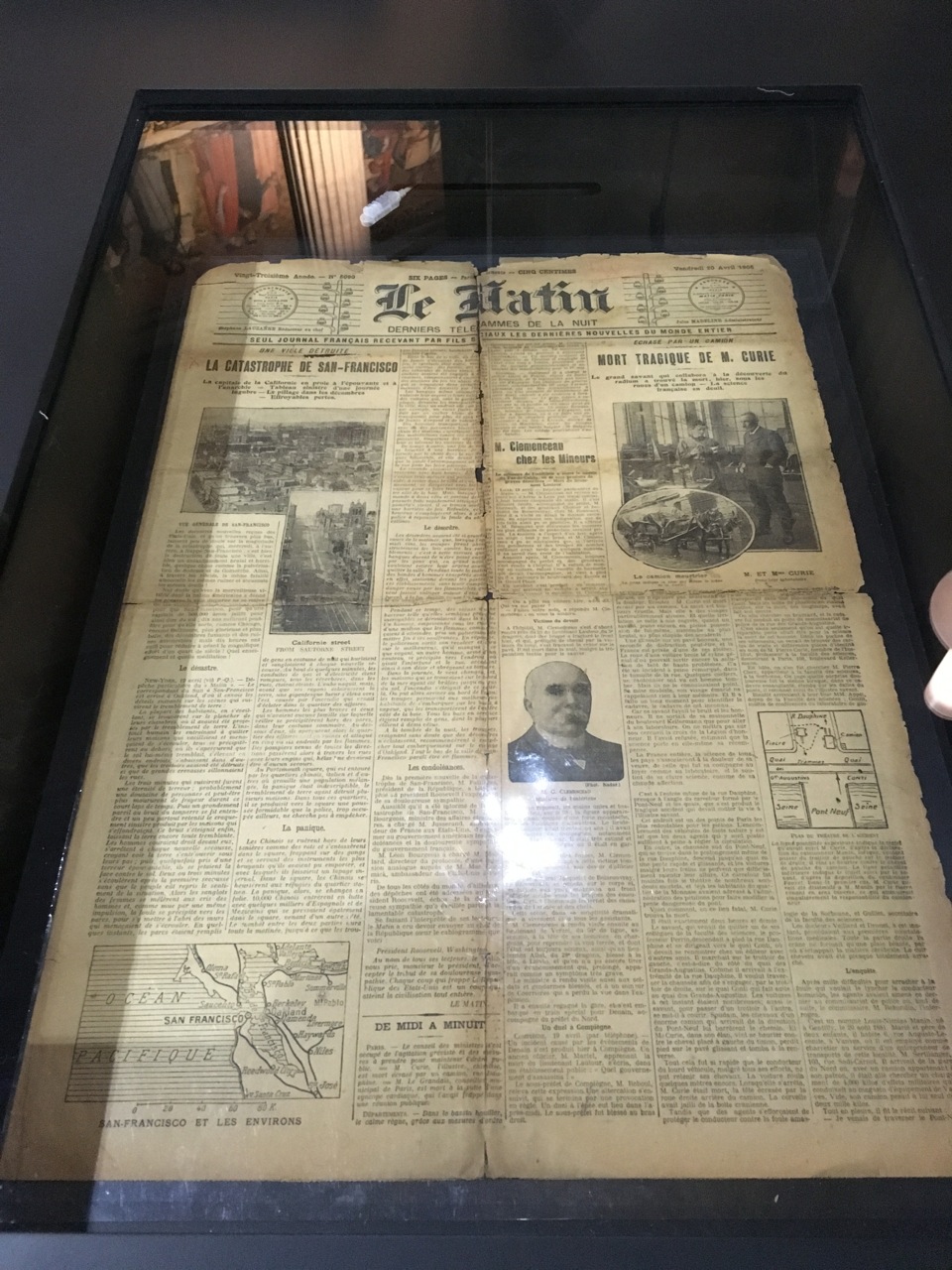
After his death, she takes over her husband’s chair, becoming the first woman to teach at the Sorbonne.
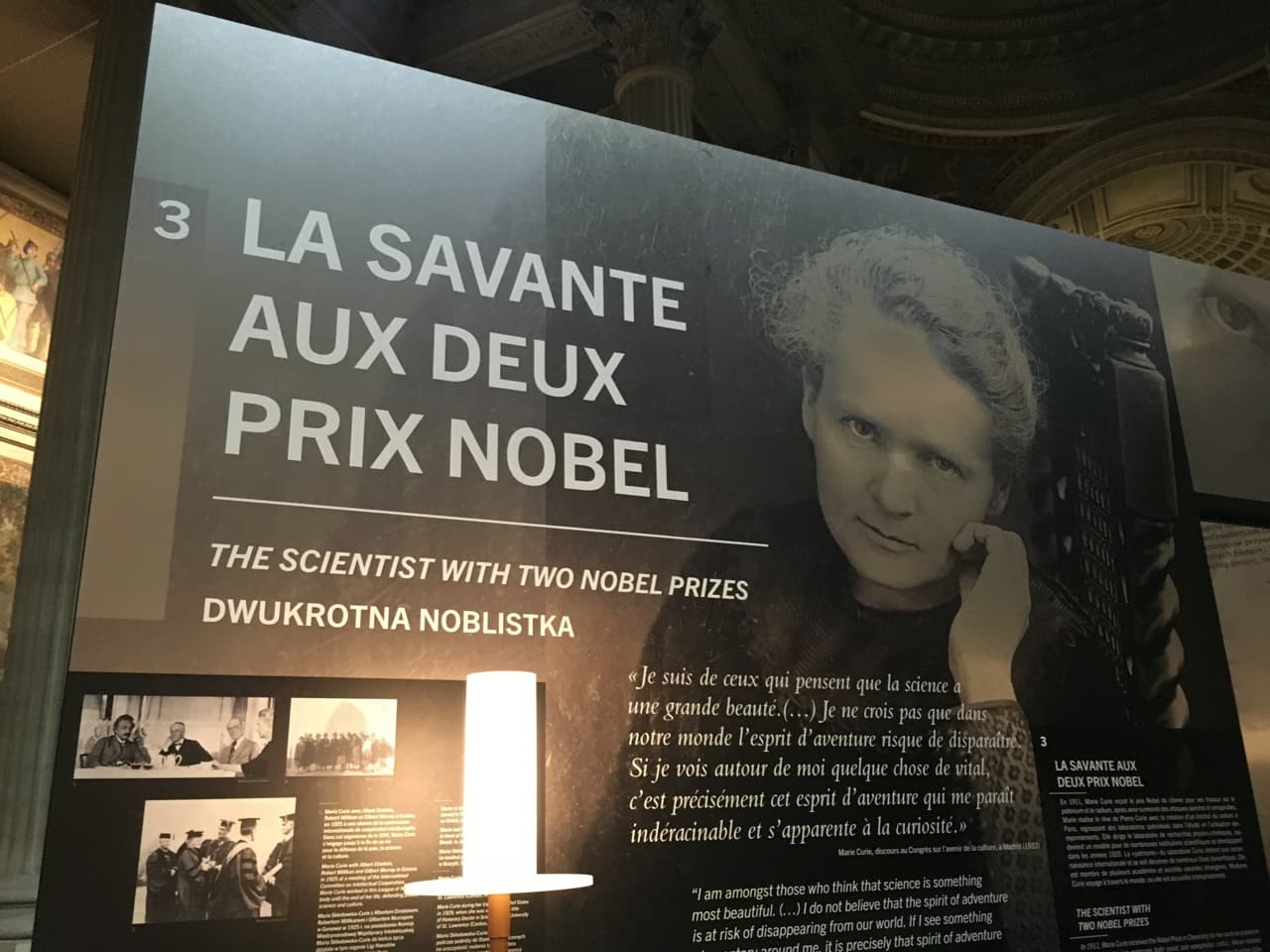
Chapter 3: The Scientist With Two Nobel Prizes
In this chapter, we see that France can treat even its most talented people badly, and this great scientist in particular.
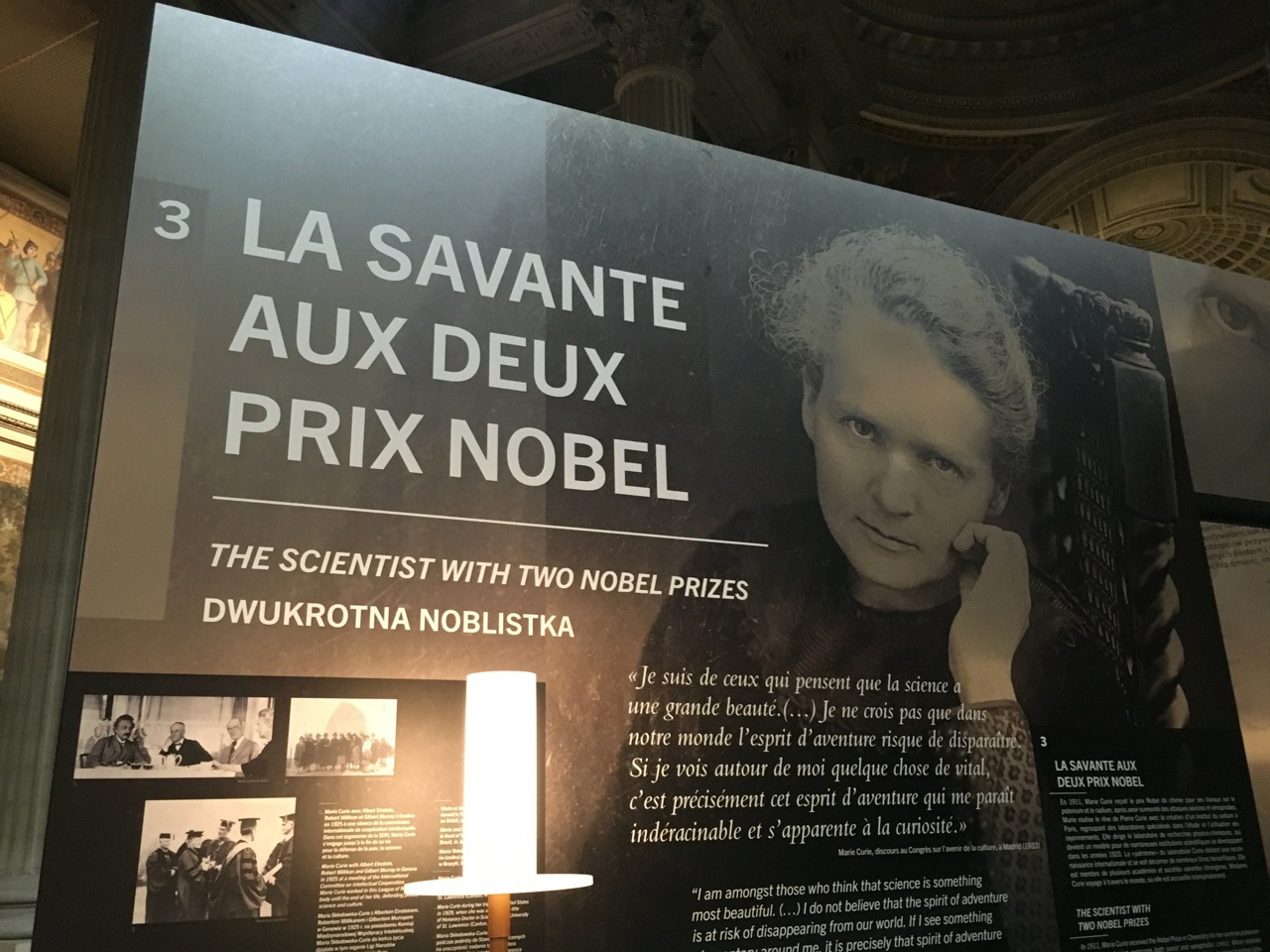
Take the scandal over her bid to join the academy. A bitter contest pits M.Branly, an extreme nationalist, against Marie Curie, whose origins are held against her.
Then comes the scandal over her relationship with Langecin.
These back-to-back scandals even cast a shadow over her second Nobel Prize. She wins it, but she’s asked not to come and accept it.
She goes anyway, and Swedish women organize a welcome for her.
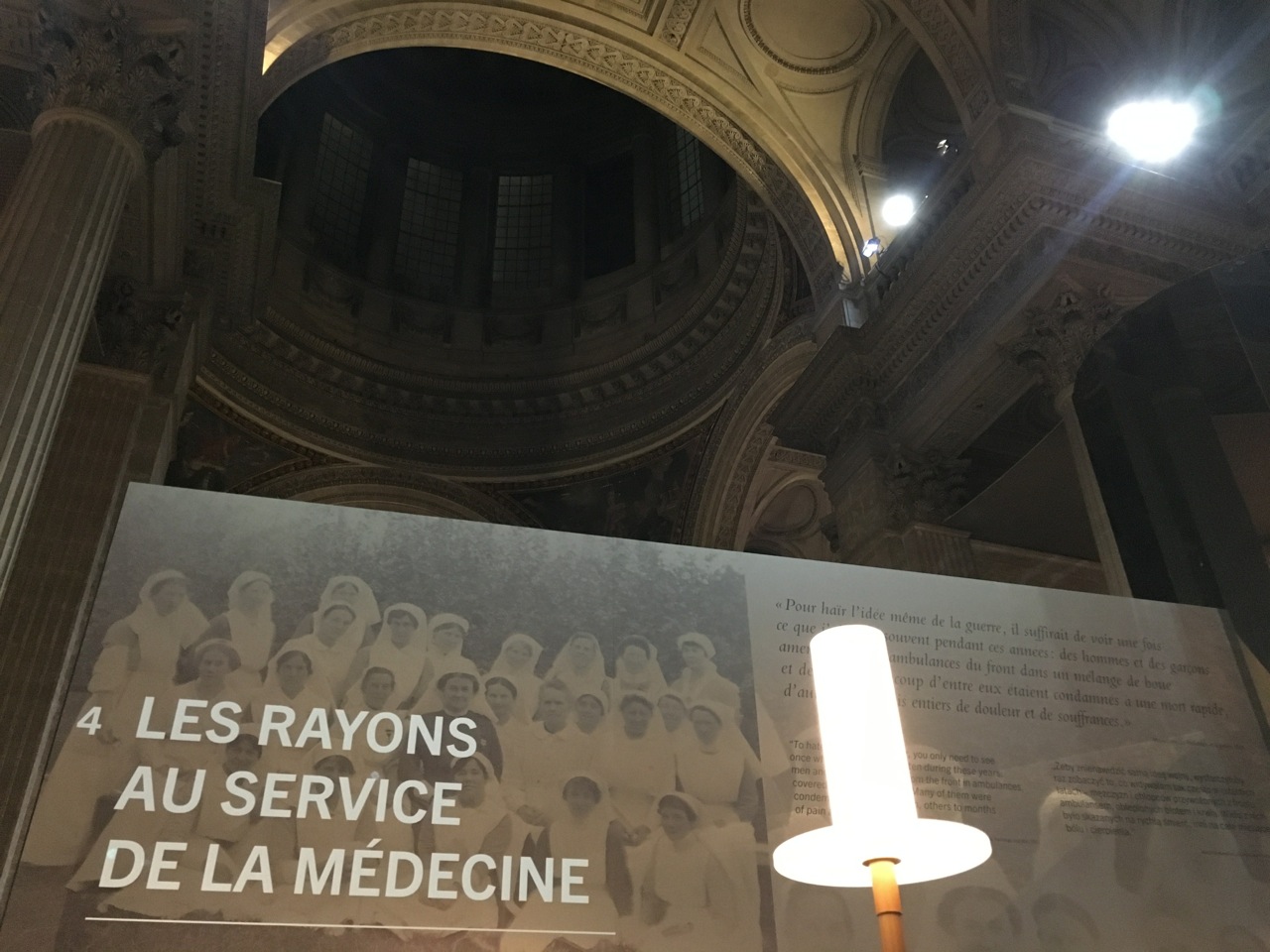
Chapter 4: Medical Applications
When war breaks out, Marie Curie uses her fame to get hold of X-ray equipment, outfits civilian vehicles, and heads out with her daughter to take X-rays of the wounded.
 Chapter 5: Interment in the Panthéon
Our visit ends with one final chapter: François Mitterrand’s interment of Marie Curie in the Panthéon.
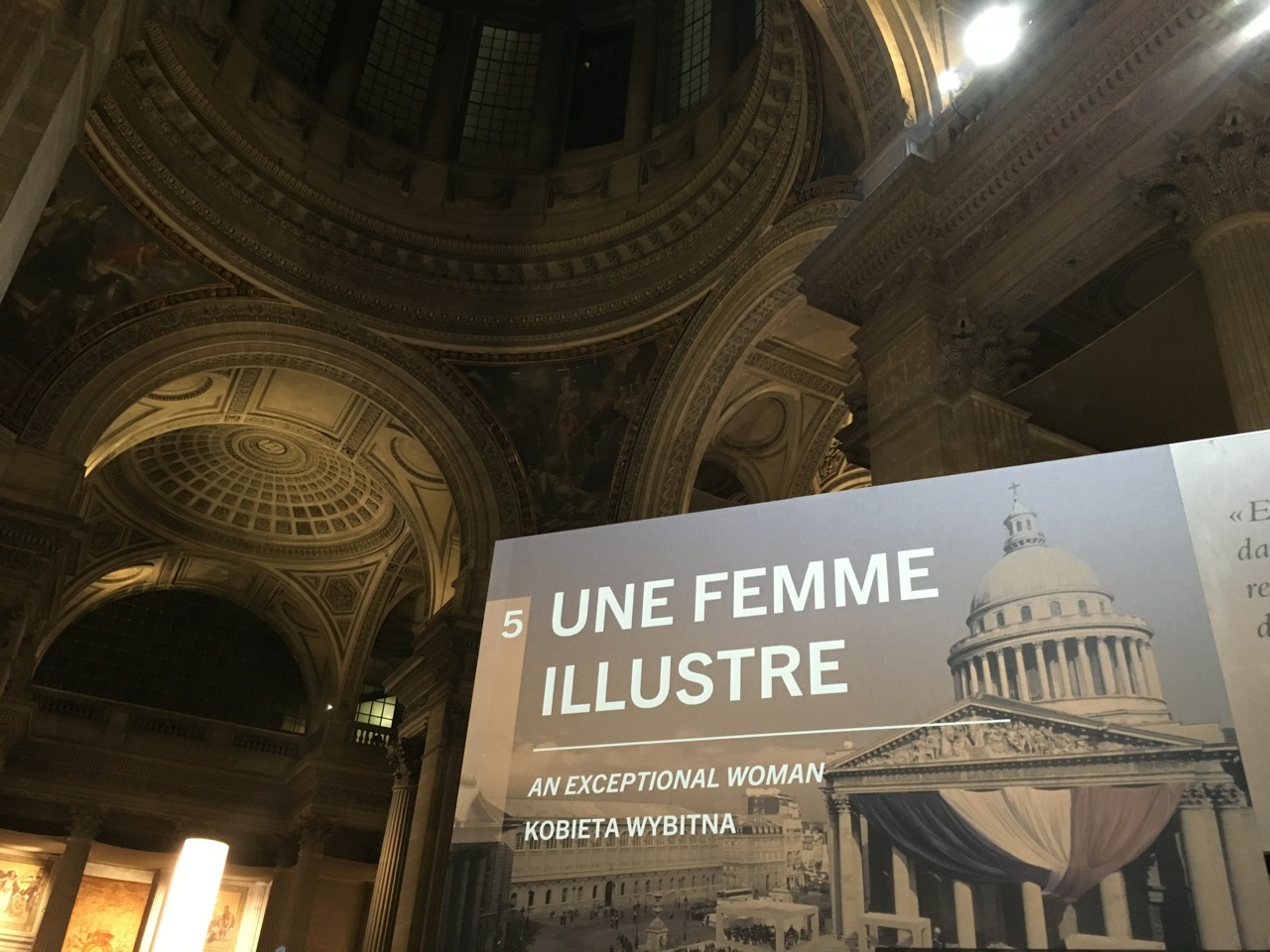
A tip: keep a close eye on the clip from “les Palmes de M.Schultz” playing on the screen in this section. You’ll spot two very unusual extras! I’ll leave it to you to figure out who they are...
Marie Curie: At the Panthéon and Beyond
The exhibition runs from November 8 through March 4, 2018. And there are several ways to get to know this remarkable woman better.
There’s a guided walk, a talk at the musée Curie just steps from the Panthéon, and of course a night at the Panthéon is back, so you can explore by flashlight for a visit that’s both magical and mysterious.
Now all you have to do is choose, and above all, remember to book.
Marie Curie at the Panthéon Place du Panthéon, 75005 Paris
SaveSave
SaveSave